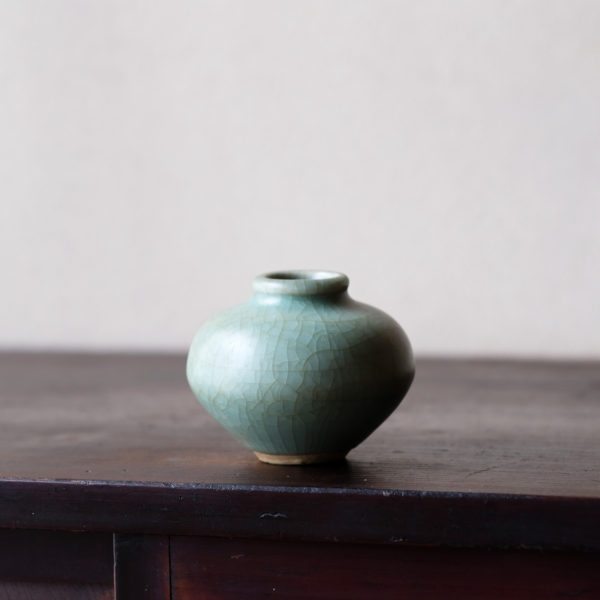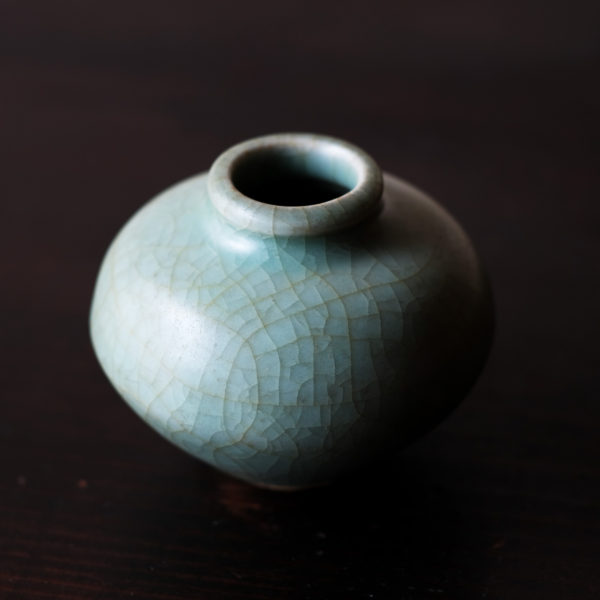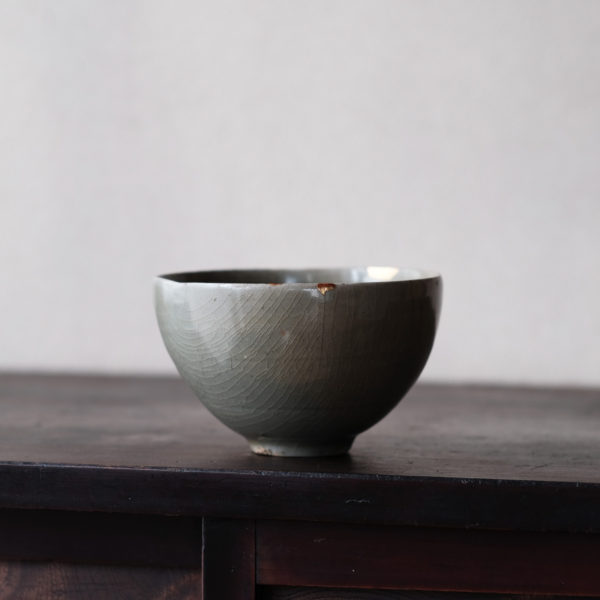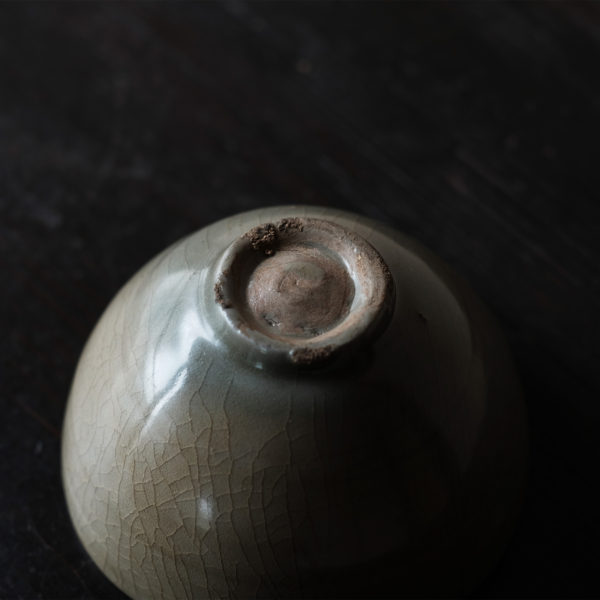
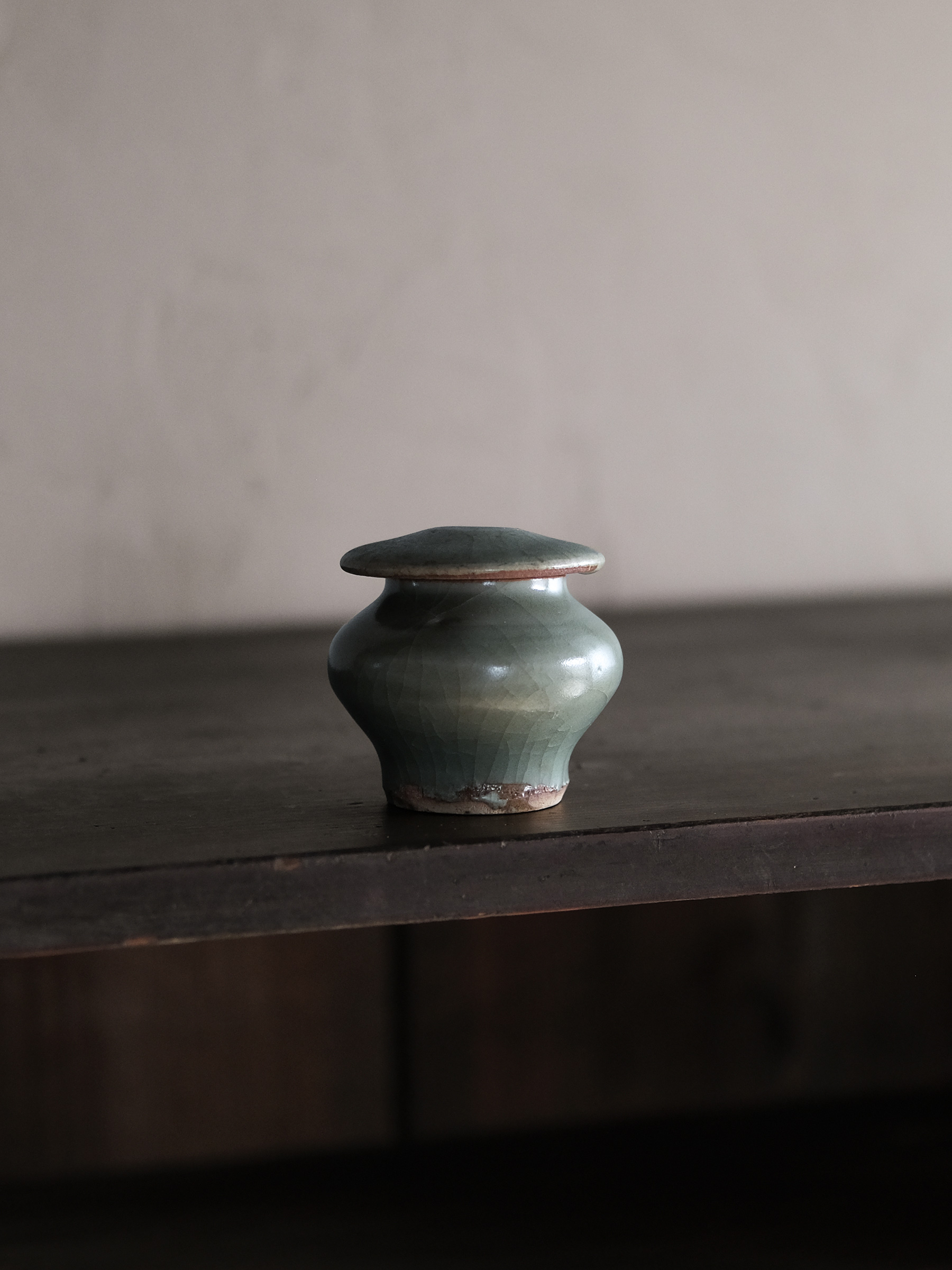

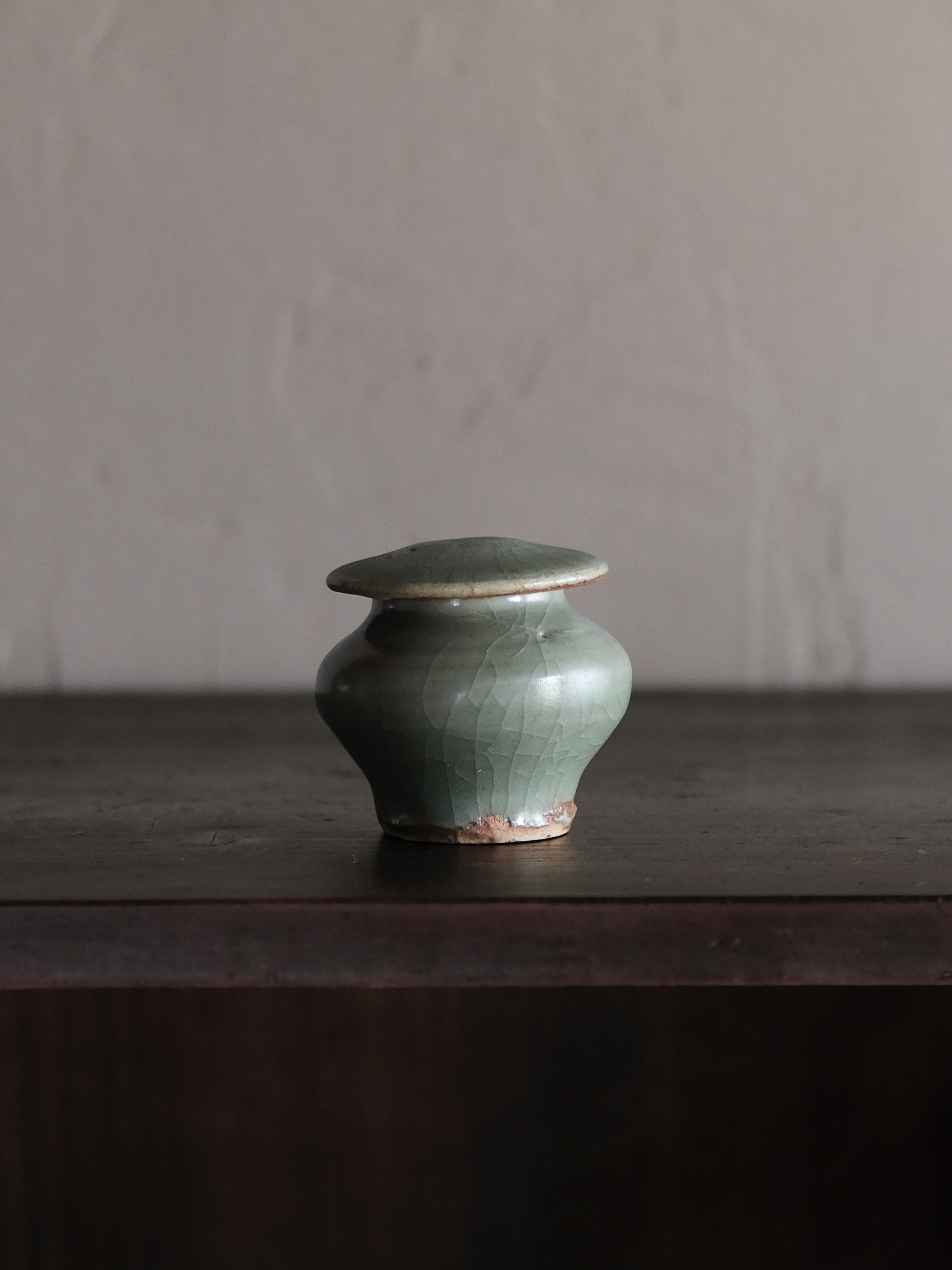

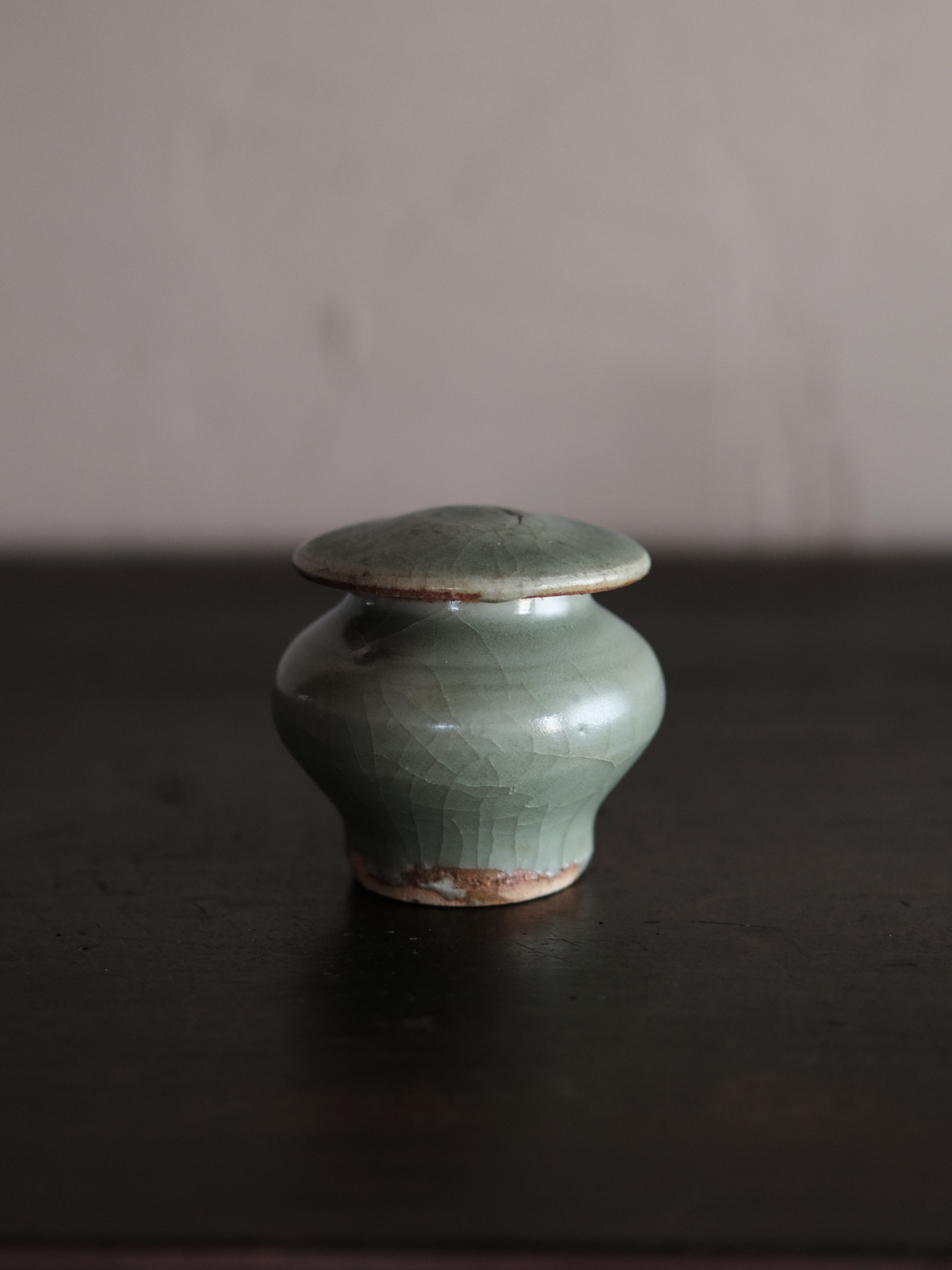
Yuan Dynasty Longquan Ware Celadon Lidded Jarlet
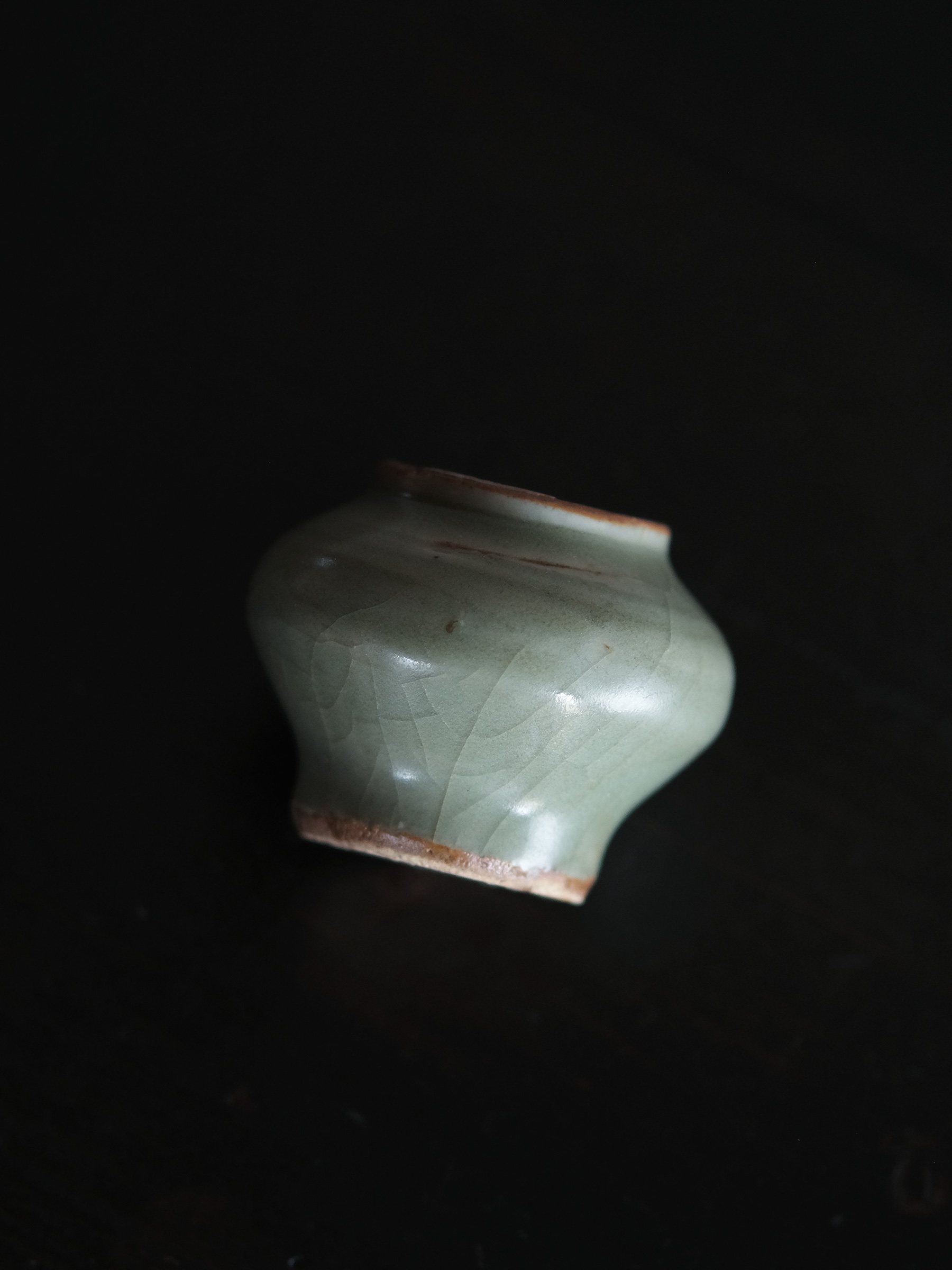
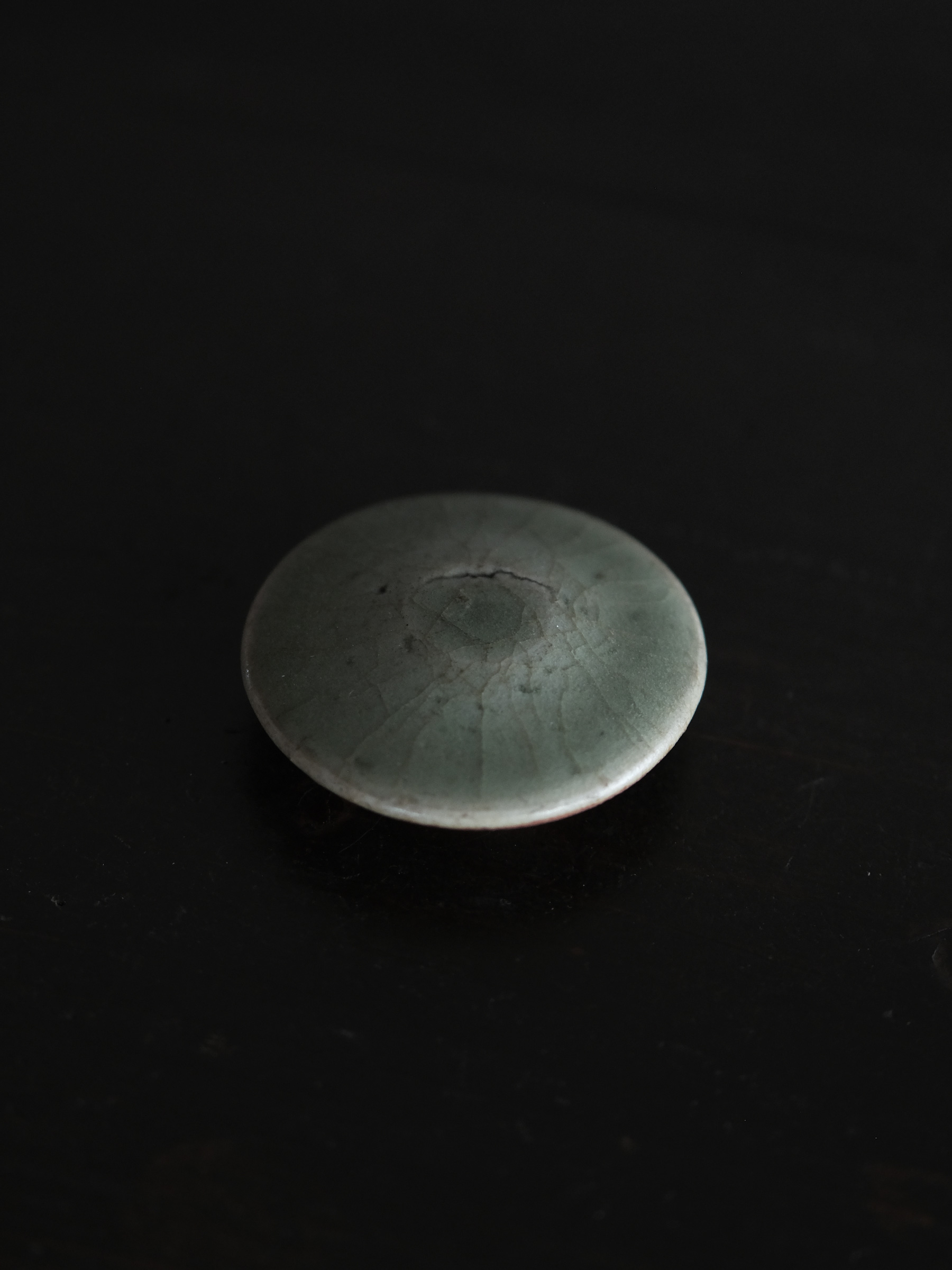
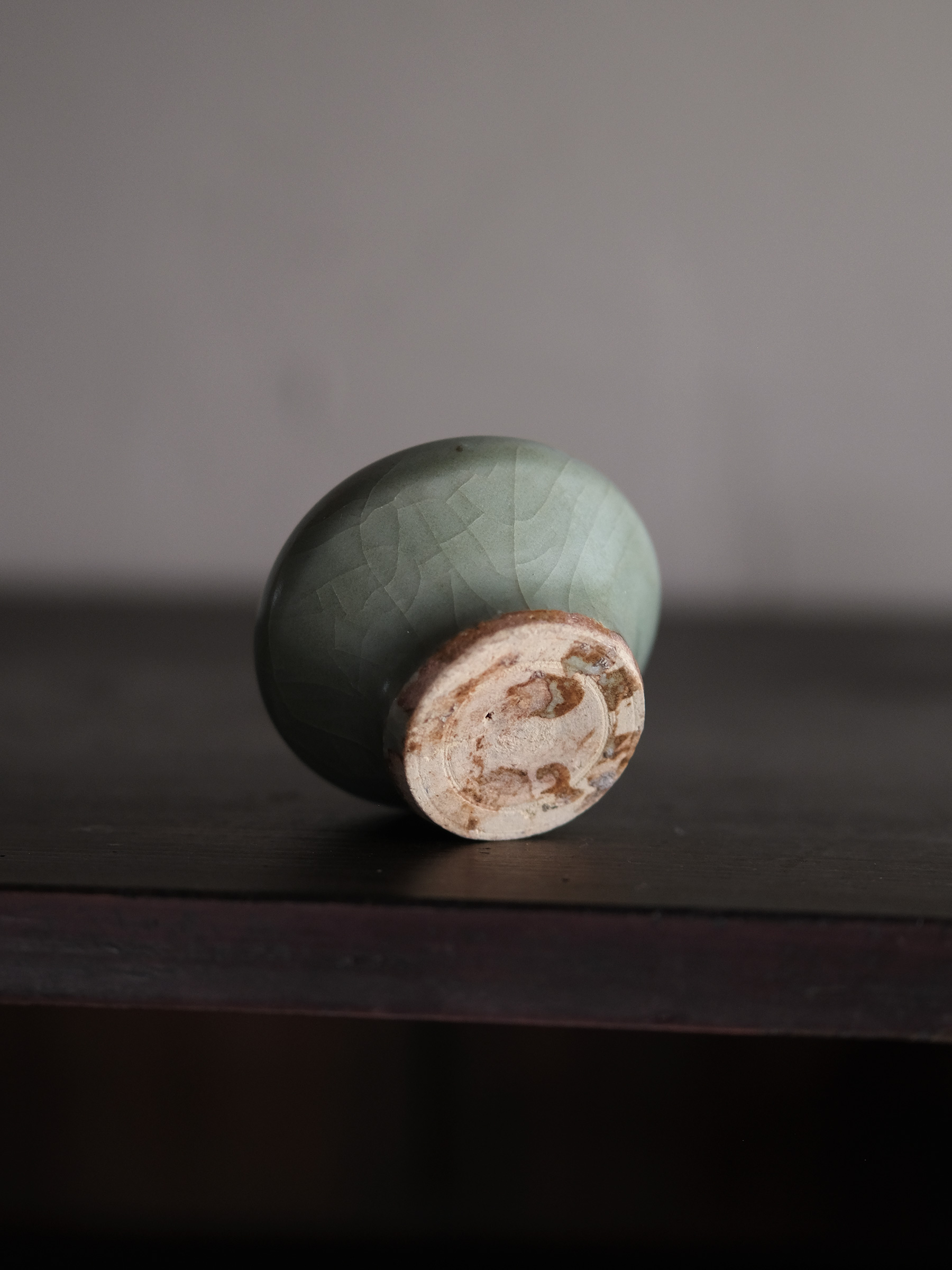
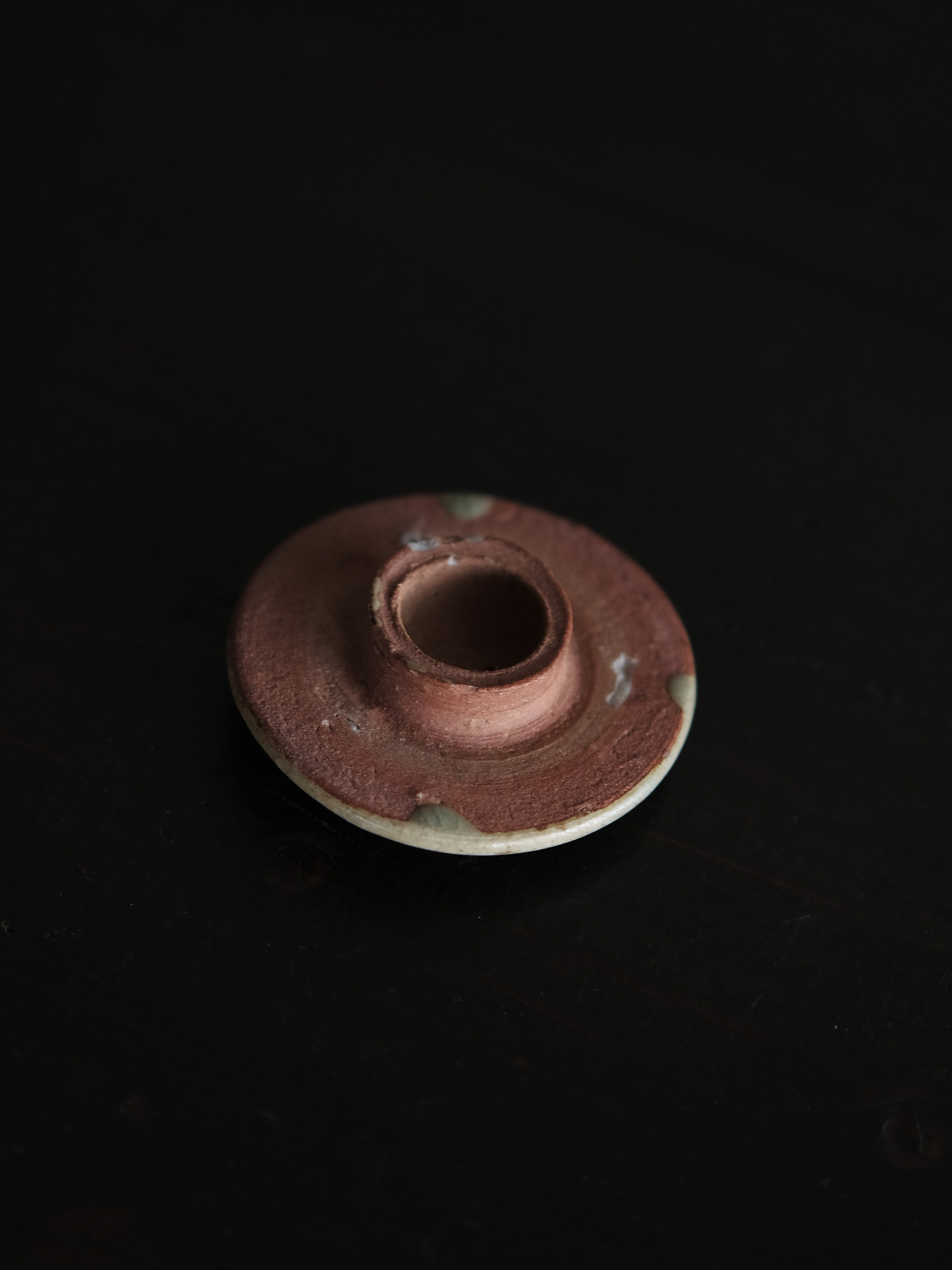
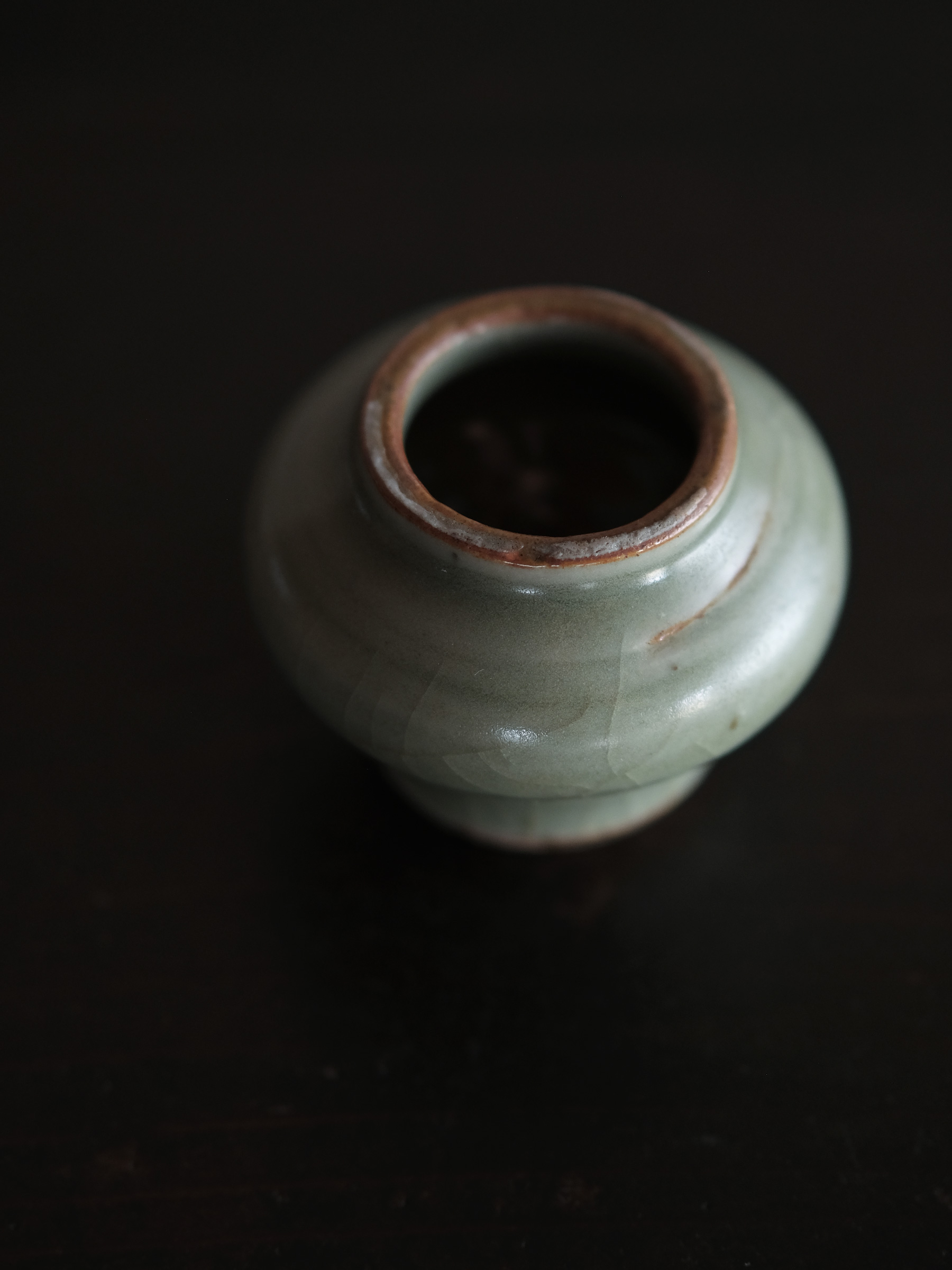
A small jar made at the Longquan kilns during the Yuan to early Ming dynasty. It has a broad mouth and a generously rounded body, accompanied by a conical, hat-shaped cover. The thickly applied glaze has melted to a dense, lustrous surface, with large, widely distributed crackles throughout. The rim, the underside of the cover, and the base are left unglazed, where iron in the clay has seeped through during firing, imparting a reddish hue. A faint circular mark on the underside of the cover, corresponding in diameter to the rim of the vessel, suggests that the cover and body may have been fired together, one placed over the other.
In Japan, vessels of this type are conventionally known as shukaiko (酒会壺). Among examples of various sizes, larger vessels were sometimes appreciated by tea practitioners as mizusashi (water jars), while smaller examples that fit comfortably in the palm were used as kōgō (incense containers). Small vessels of the same type have also been found among the cargo of the Sinan shipwreck, which sank off the coast of Korea around 1323 while en route from Ningbo to Japan. An exemplary work of Longquan celadon, it succinctly conveys the characteristic style of the Yuan-dynasty kilns and represents a notable example of what is known in Japan as Tenryūji celadon.
Apart from minor kiln flaws, the vessel is free from notable defects and remains in exceptionally good condition. Accompanied by a fitted wooden storage box.
- The description will be updated as our research progresses.
- Images may differ in color from the actual products.
- Please read "Terms" when purchasing.