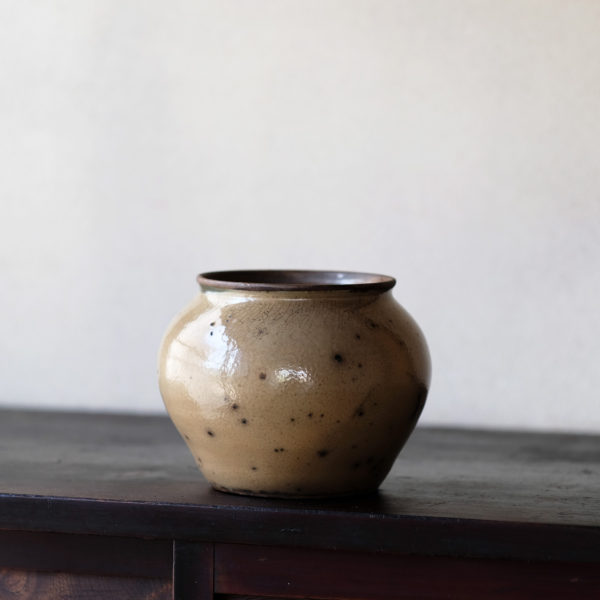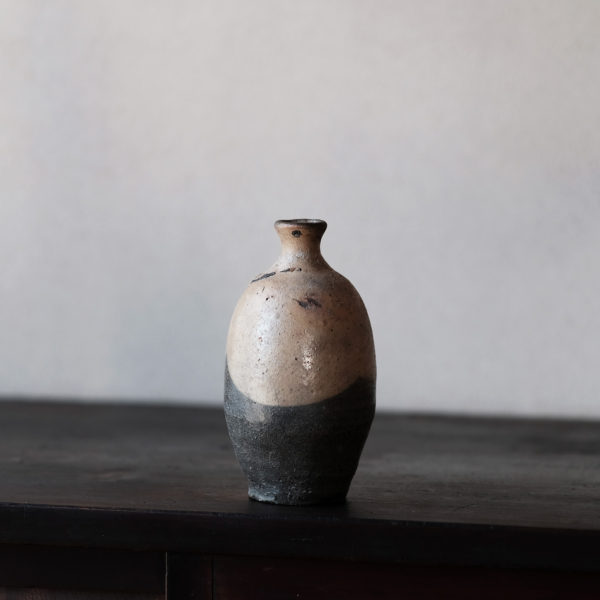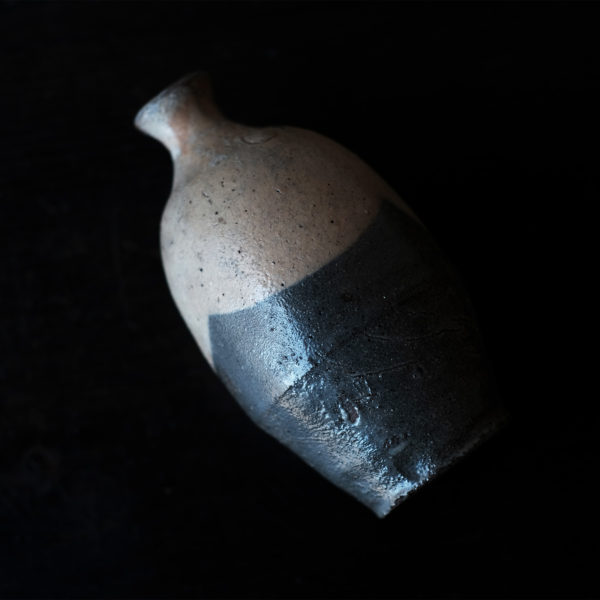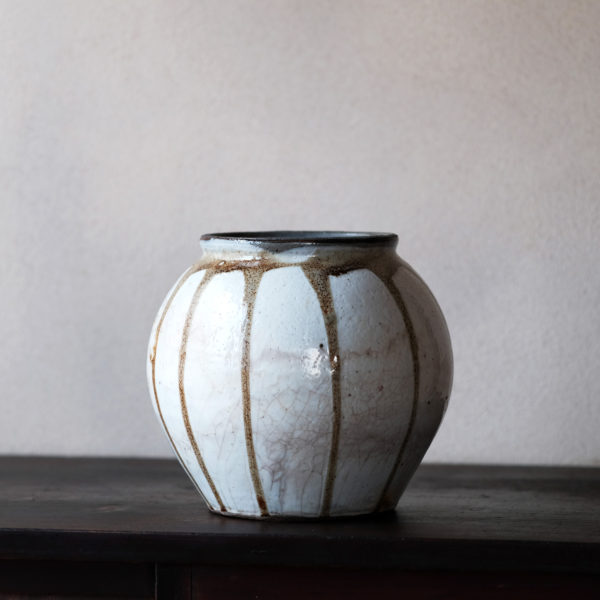






Tamba Ware White Slip Jar
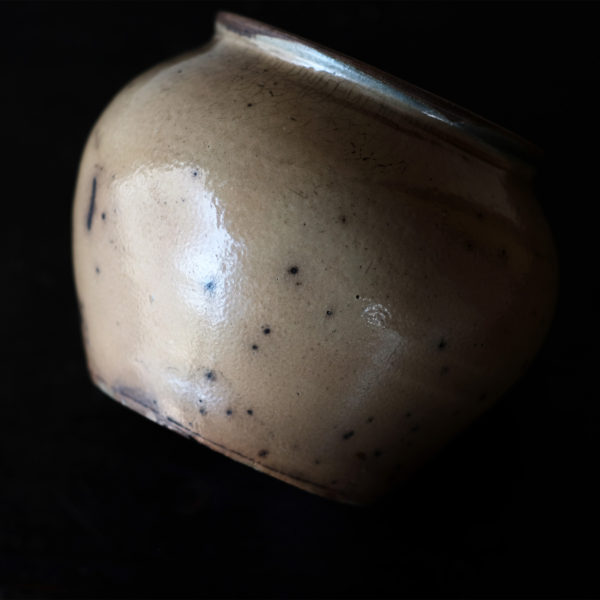
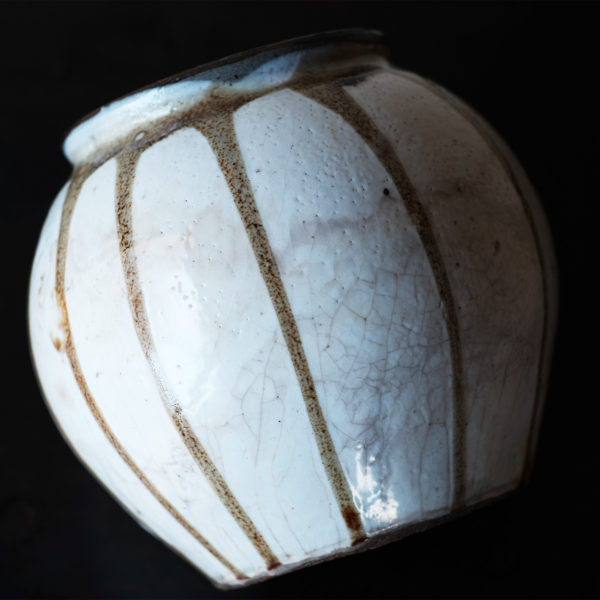
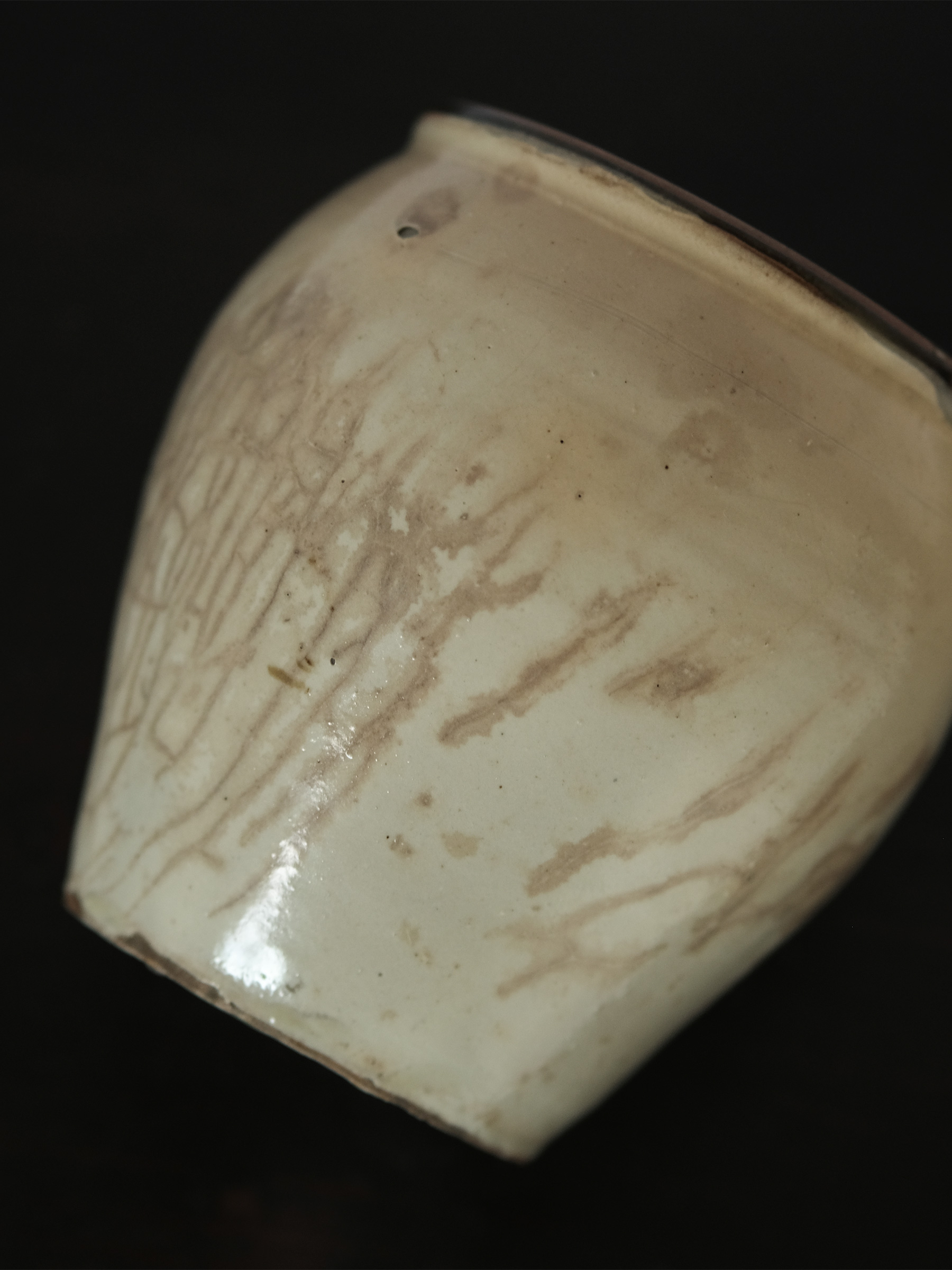
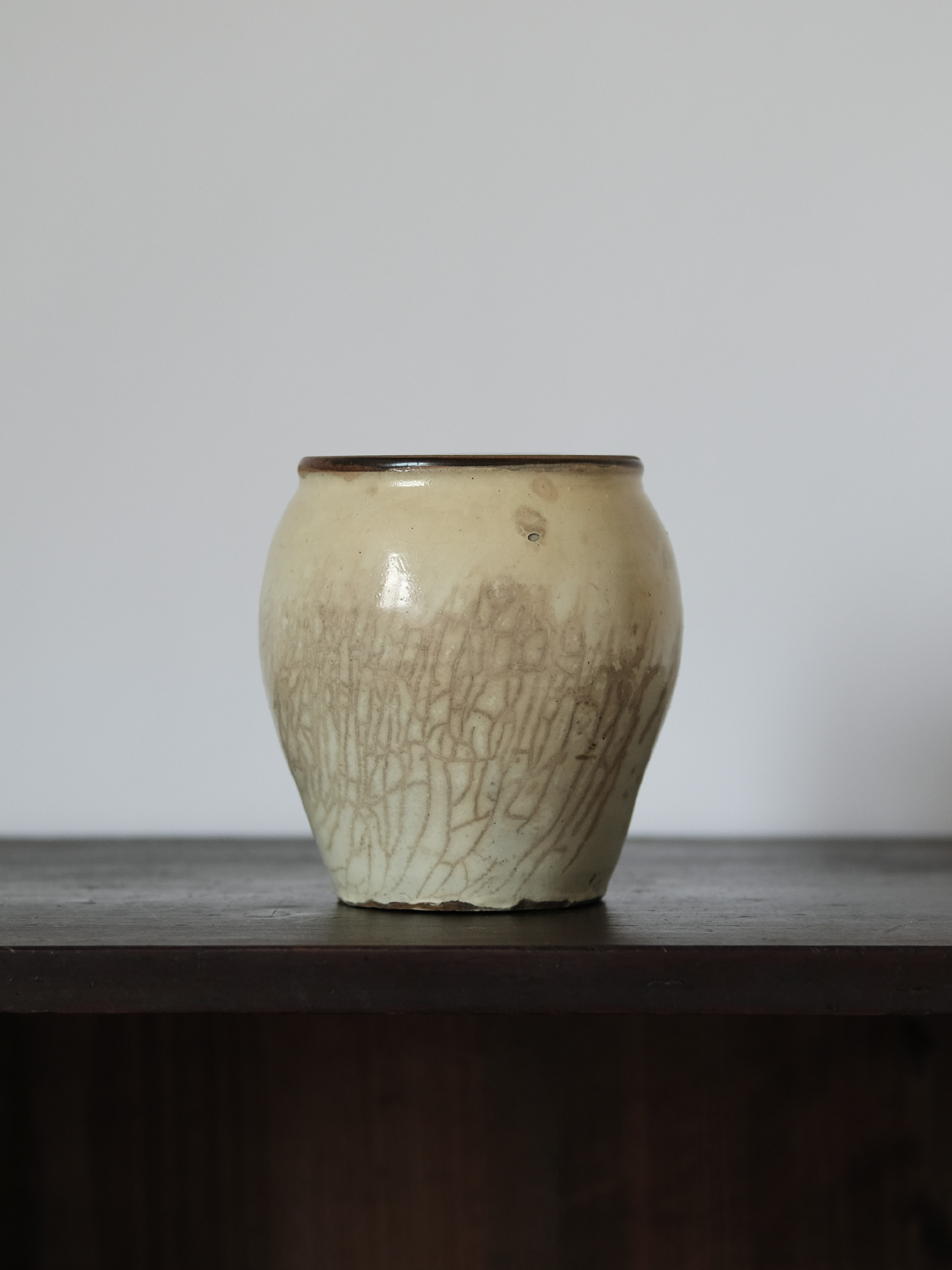
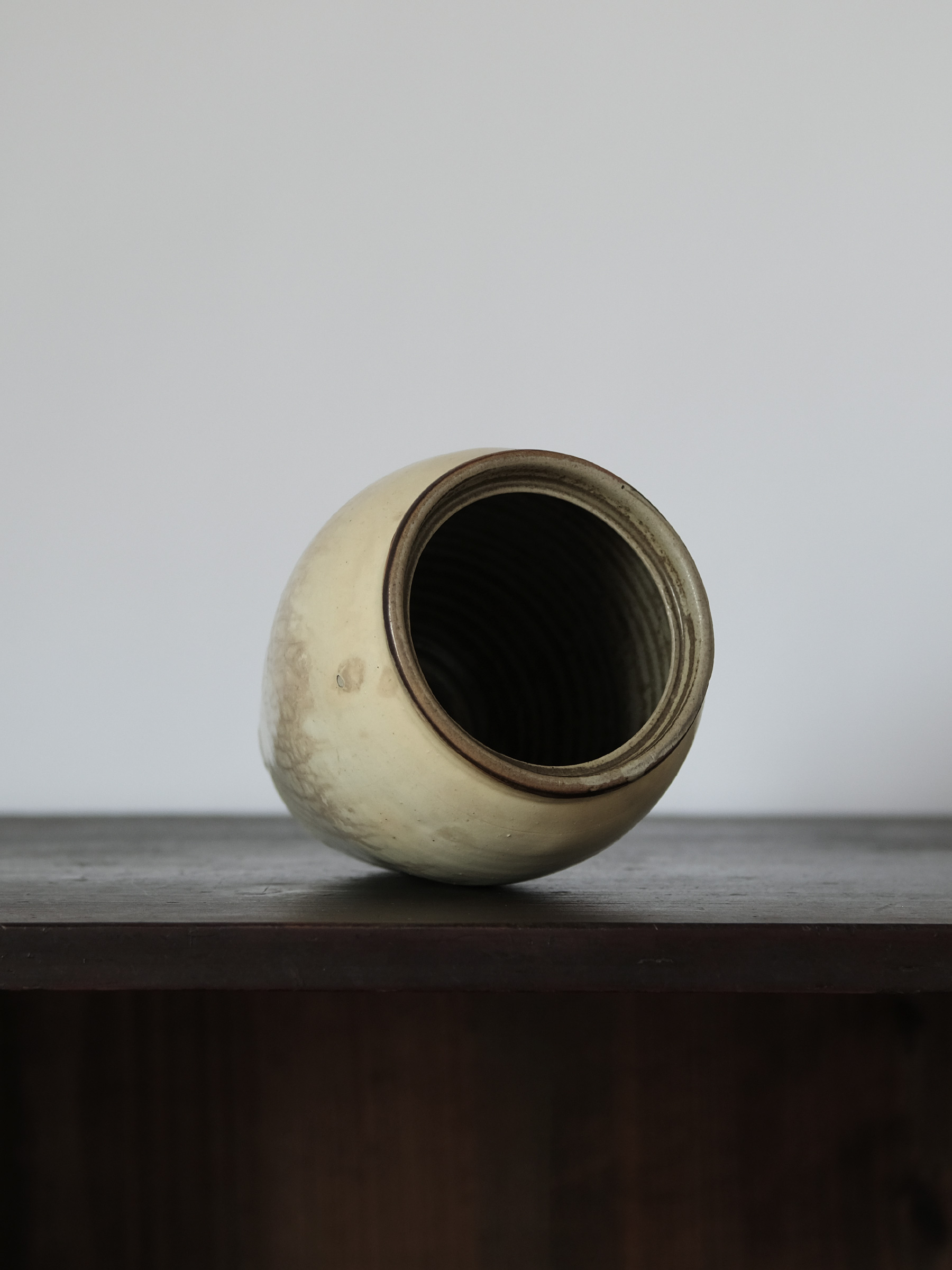
A small jar of Shiro-Tamba (White Tamba ware), fired during the closing years of the Edo period to the early Meiji era. Likely intended as a storage vessel for salt, pickled plums, or other preserved foods, it takes the form of a simple, broad-mouthed container of quiet utility. The transparent glaze laid over the white slip possesses a moist, wet-like lustre, while stains that have penetrated the crackled glaze spread across the body in dendritic patterns.
Tamba is counted among the Six Ancient Kilns of Japan and has continued to produce ceramics since the medieval period, centred around the village of Tachikui in present-day Hyōgo Prefecture. Until the early modern period, its wares were characterised chiefly by natural ash glaze, haidara ash effects, and the iron-rich slip known as akadobe. Around the Kansei era (1789–1801), however, white slip decoration came into use, and jars and bottles with pale surfaces gradually entered everyday life among the wider populace. The present vessel belongs to this lineage of practical domestic wares, yet over the course of many decades the glaze and clay body have quietly absorbed traces of use, allowing singular patterns to emerge within the boundary between surface and earth.
Apart from kiln imperfections inherent to its manufacture, there are no notable defects, and the condition is excellent.
- The description will be updated as our research progresses.
- Images may differ in color from the actual products.
- Please read "Terms" when purchasing.