

Bizen Ware Three-Handled Jar
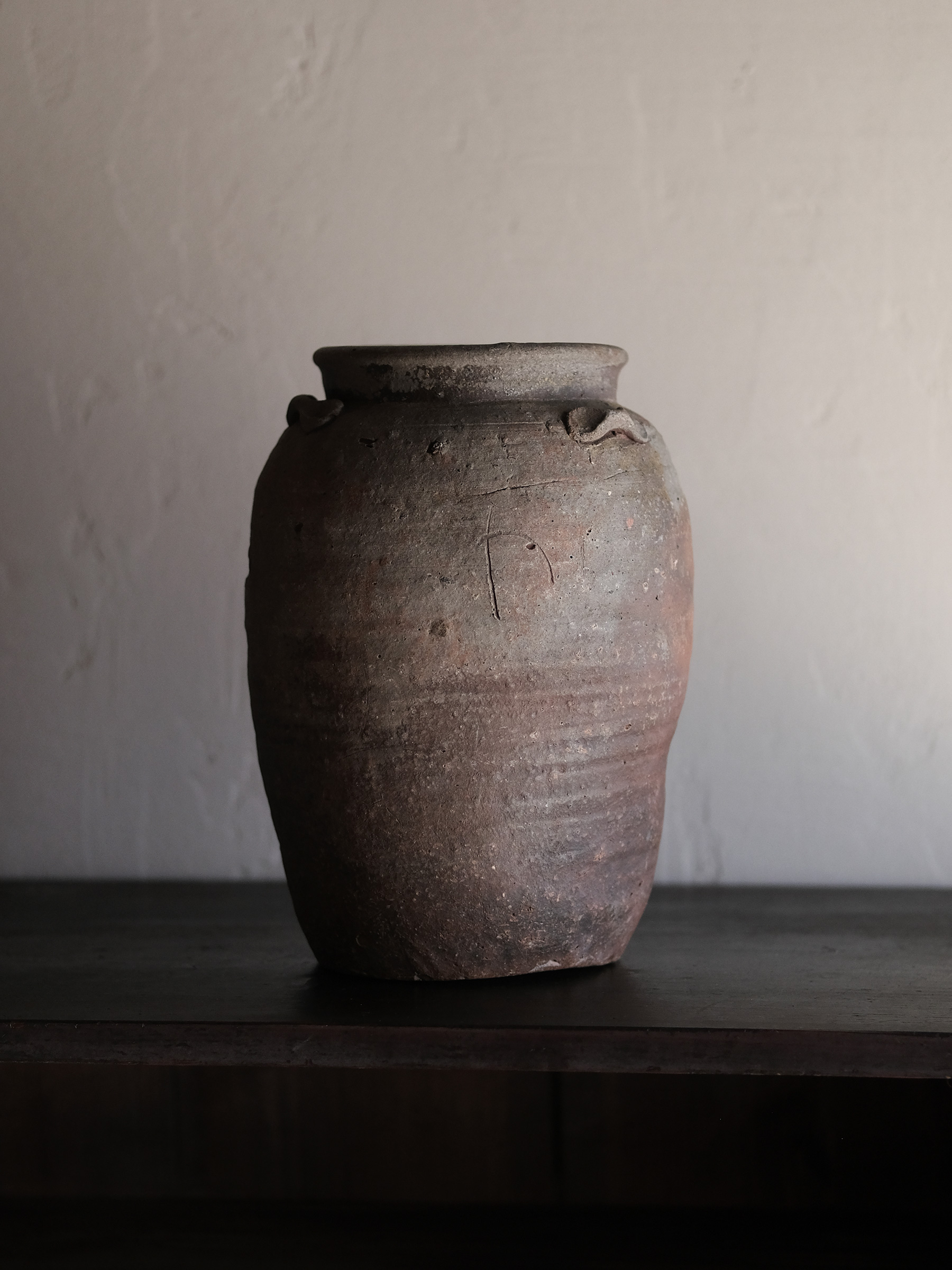
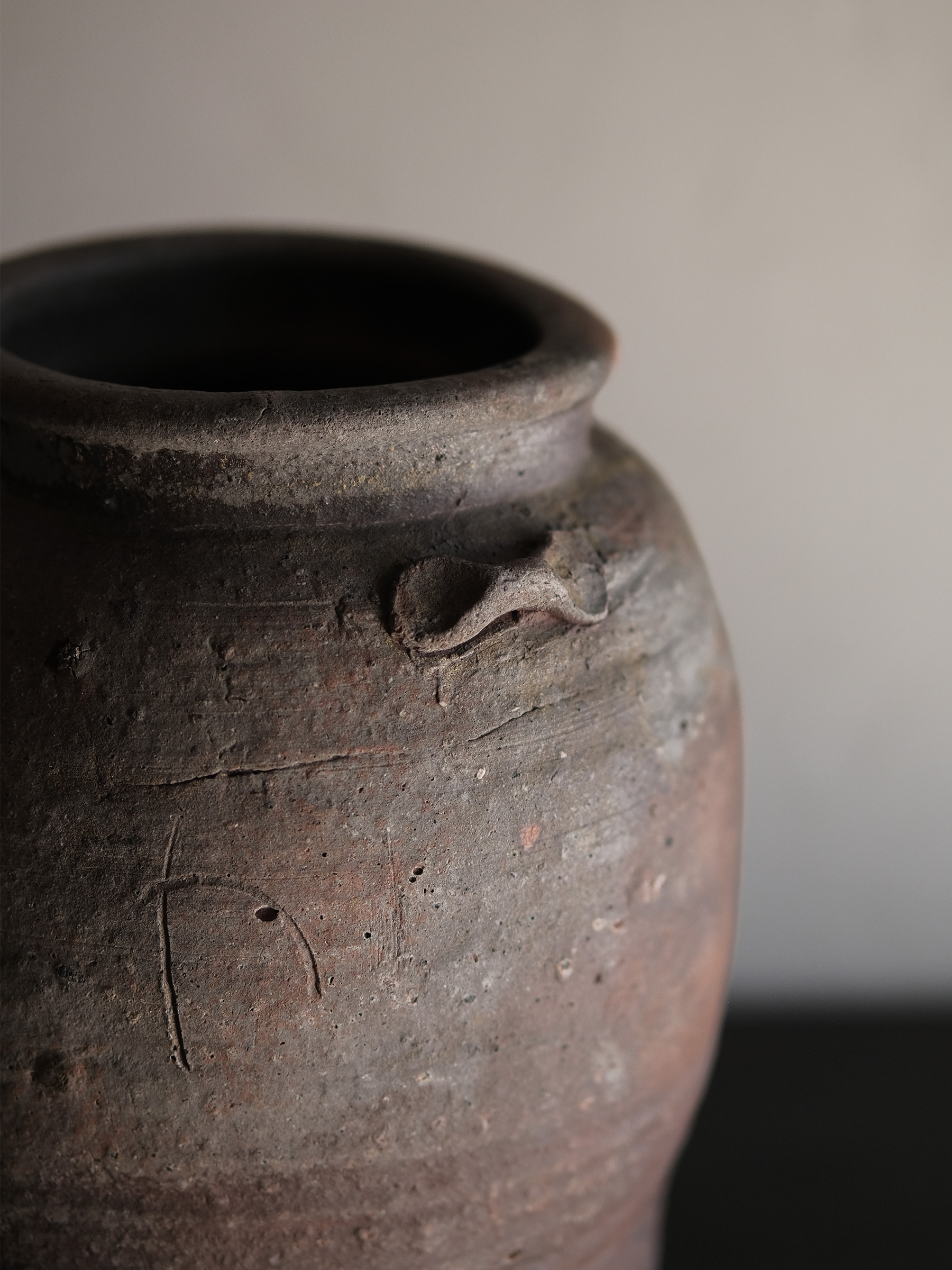
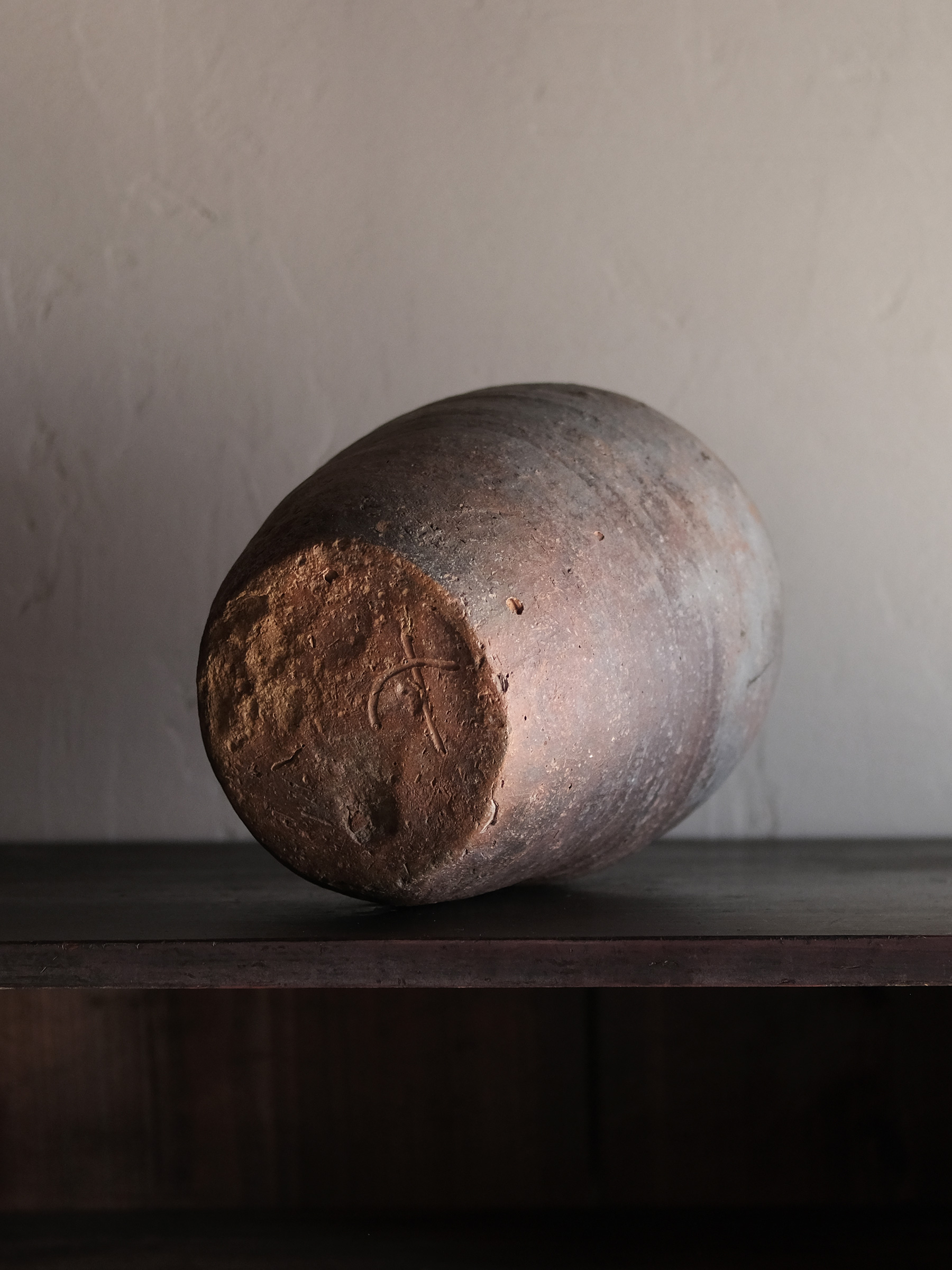
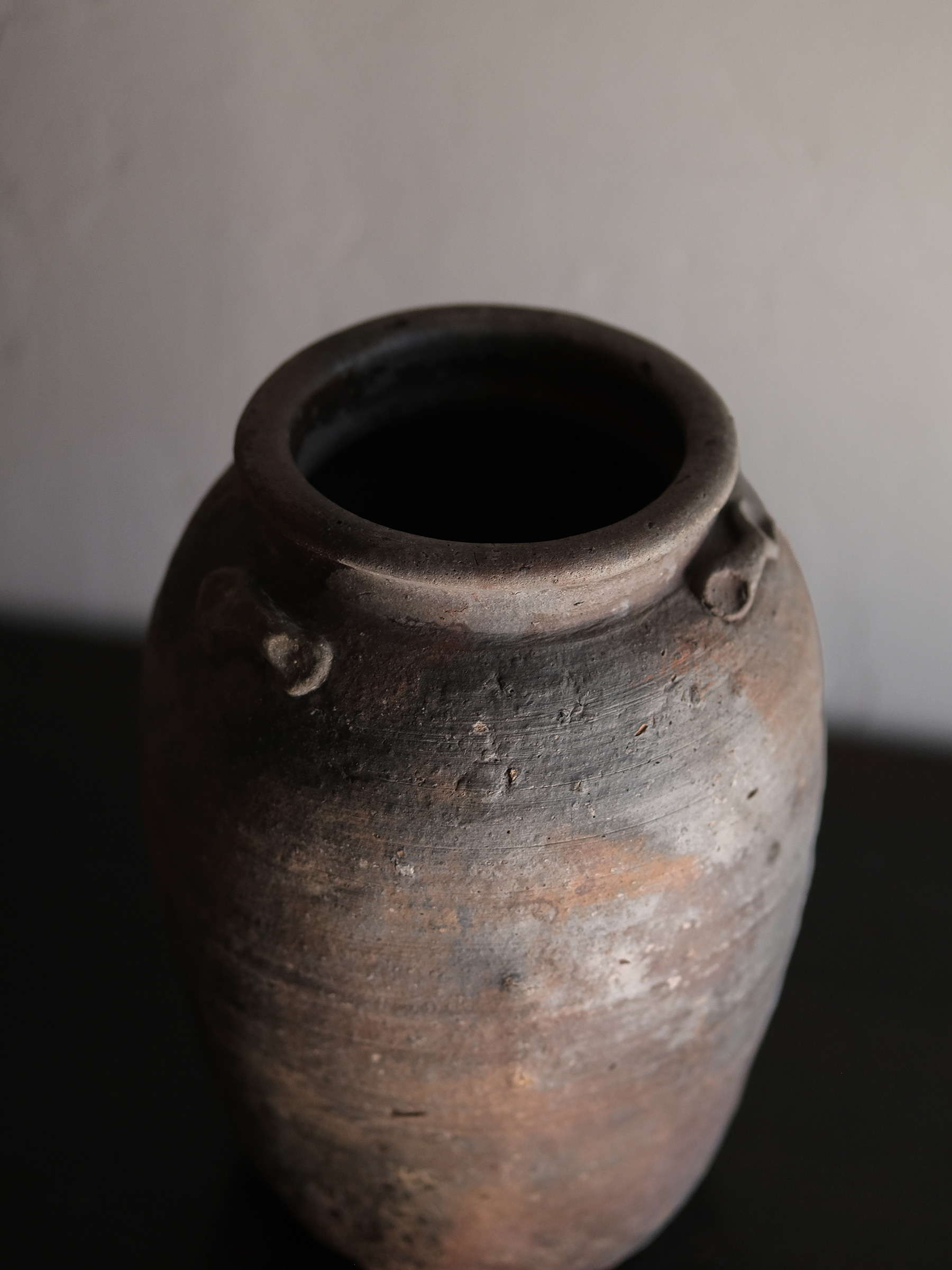
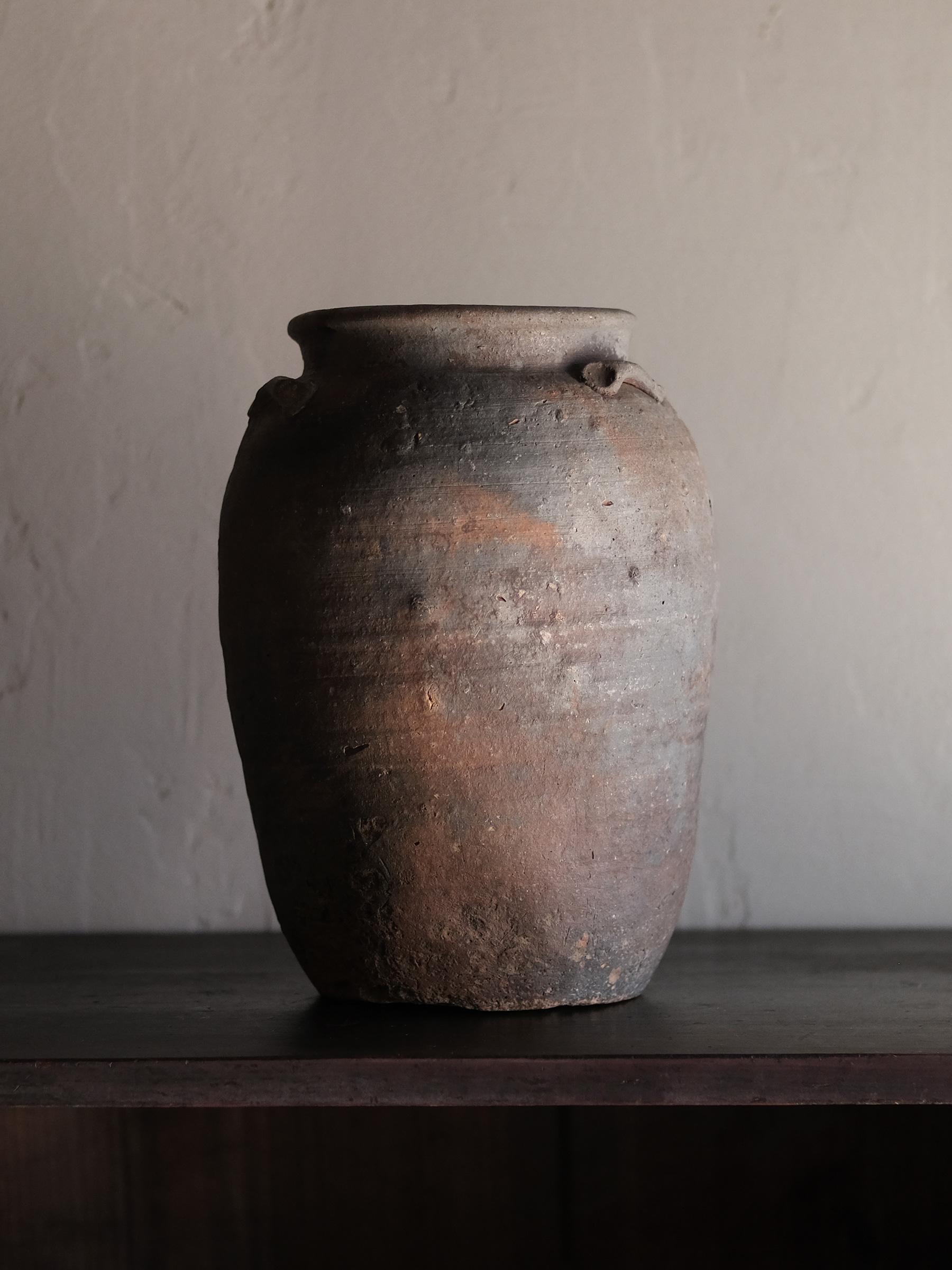
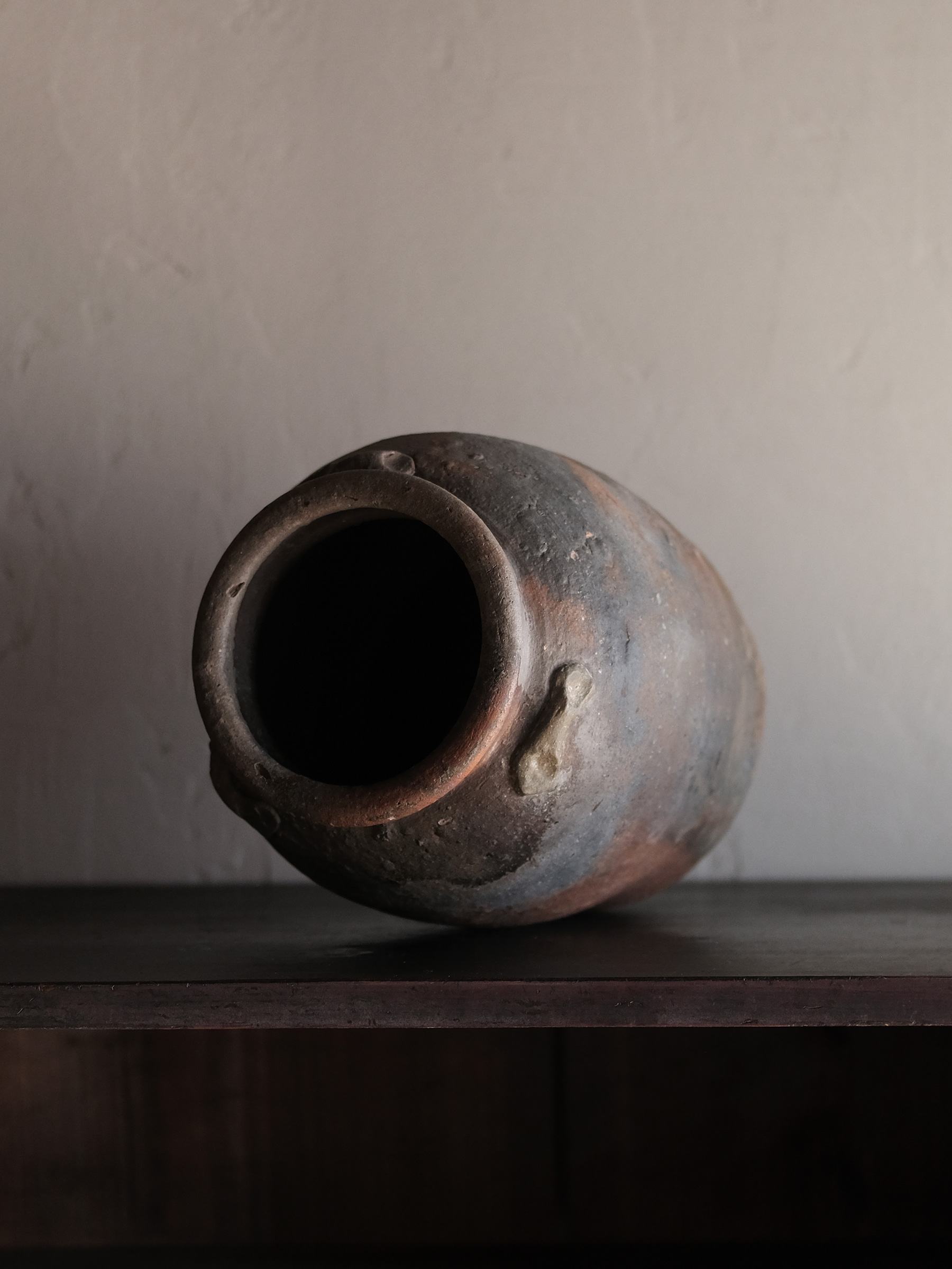
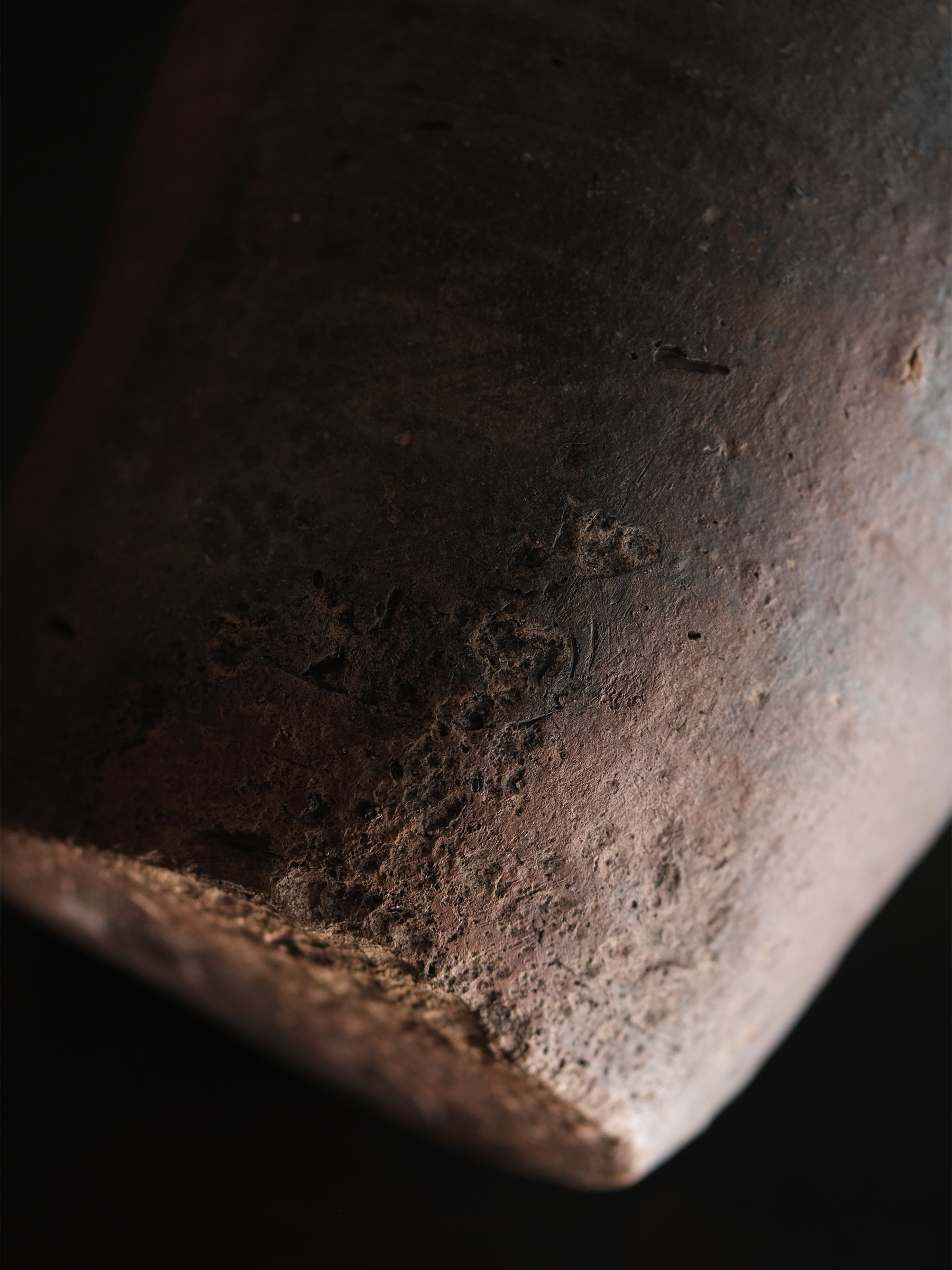
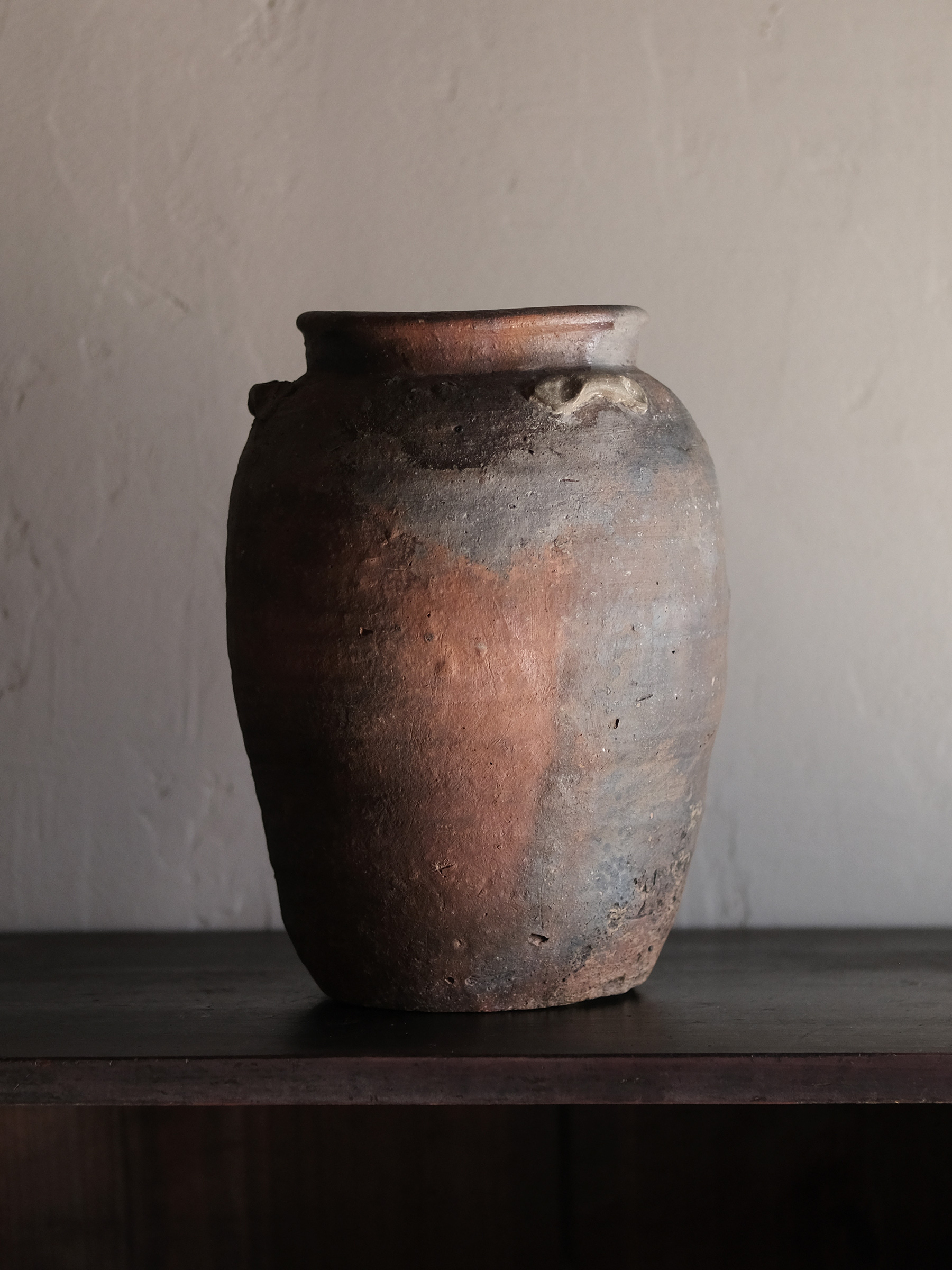
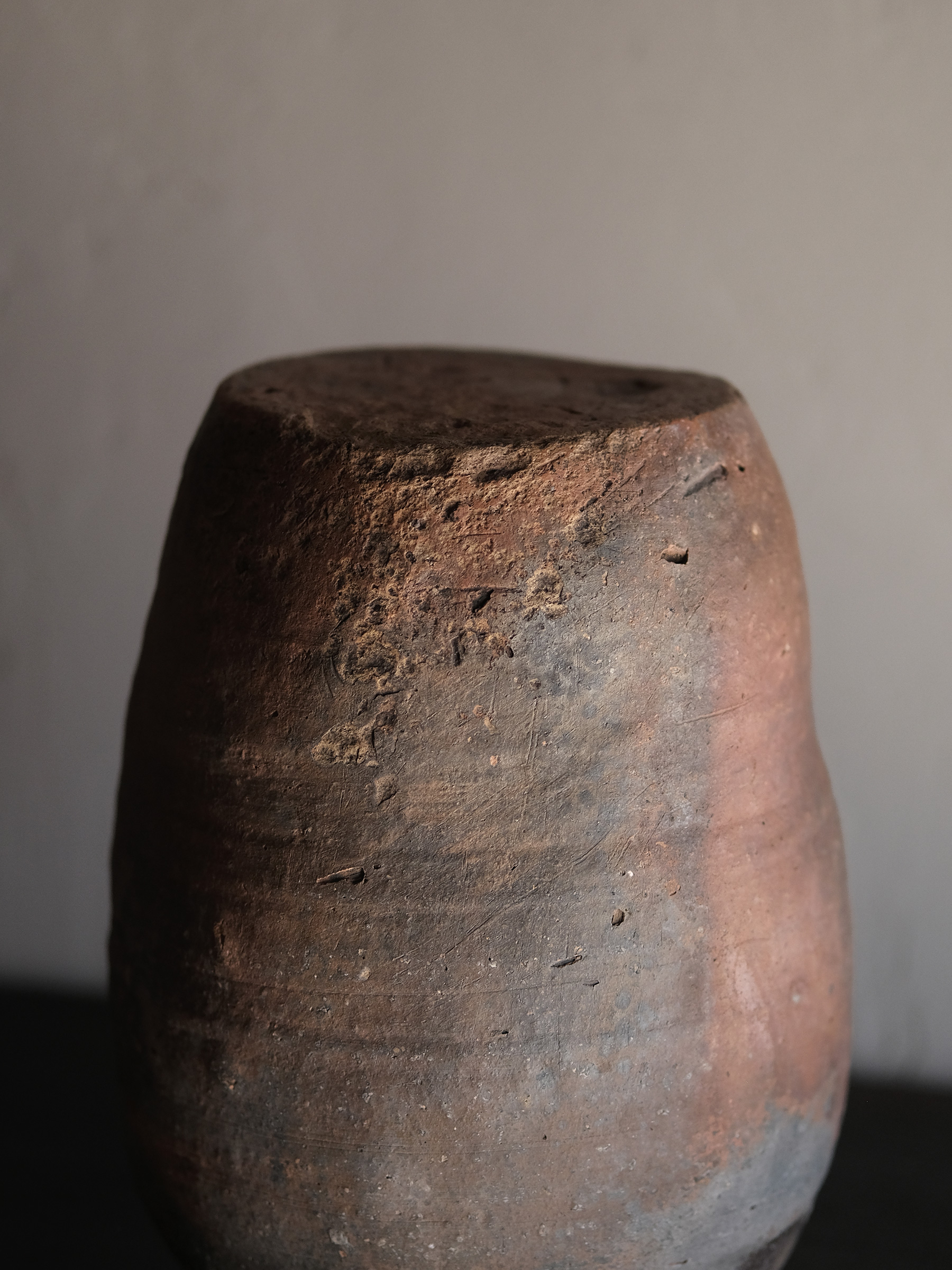
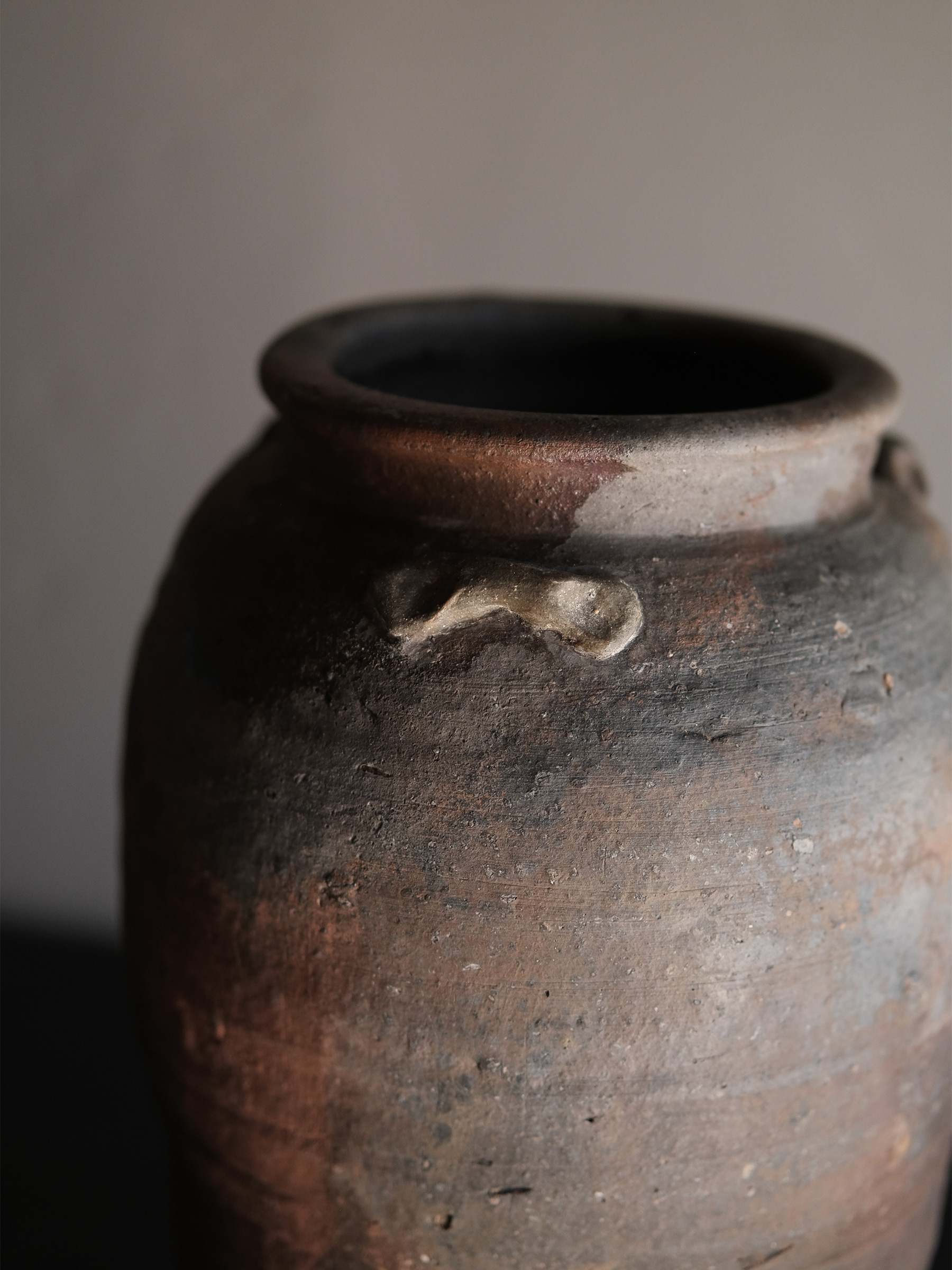
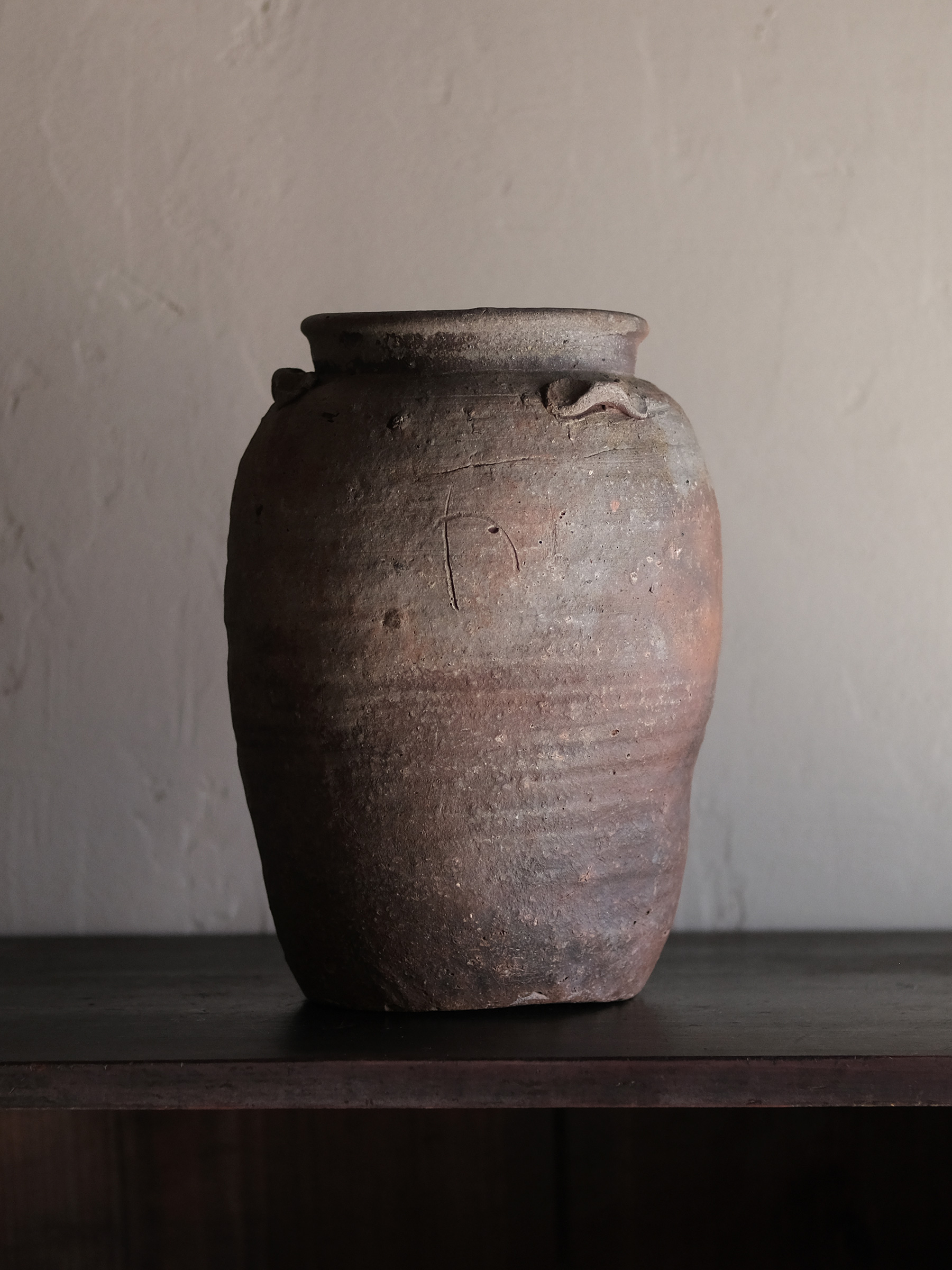
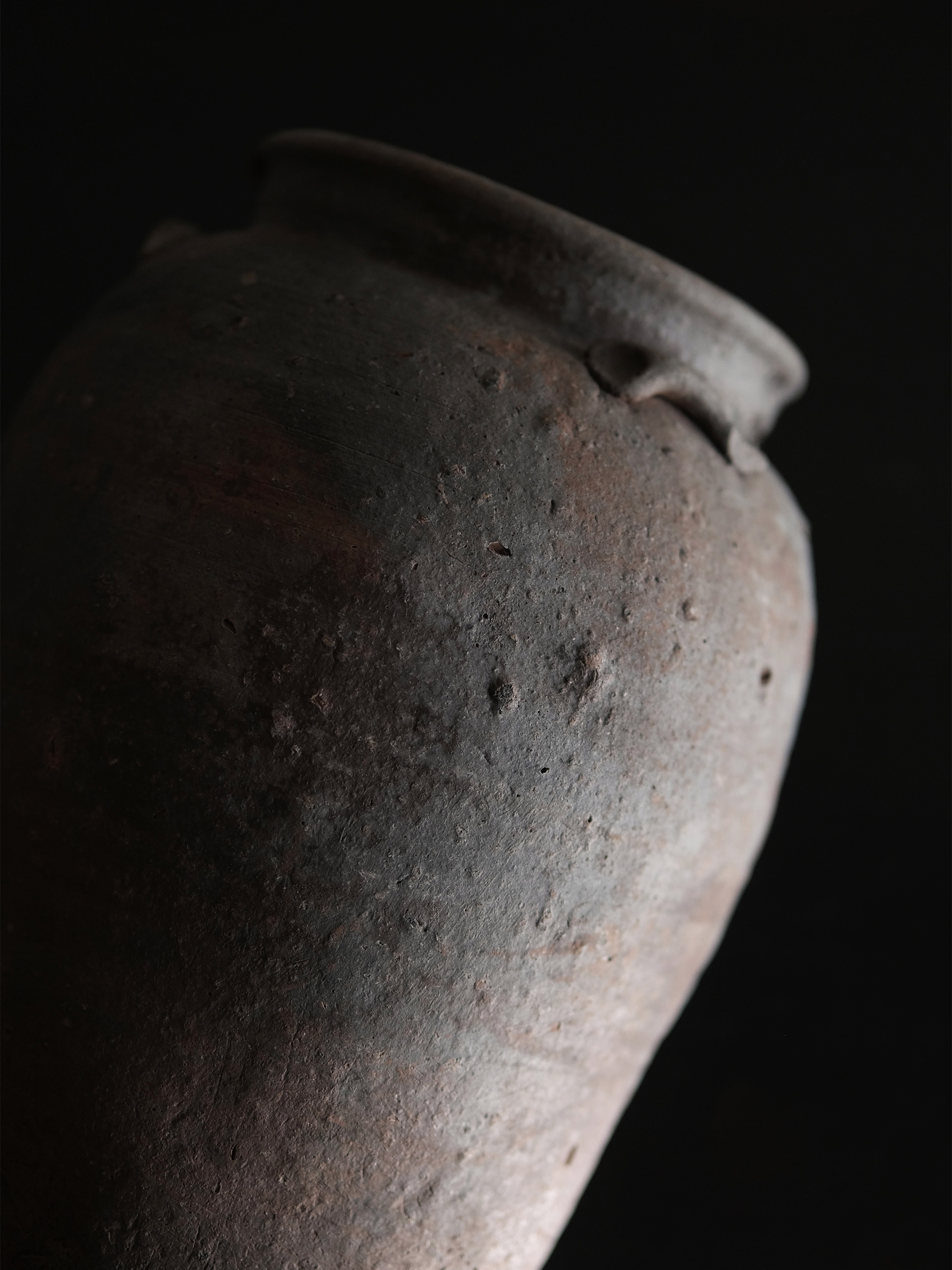
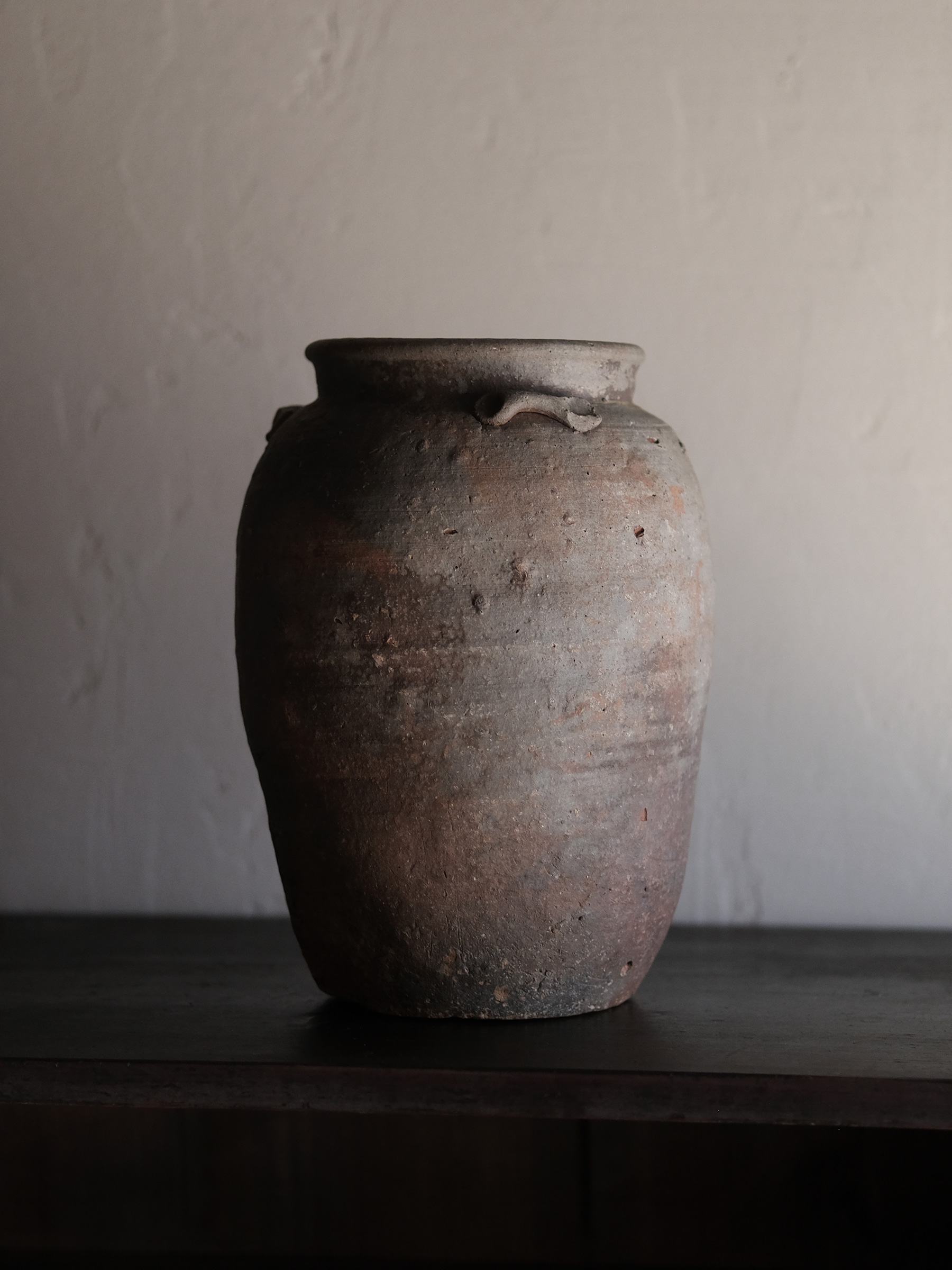
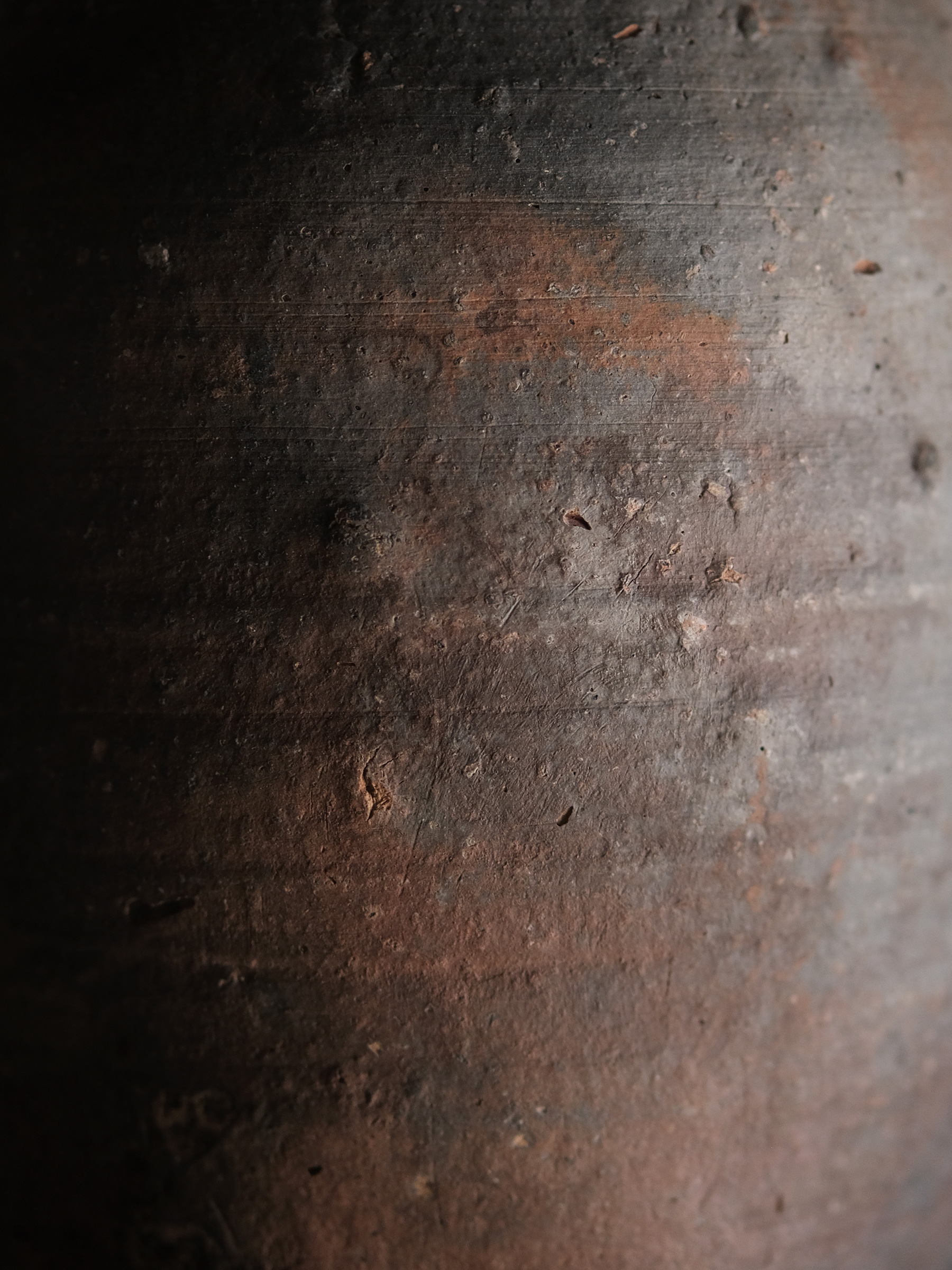
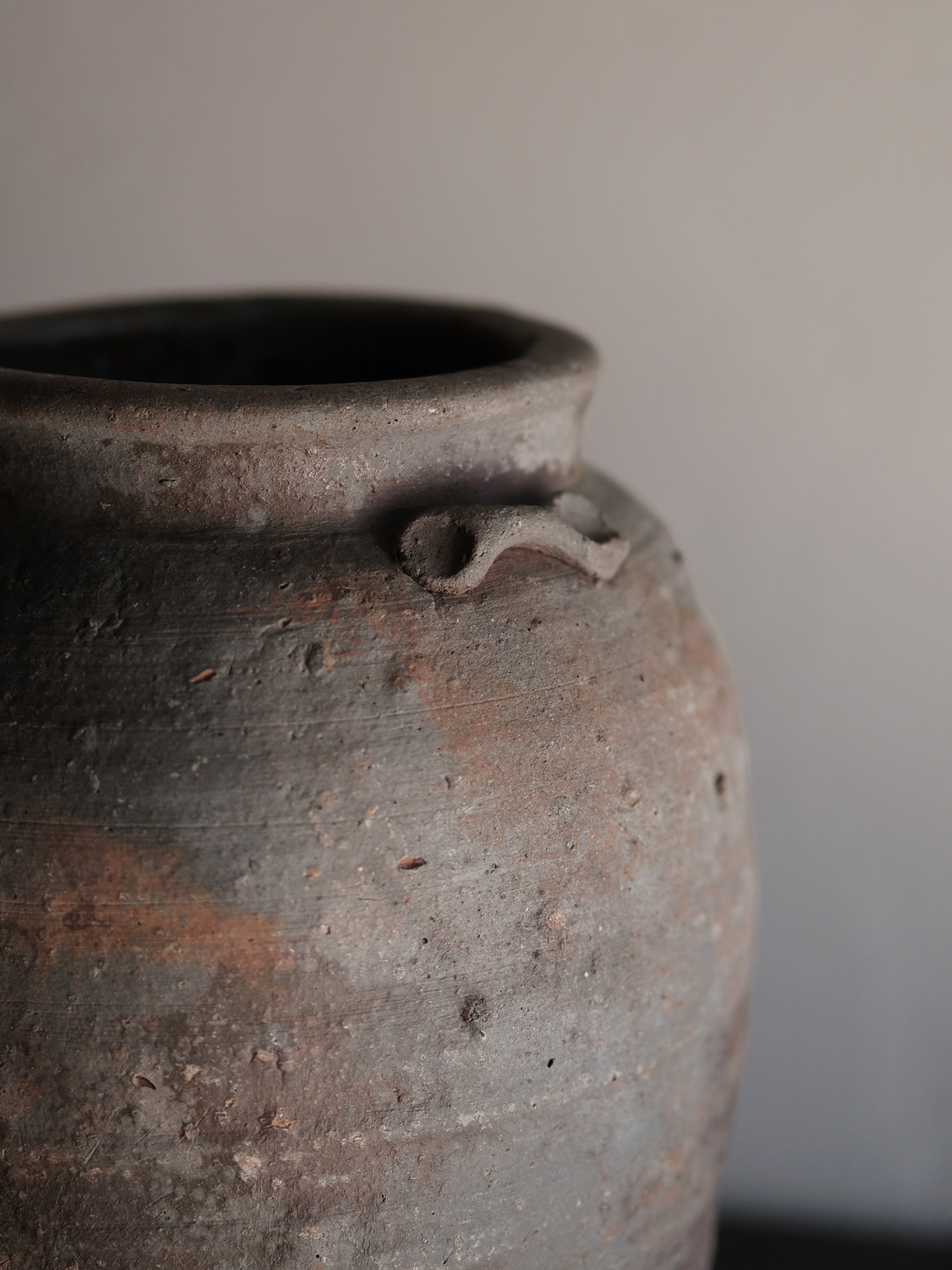
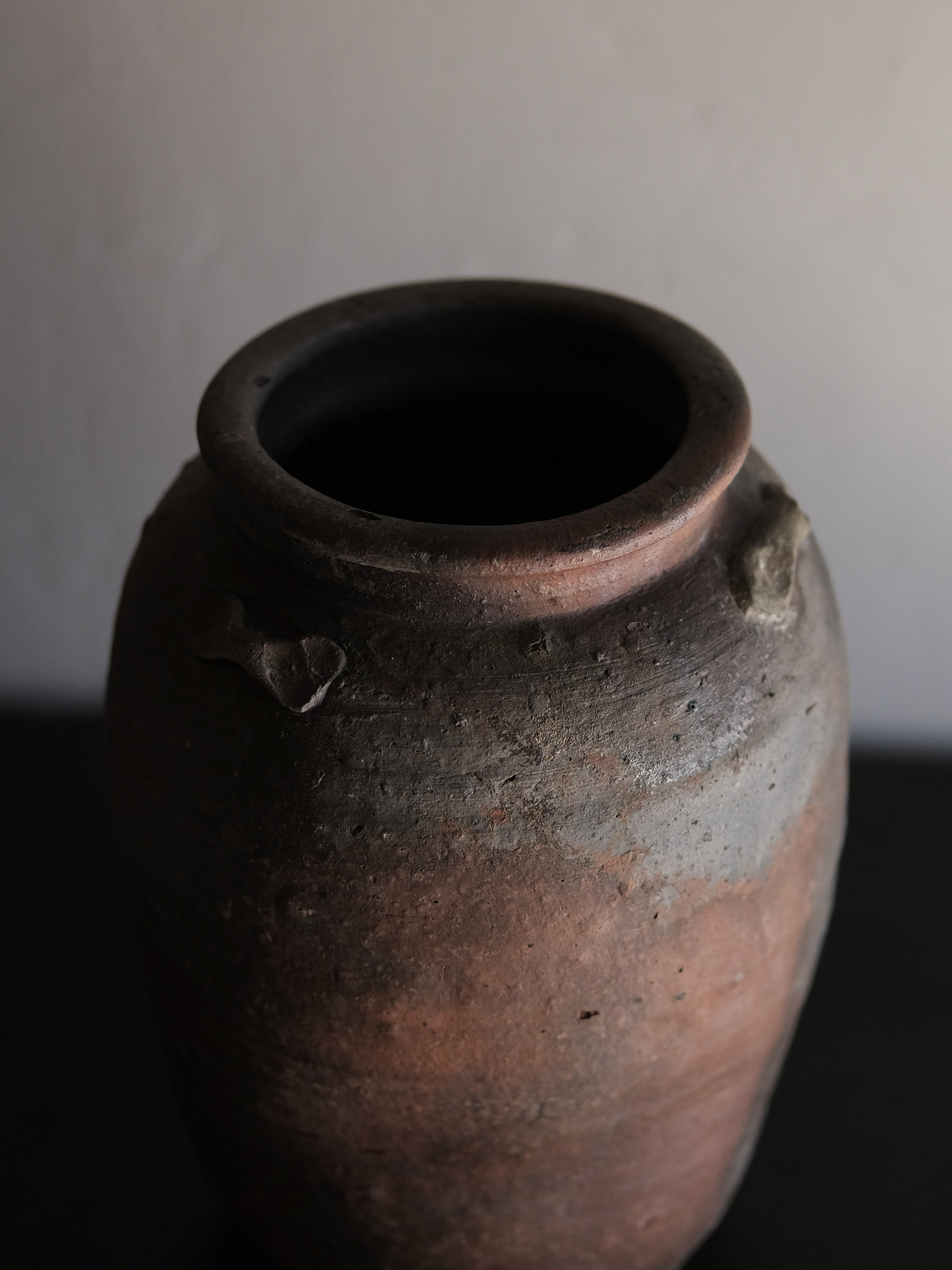
A three-handled jar fired in Bizen around the Azuchi–Momoyama period. The body rises from a flat base in a near-cylindrical form, broadening gently at the shoulder before narrowing into a short neck with a rounded rim. Three small handles are attached at intervals around the shoulder. Broad throwing rings extend from the foot to the mouth, while a slight distortion of the body during firing lends the vessel a sense of weight and vigour. The fired surface shifts irregularly between reddish brown, black and ash grey. Grains of sand and ishihaze—stone inclusions that have burst through the surface during firing—remain embedded in the coarse clay, revealing the raw, unglazed character of Bizen stoneware. The character chikara (力, meaning “strength”) is incised on the body, while the mark nana (七, meaning “seven”) appears on the base.
From the late Muromachi period onwards, Bizen’s large kilns were increasingly fired collectively by several kiln operators. Marks were incised into vessels to identify their respective owners after firing. Earlier examples tend to bear larger marks on prominent areas such as the body, while those of the Momoyama period increasingly feature smaller marks on the base. Bearing marks on both the body and base, this jar occupies an intriguing position in that transition. Originally made as a storage vessel, it nonetheless conveys the formidable presence of the great kilns and their fires during the Momoyama period.
One of the three handles is missing and has been restored in a matching colour. Accompanied by a storage box and a certificate of appraisal issued by the Okayama-ken Bizenyaki Touyuukai (Okayama Prefecture Bizen Ware Pottery Association).
- The description will be updated as our research progresses.
- Images may differ in color from the actual products.
- Please read "Terms" when purchasing.


