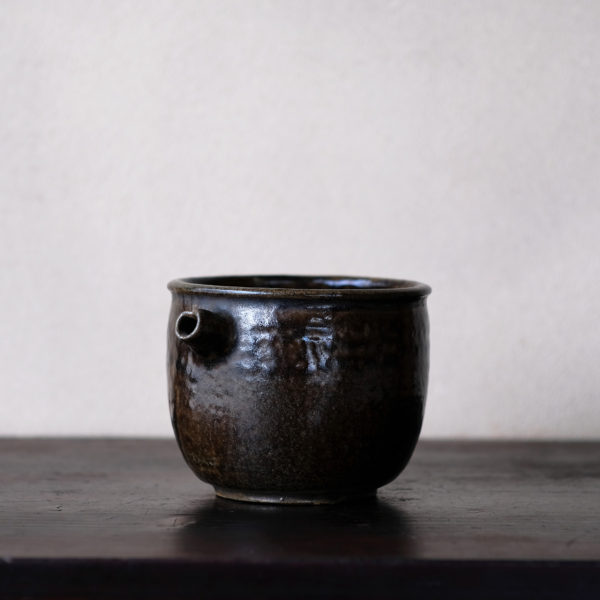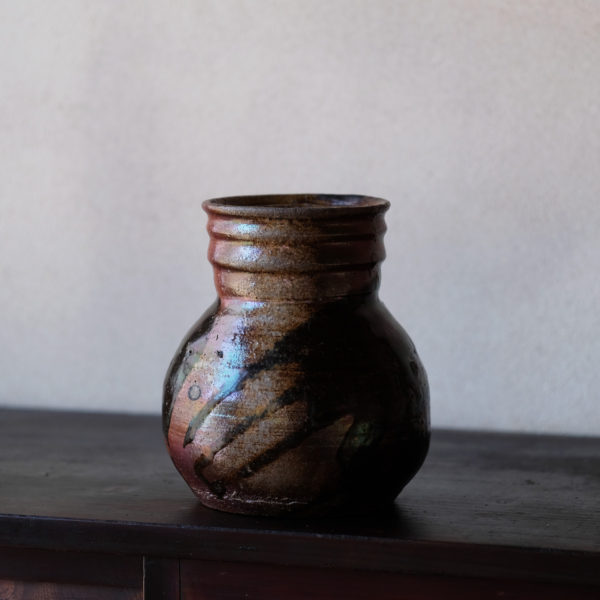
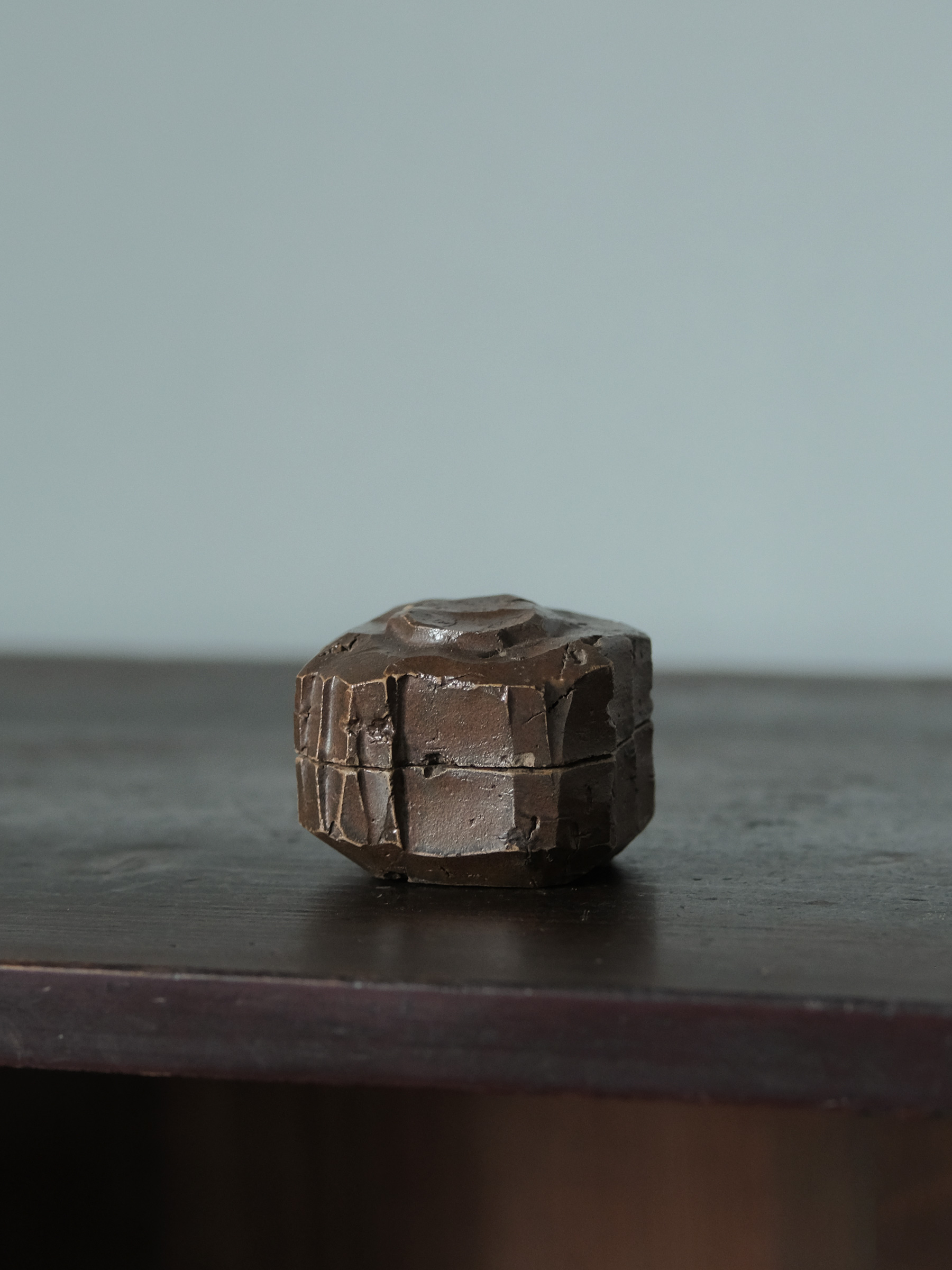
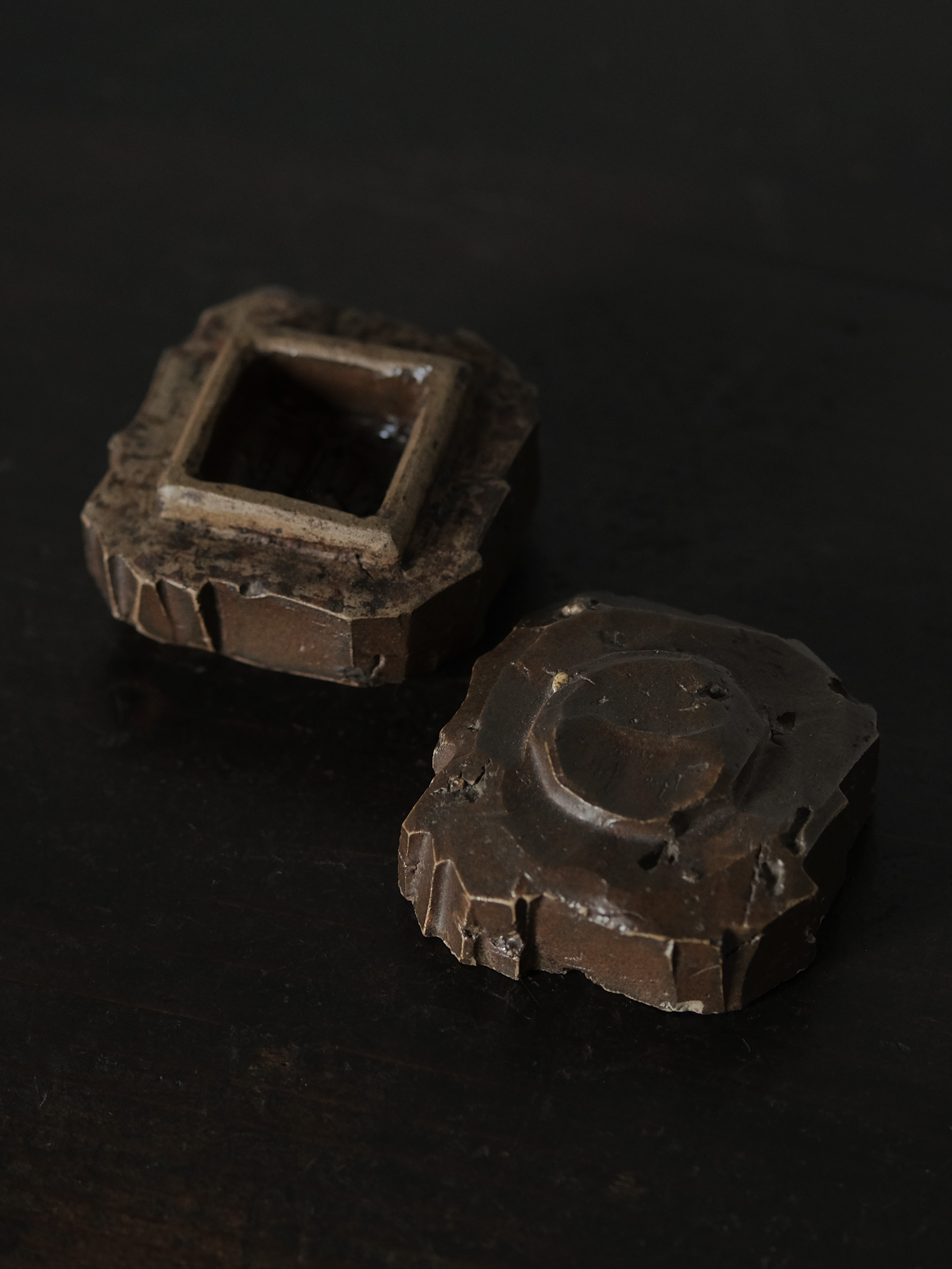
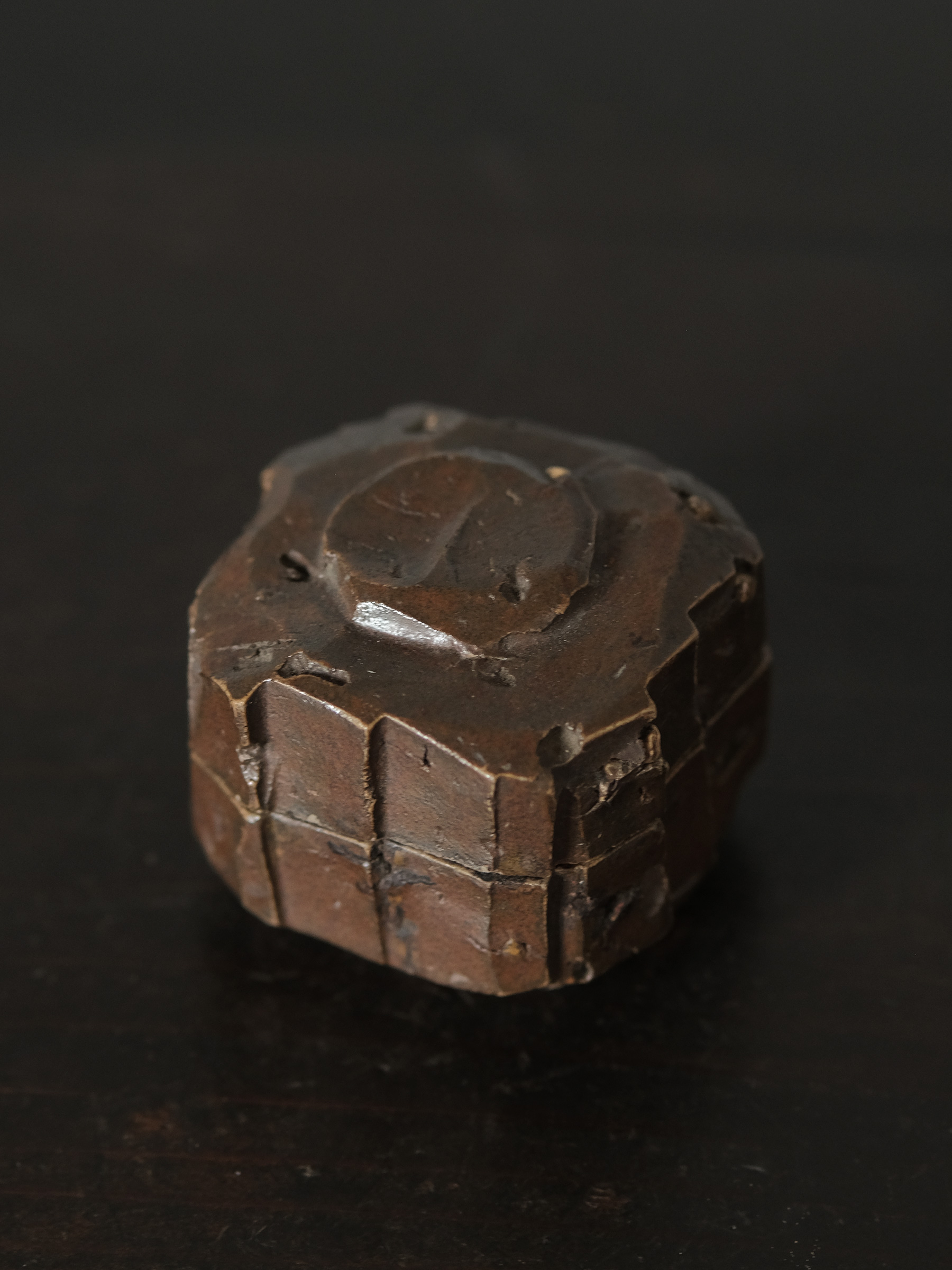
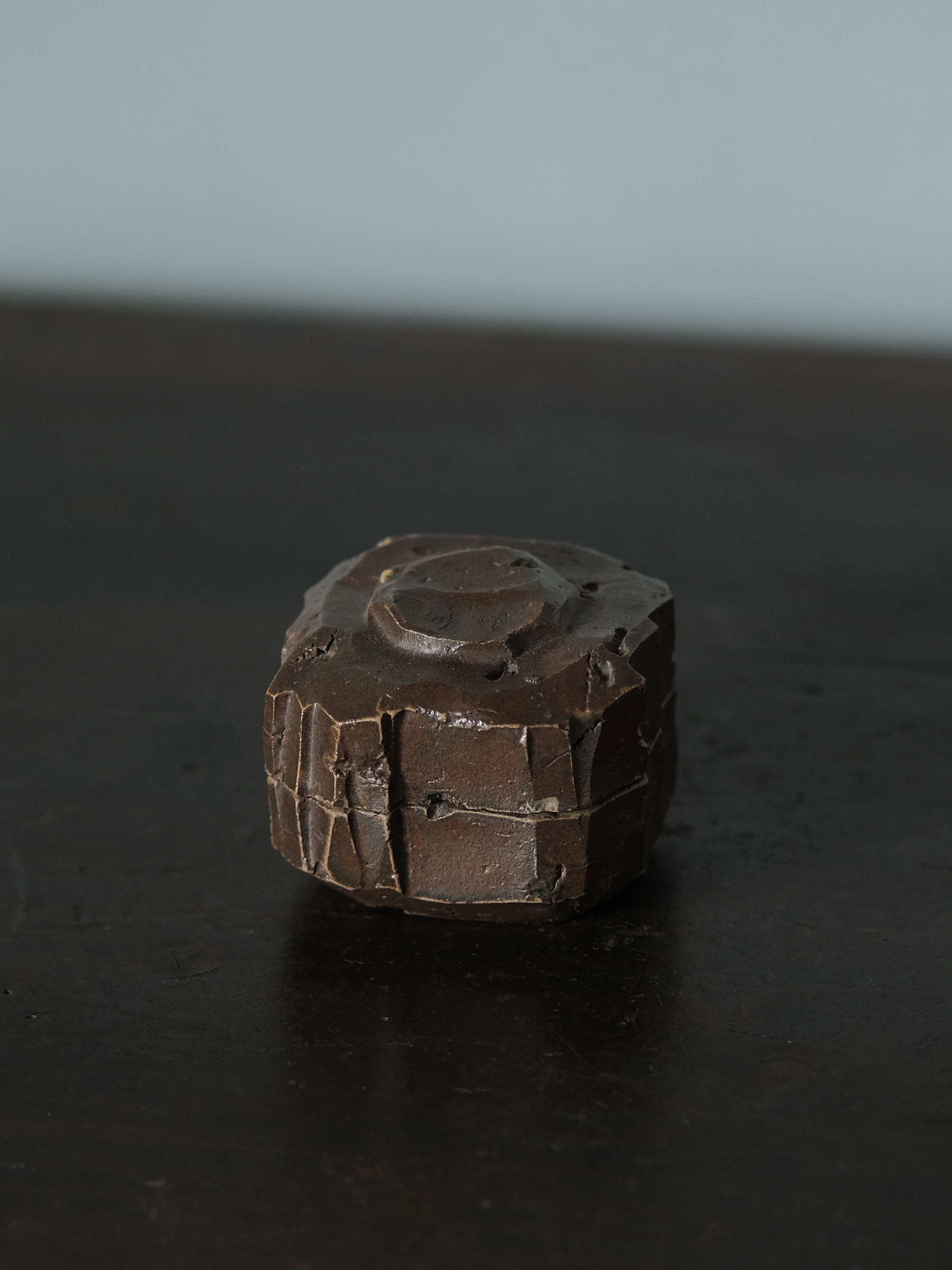
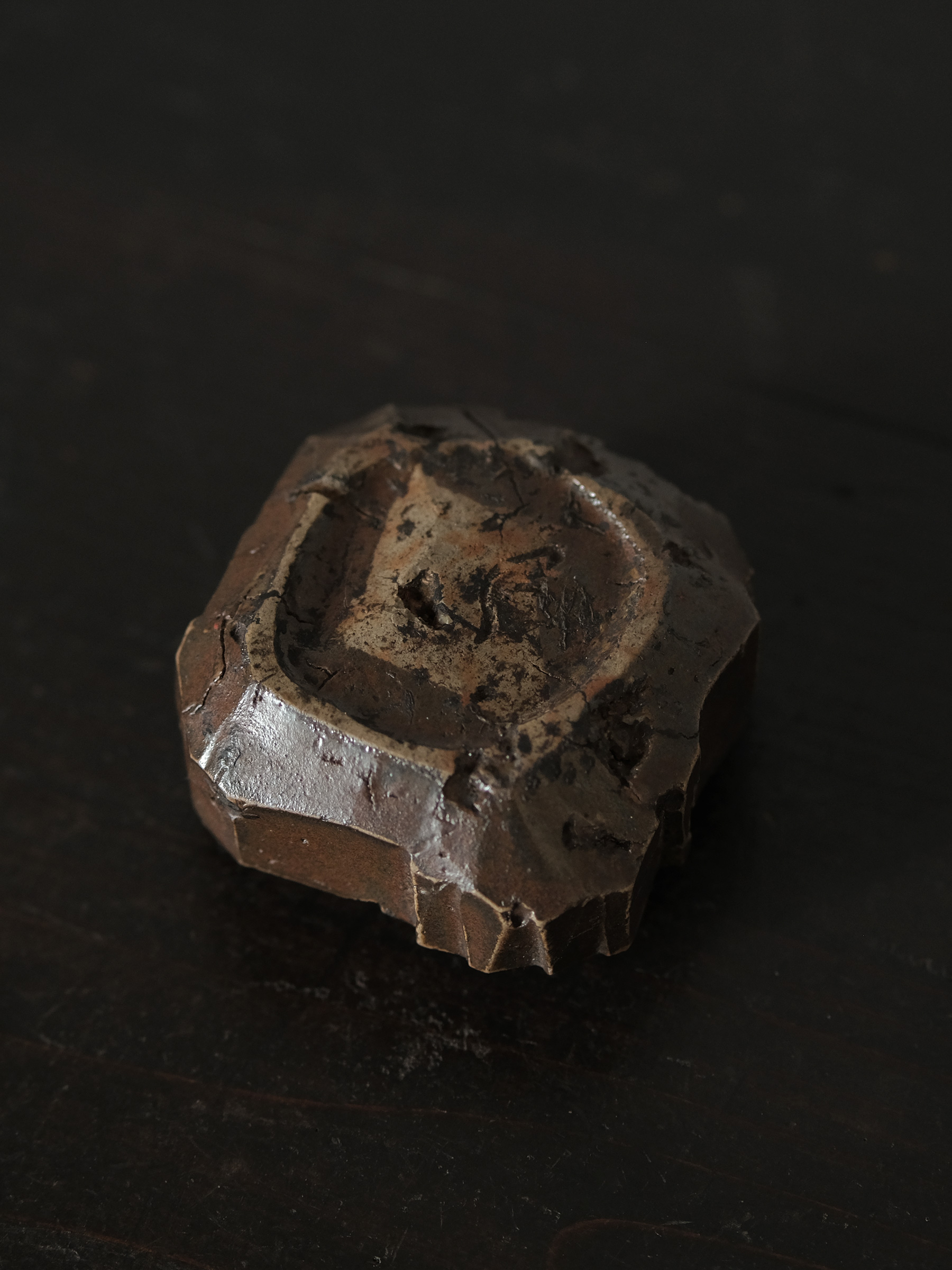
Tamba Ware Incense Container with Temple Stone Design
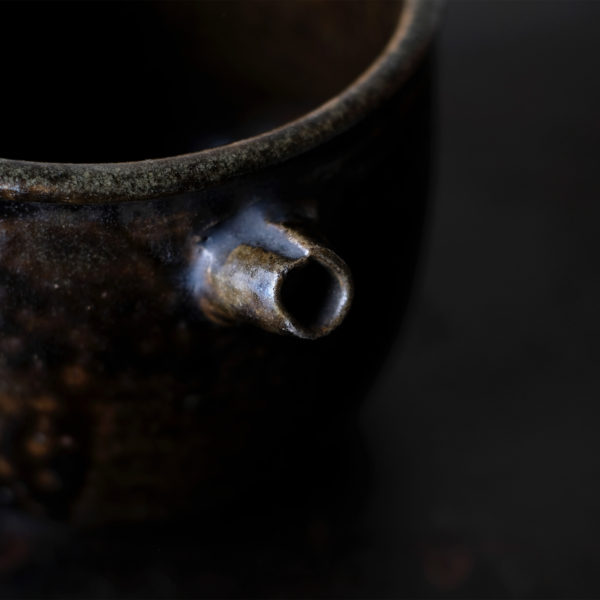
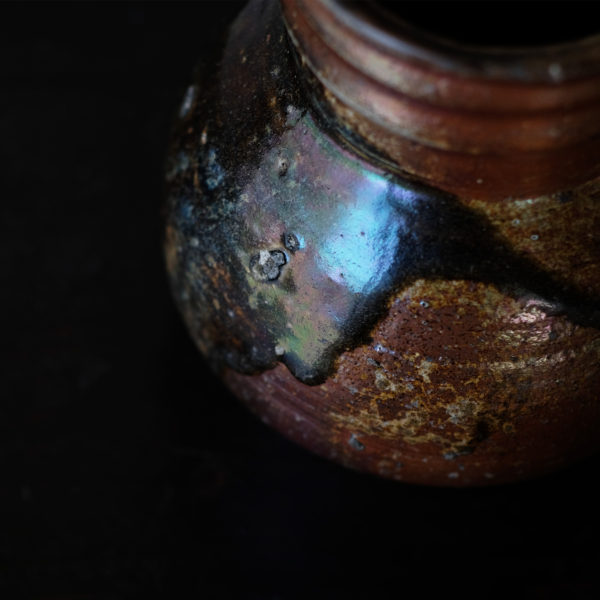
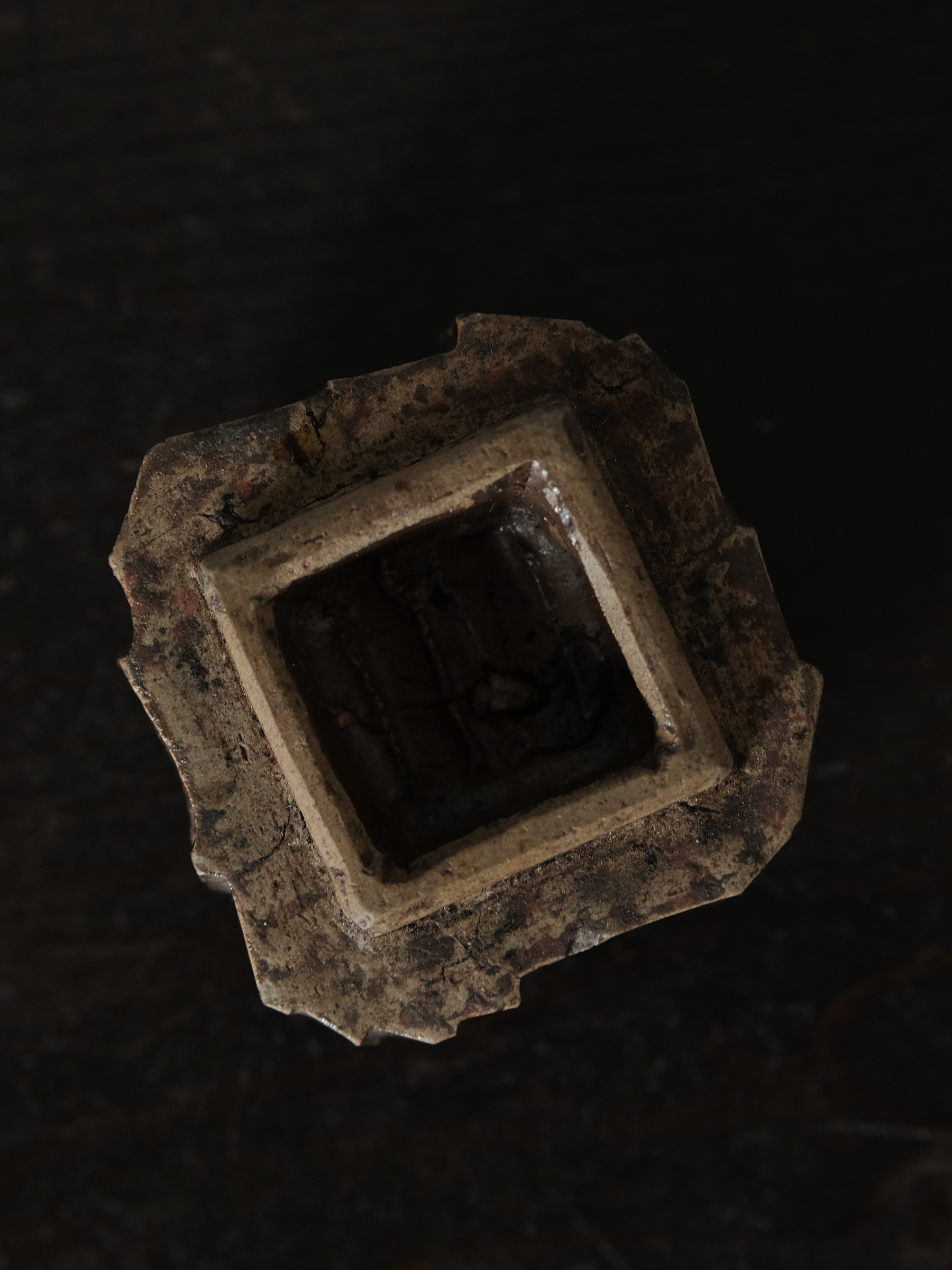
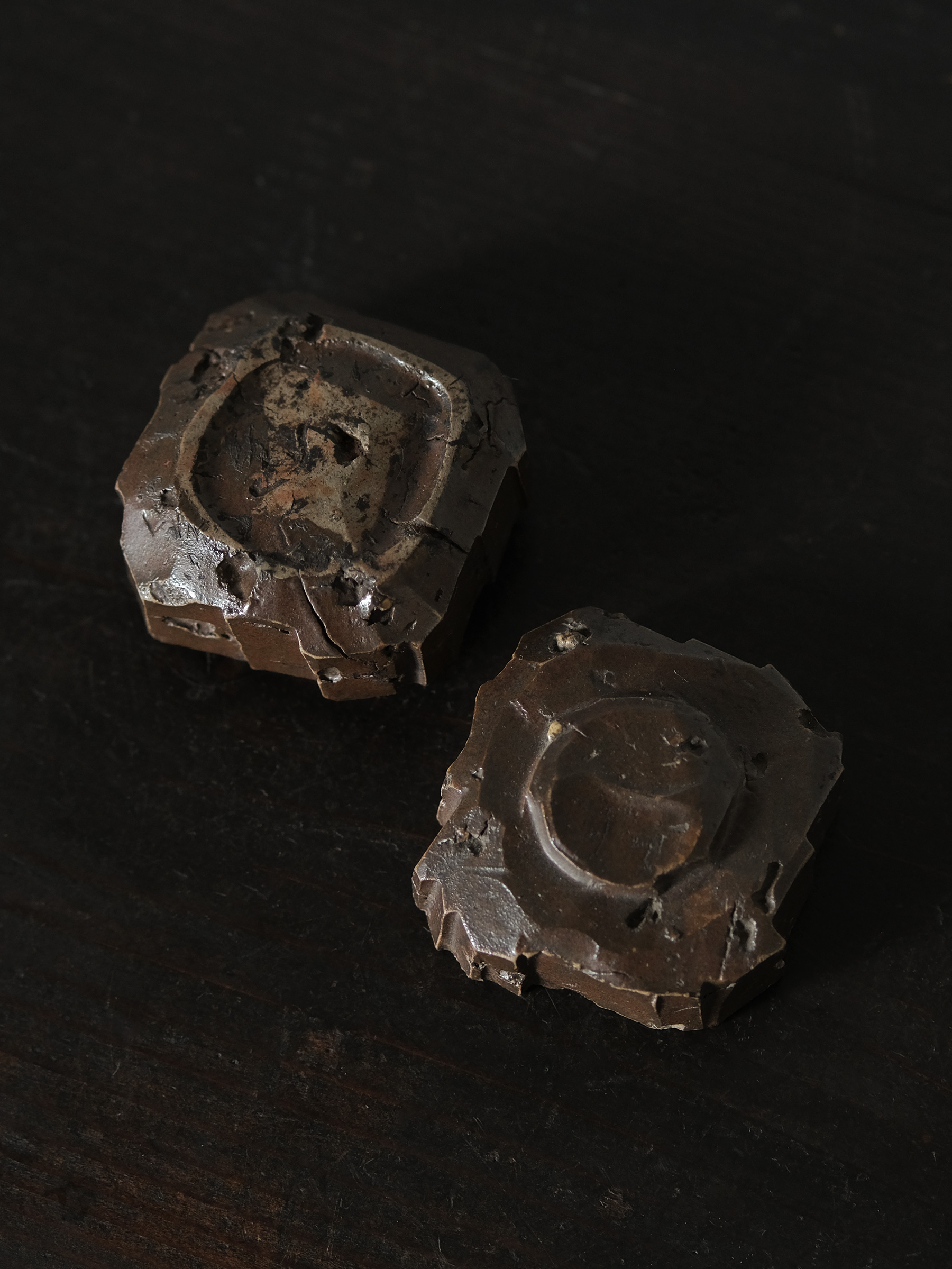
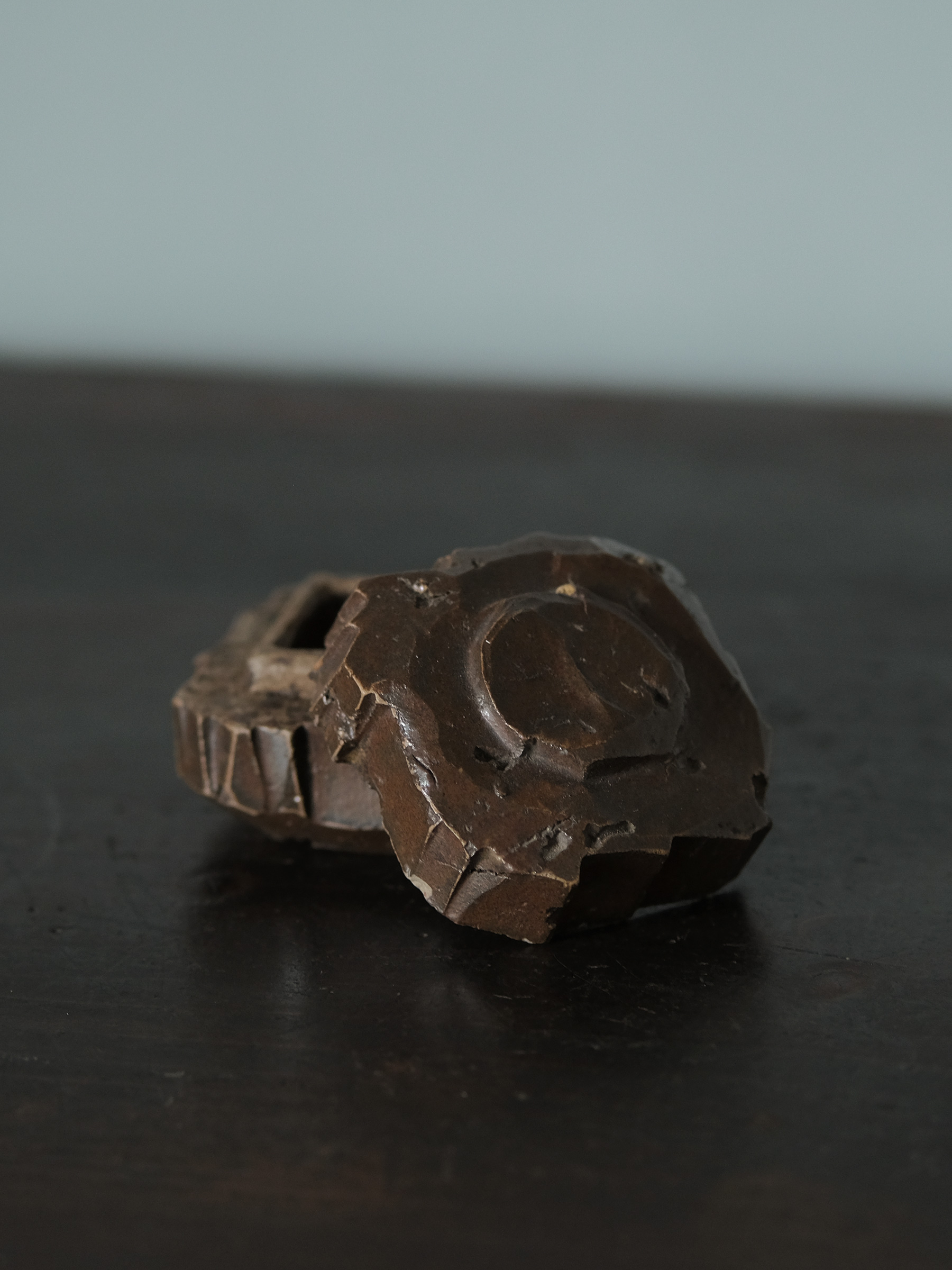
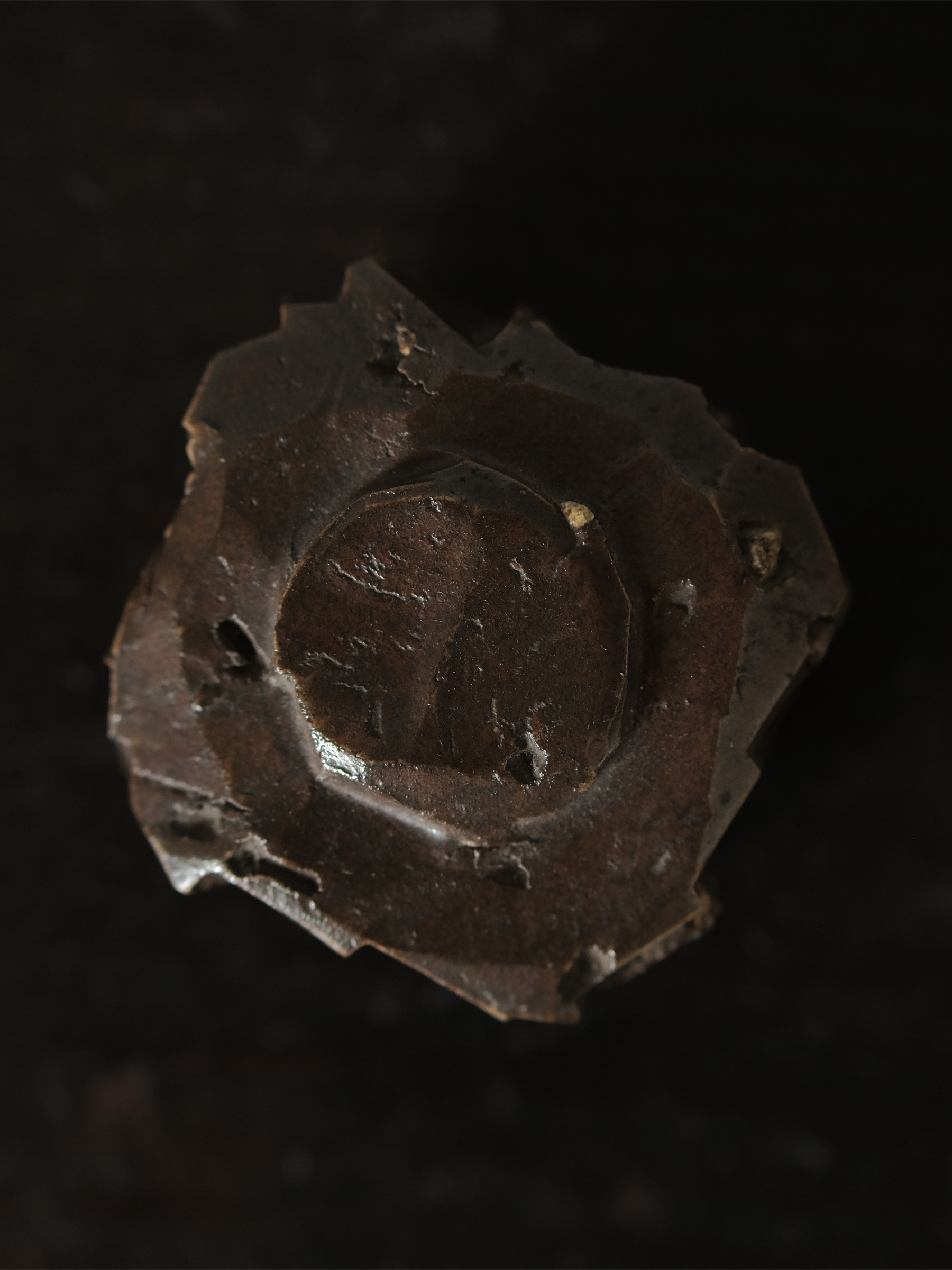
A Kogo incense container of Old Tamba ware, fired in the early to mid-Edo period. The form is modelled on the foundation stones supporting a temple Daigaran (a large monastic complex), and is thought to take its cue from garan-ishi incense containers produced in Iga ware. The sides are roughly pared away with a spatula, while the lid is shaped into a simple circular dome. An iron-rich slip known as Akadobe is applied overall, and the base is intentionally left unglazed, exposing the clay body and accentuating the robust, earthy character associated with Tamba.
Following the Imjin War, Korean-style wheel-throwing and firing techniques, along with the use of climbing kilns, are said to have been introduced to the Tamba kilns, leading to marked improvements in both productivity and quality. While the chance effects of medieval Old Tamba’s natural ash glazes gradually receded, the period saw the emergence of works in which technique and design were consciously integrated, including tea wares reputedly supervised by the tea master Kobori Enshū. Even within this context—when water jars and tea caddies were more commonly produced—incense containers remain rare. This example, with sculptural presence, condenses the weight and stability of architectural foundation stones into a small, self-contained form, embodying the strength distinctive to Old Tamba.
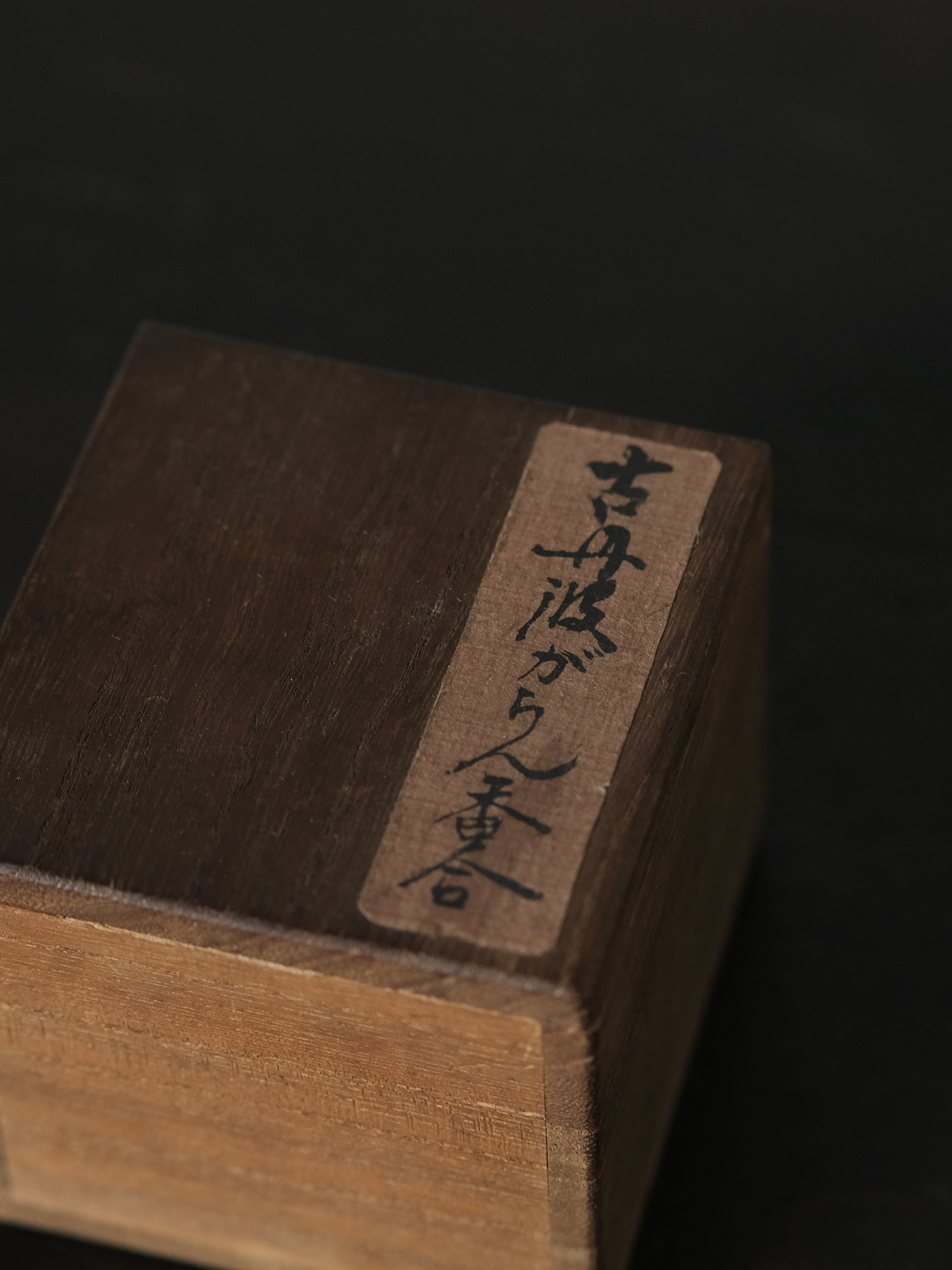
The condition is exceptionally fine, with no noticeable flaws. Housed in an old wooden box inscribed “Old Tamba Garan Incense Container.”
- The description will be updated as our research progresses.
- Images may differ in color from the actual products.
- Please read "Terms" when purchasing.