



Aizu-Hongō Ware Saiseki-de Type Bowl with Underglaze Iron Arabesque Design
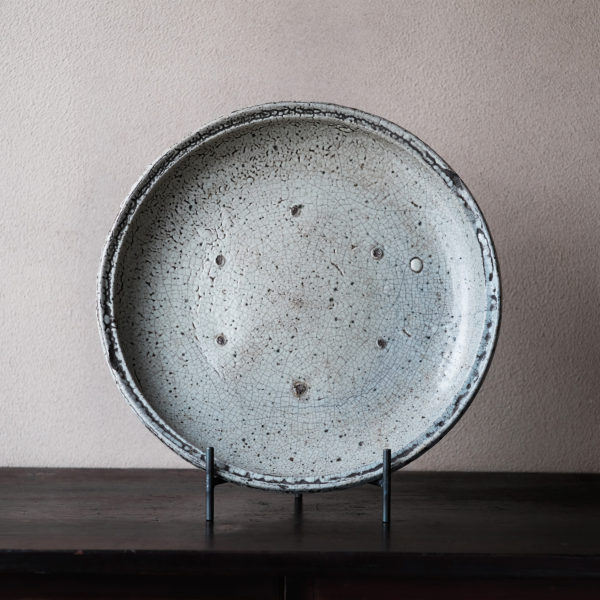
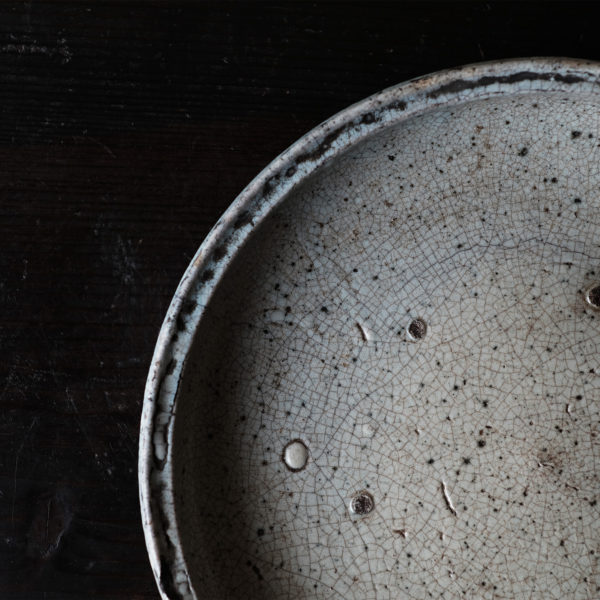
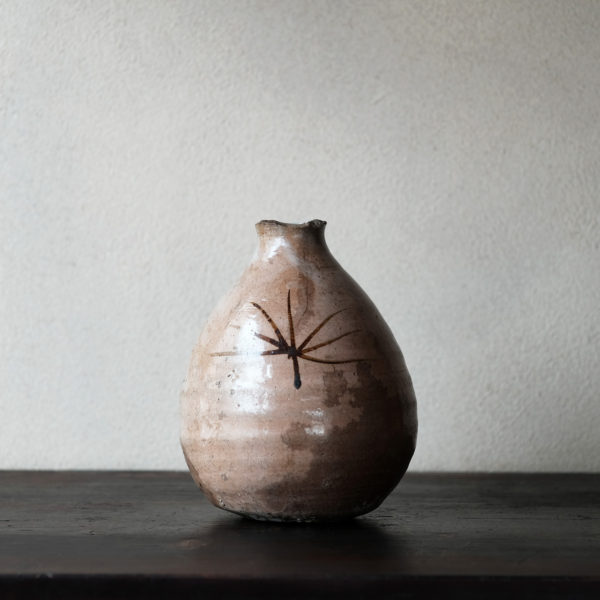
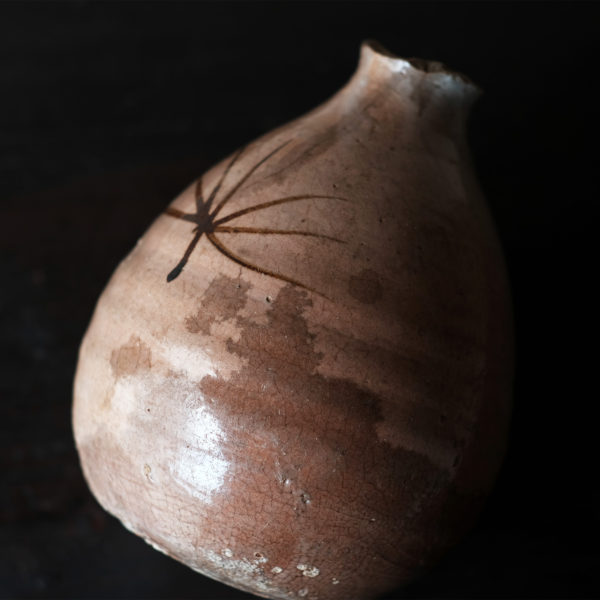
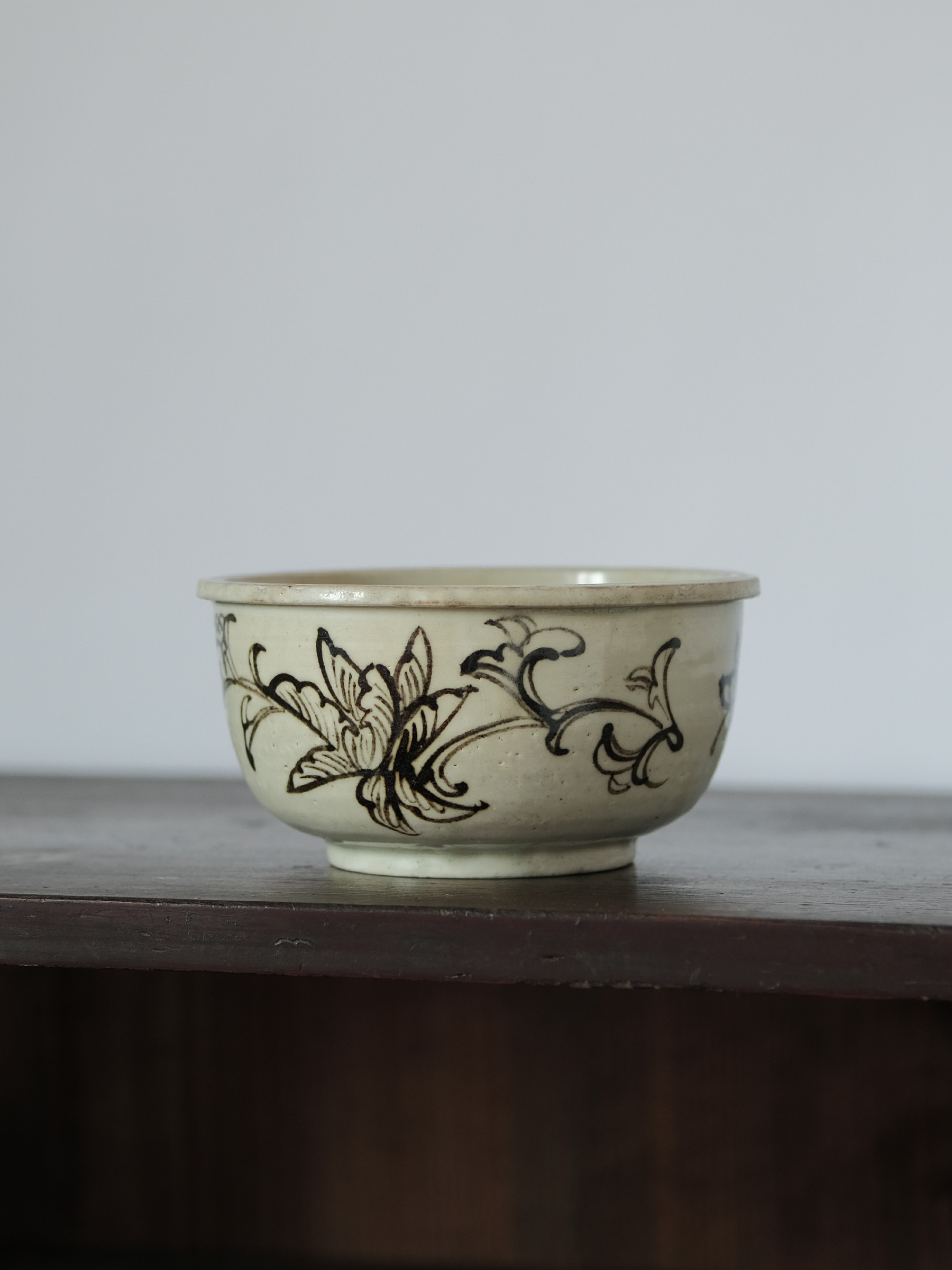
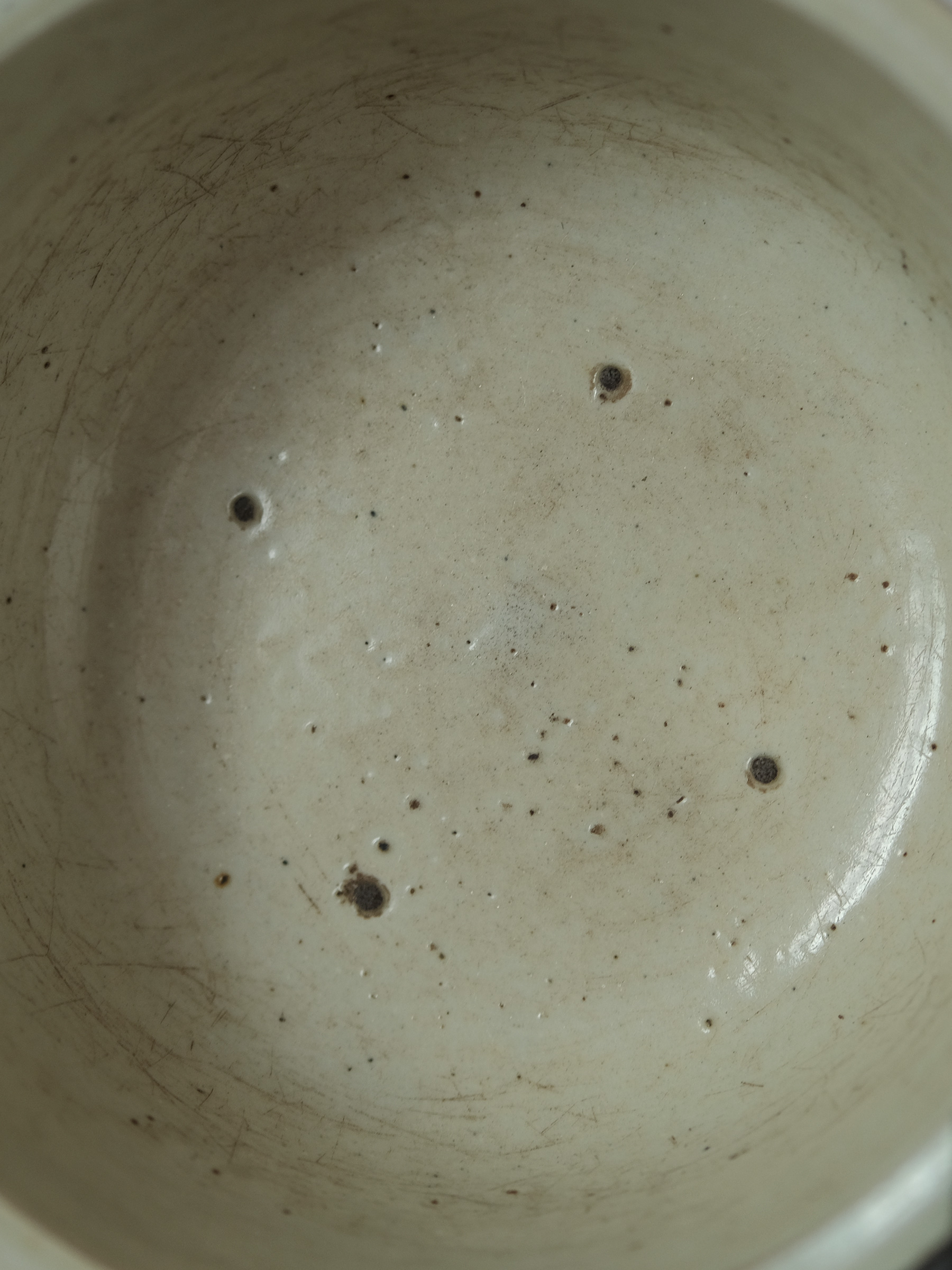
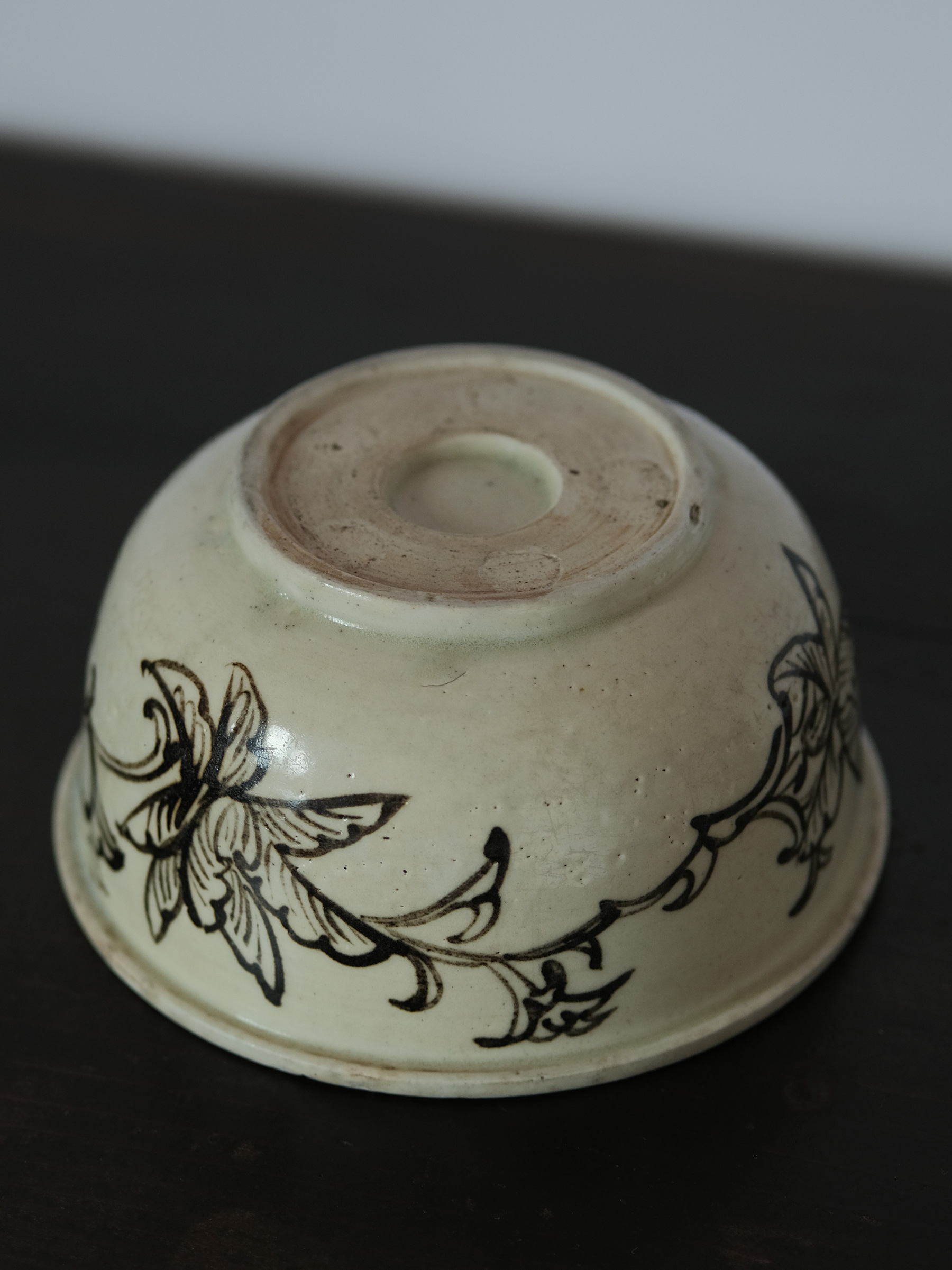
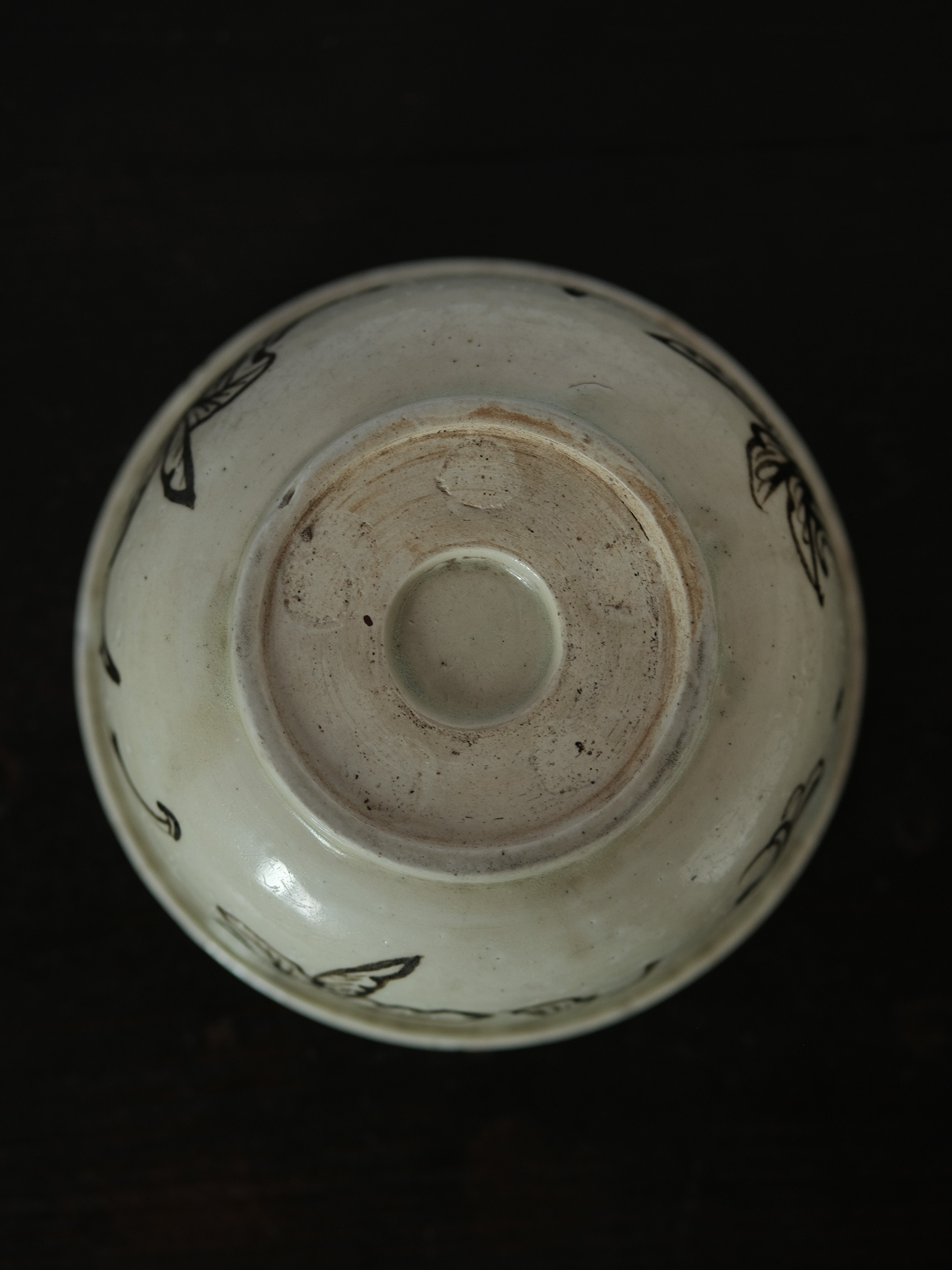
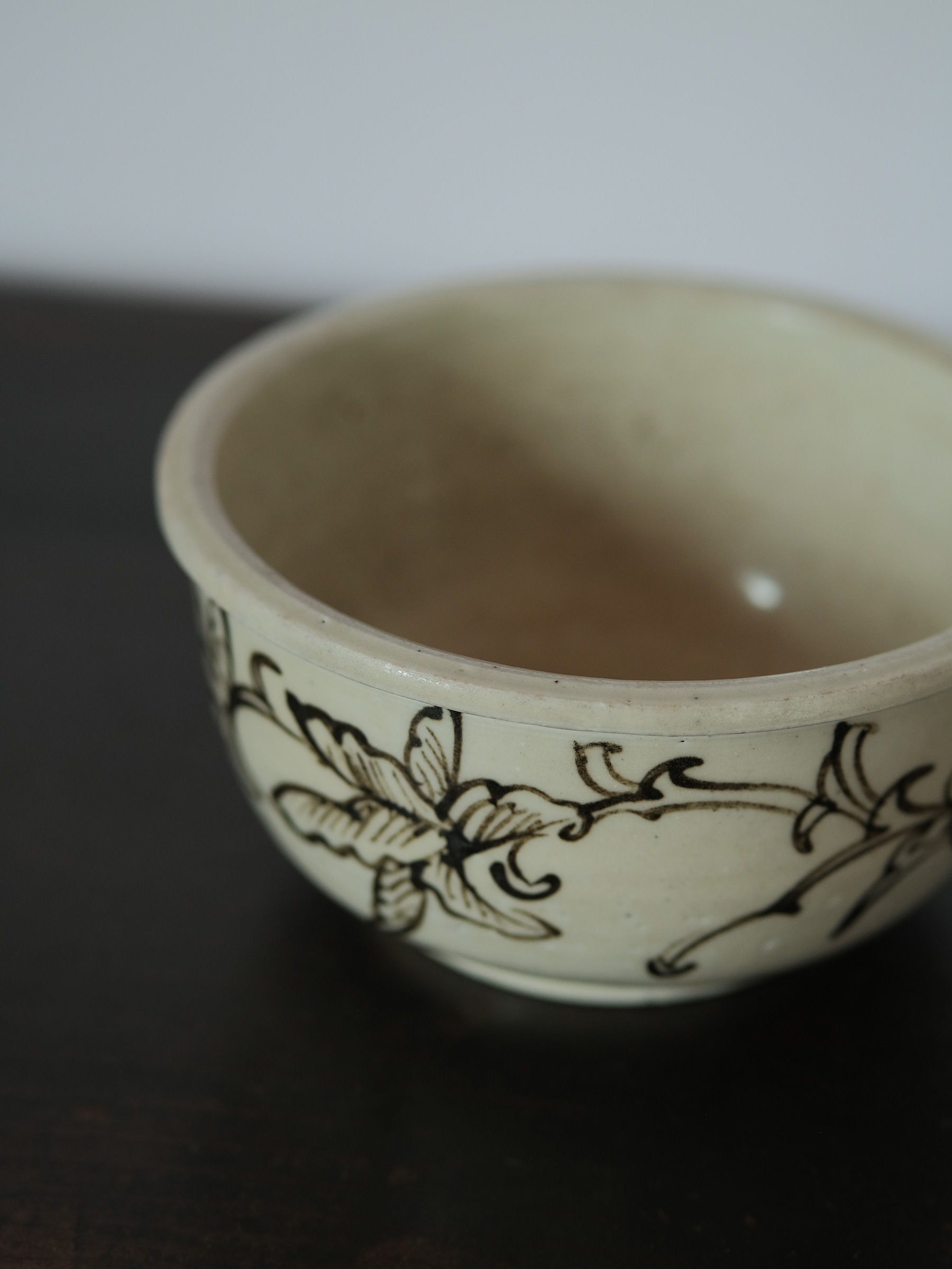
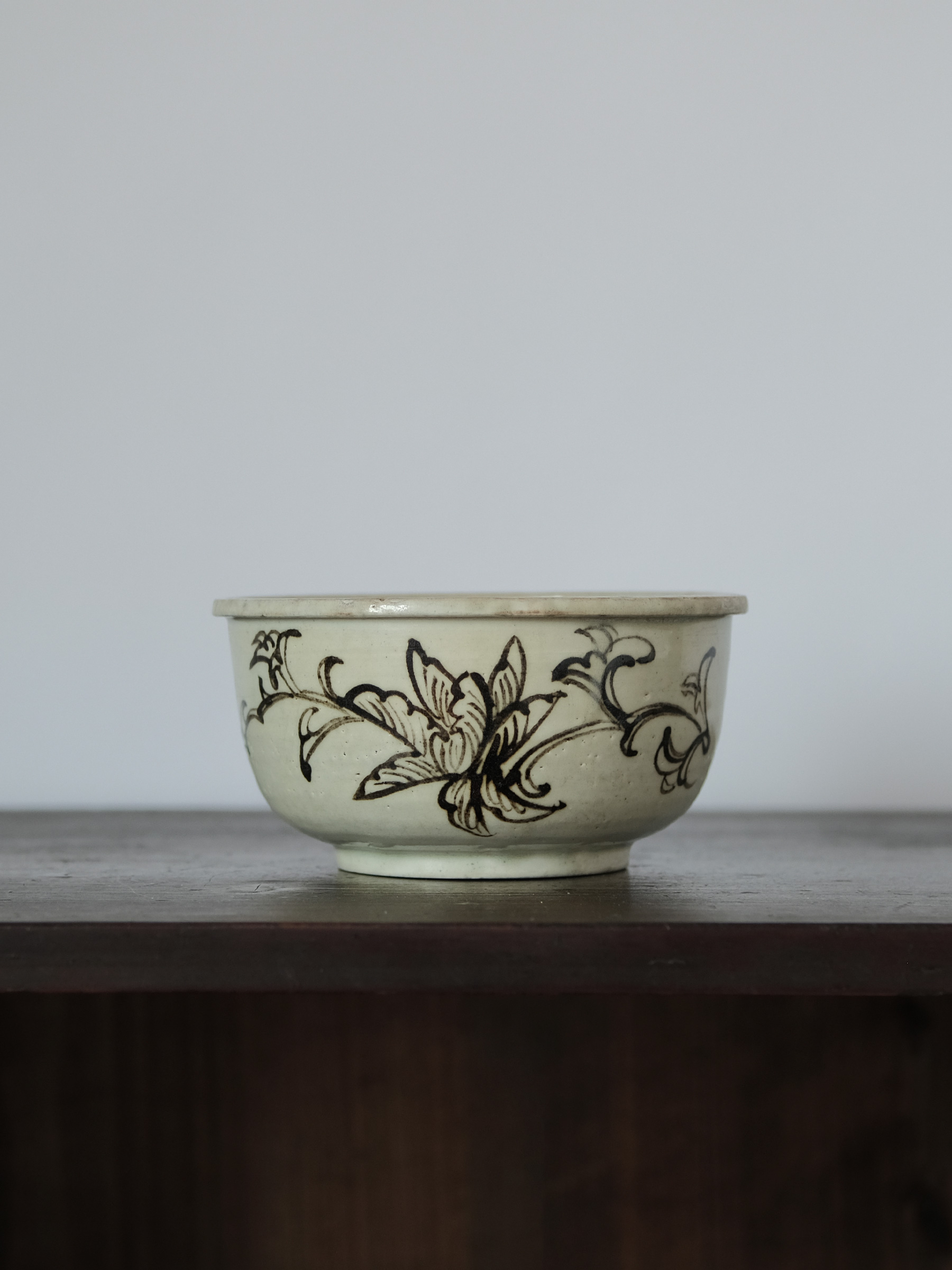
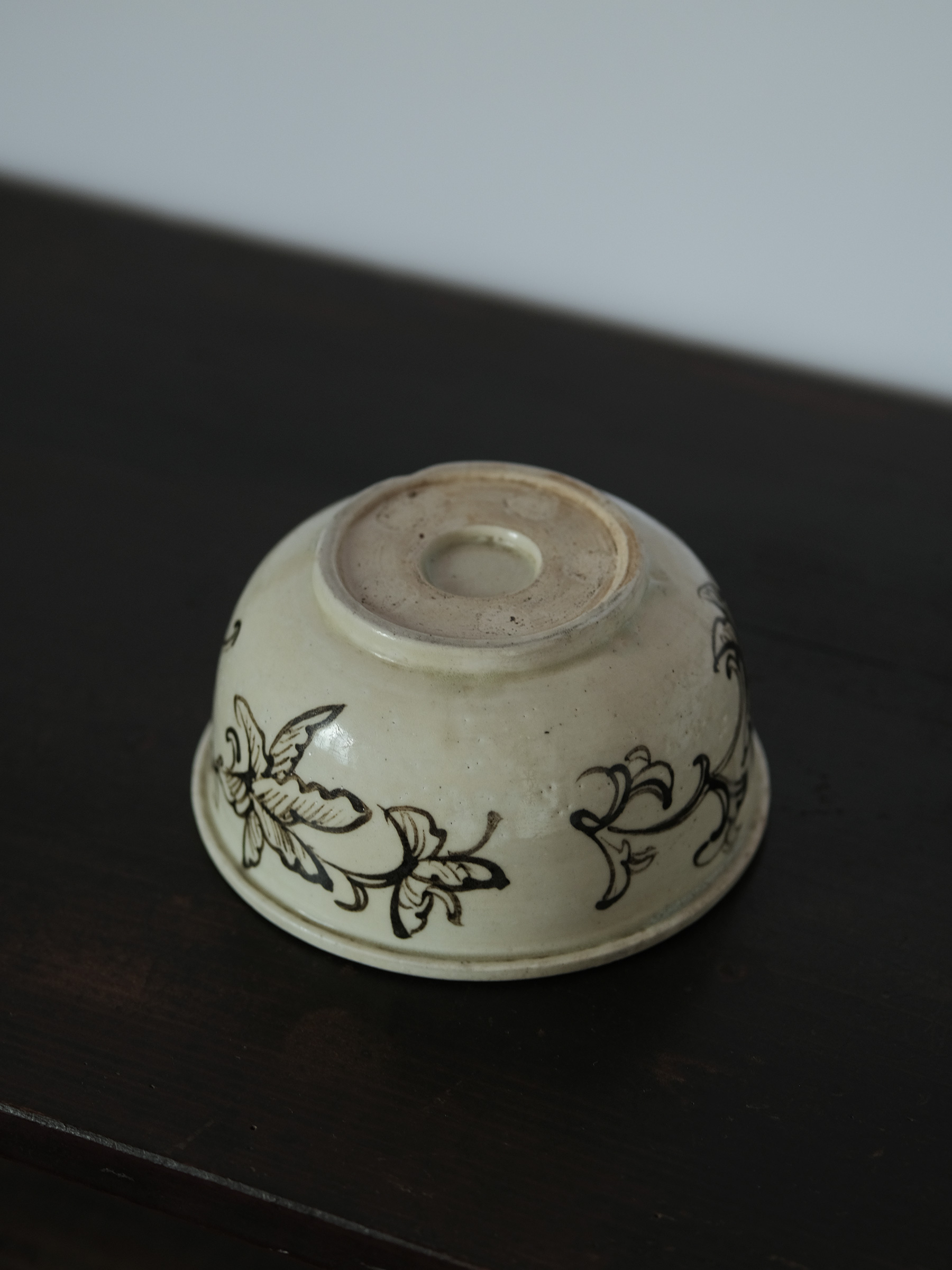
A bowl of Aizu-Hongō ware, fired during the late Edo to Meiji period. The piece belongs to the group known as Saiseki-de—wares fired in pursuit of a porcelain-like body through the incorporation of crushed stone—and was likely intended for serving soups or other everyday dishes. Four small spur marks remain in the well, while five larger circular firing marks are visible on the janome footring. The exterior is freely decorated with an iron-painted arabesque scroll, executed in broad, confident brushstrokes.
The use of iron painting on a white porcelain-like ground is relatively uncommon in Japanese ceramics. Combined with the fluidity of the brushwork, it recalls the understated character of iron-painted wares from the Joseon dynasty. The bowl reflects both the aspiration towards porcelain and the rustic vitality that persisted through the hand of the potter, giving rise to a work that is distinctly expressive of the ceramic traditions of Japan’s Tohoku (north-eastern) wares.
Light wear is visible in the well, and the rim bears several shallow, minor chips. Otherwise, there are no notable defects, and the overall condition is good.
- The description will be updated as our research progresses.
- Images may differ in color from the actual products.
- Please read "Terms" when purchasing.