
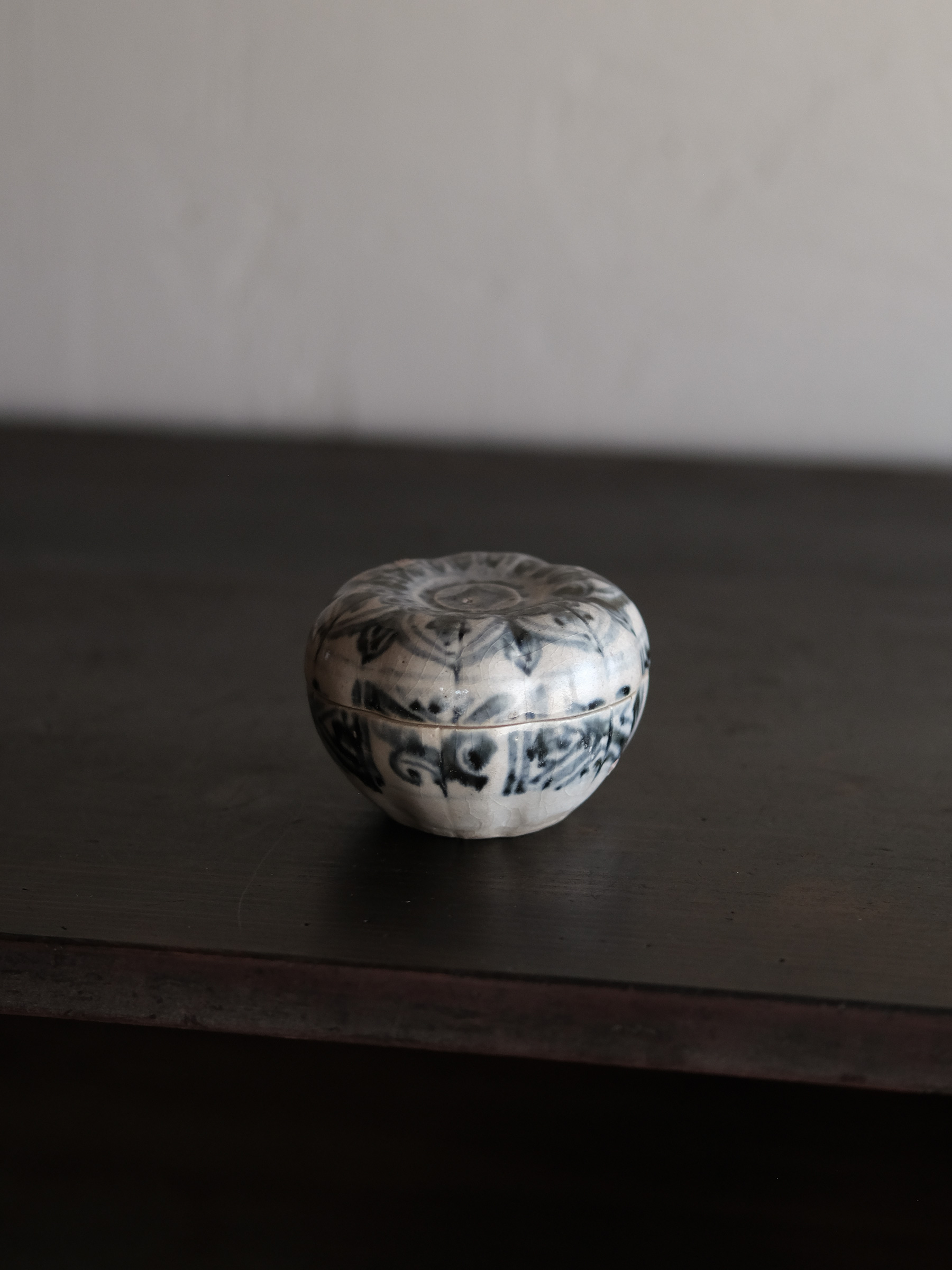
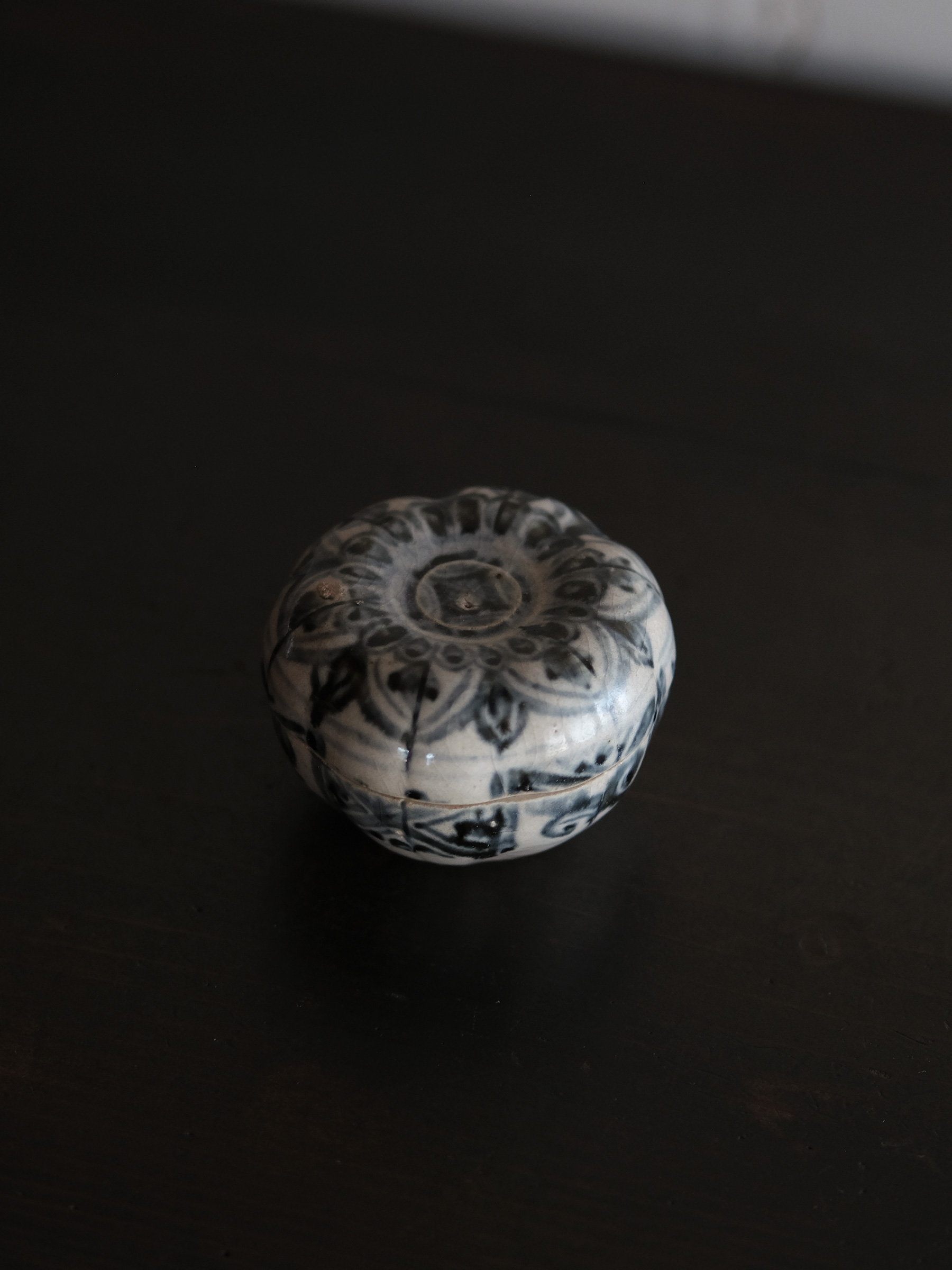
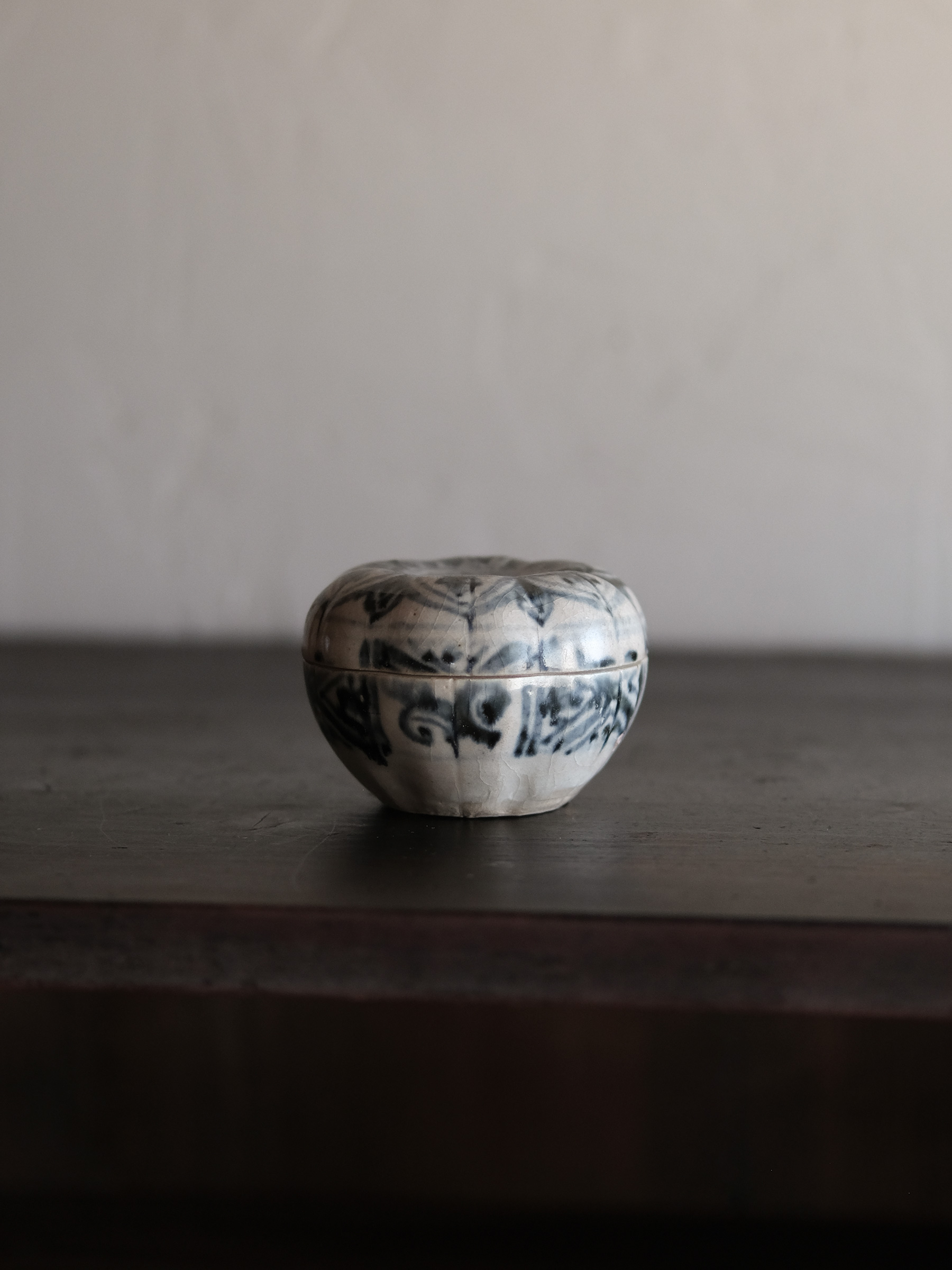
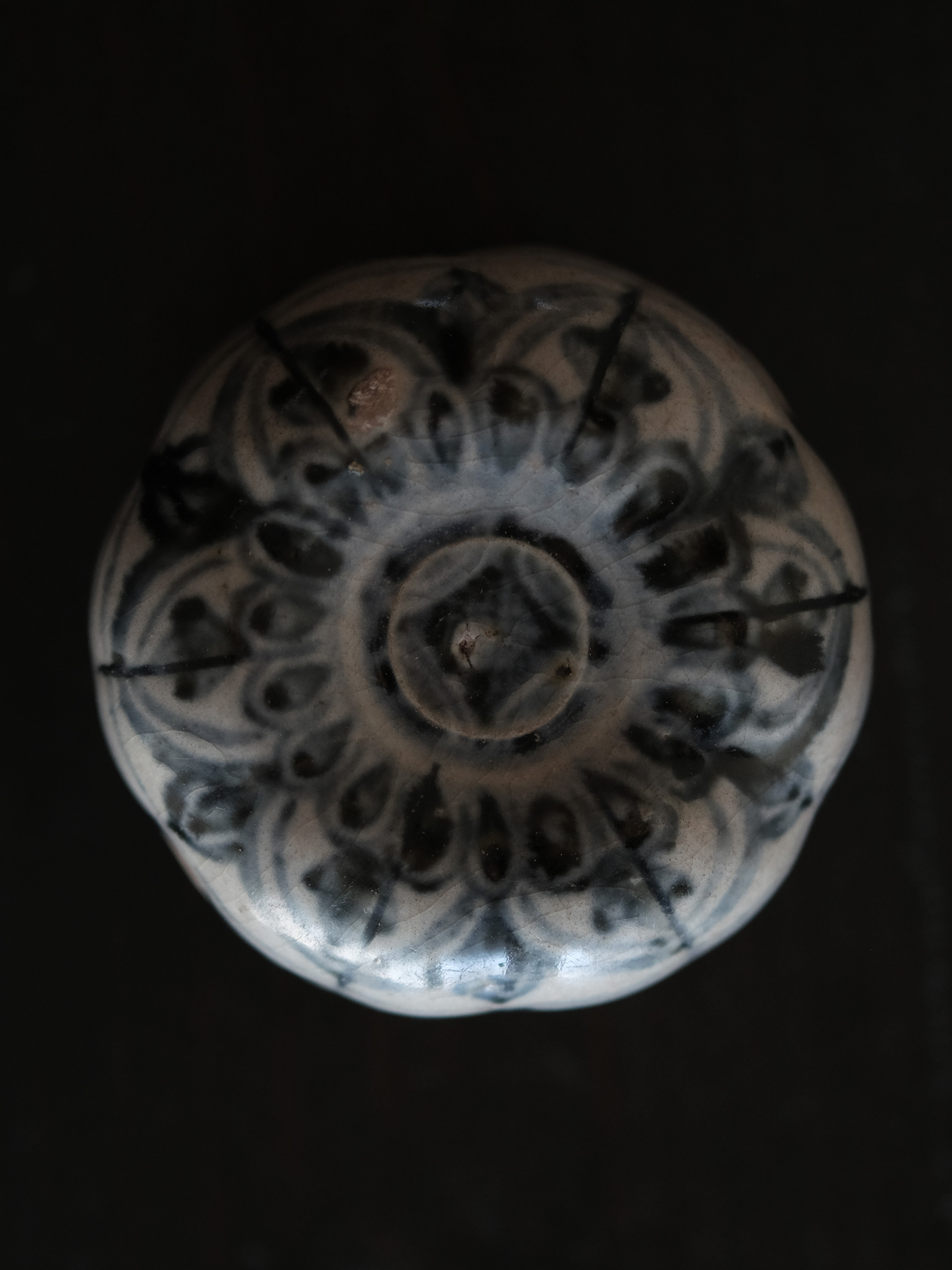
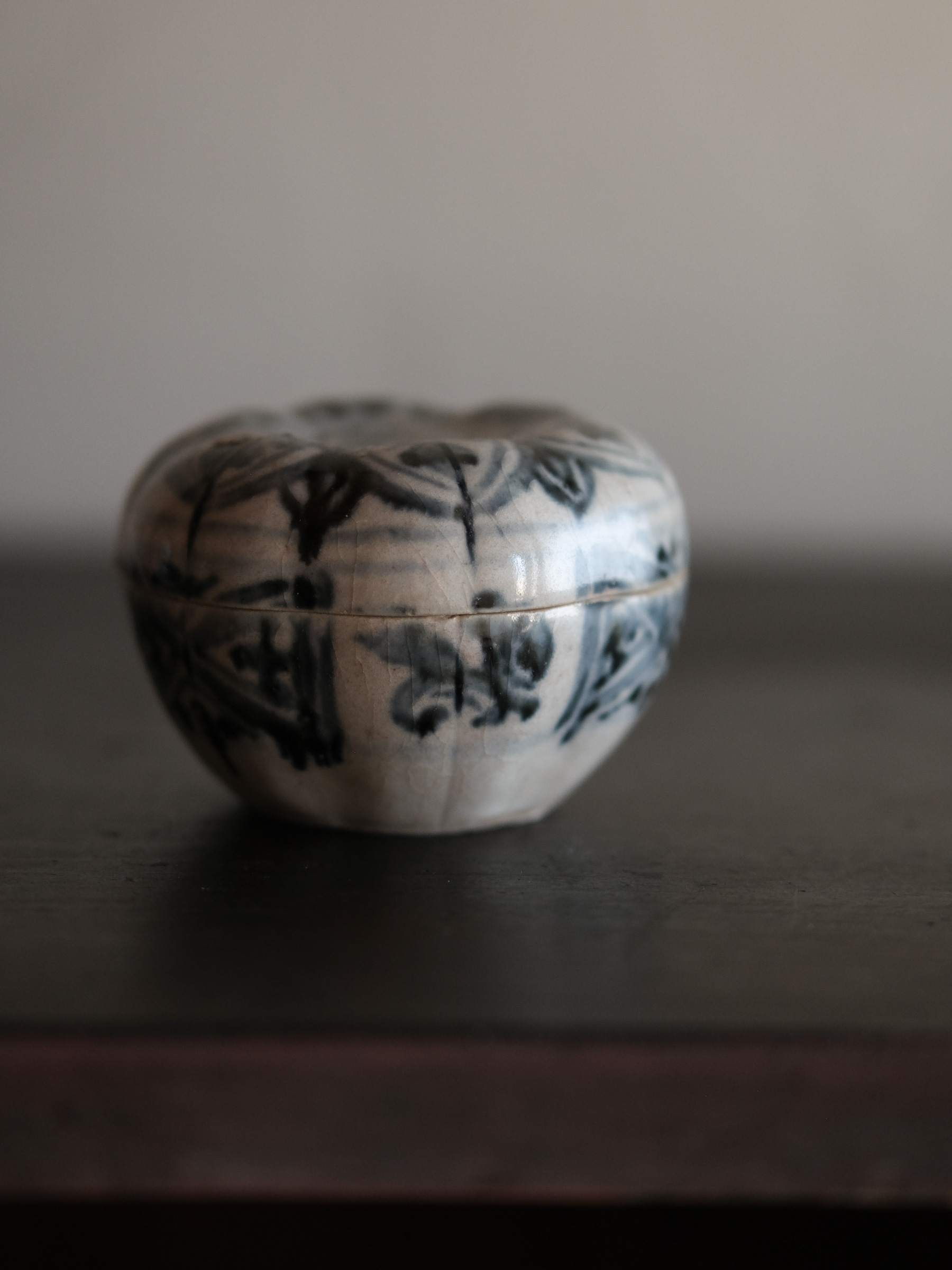
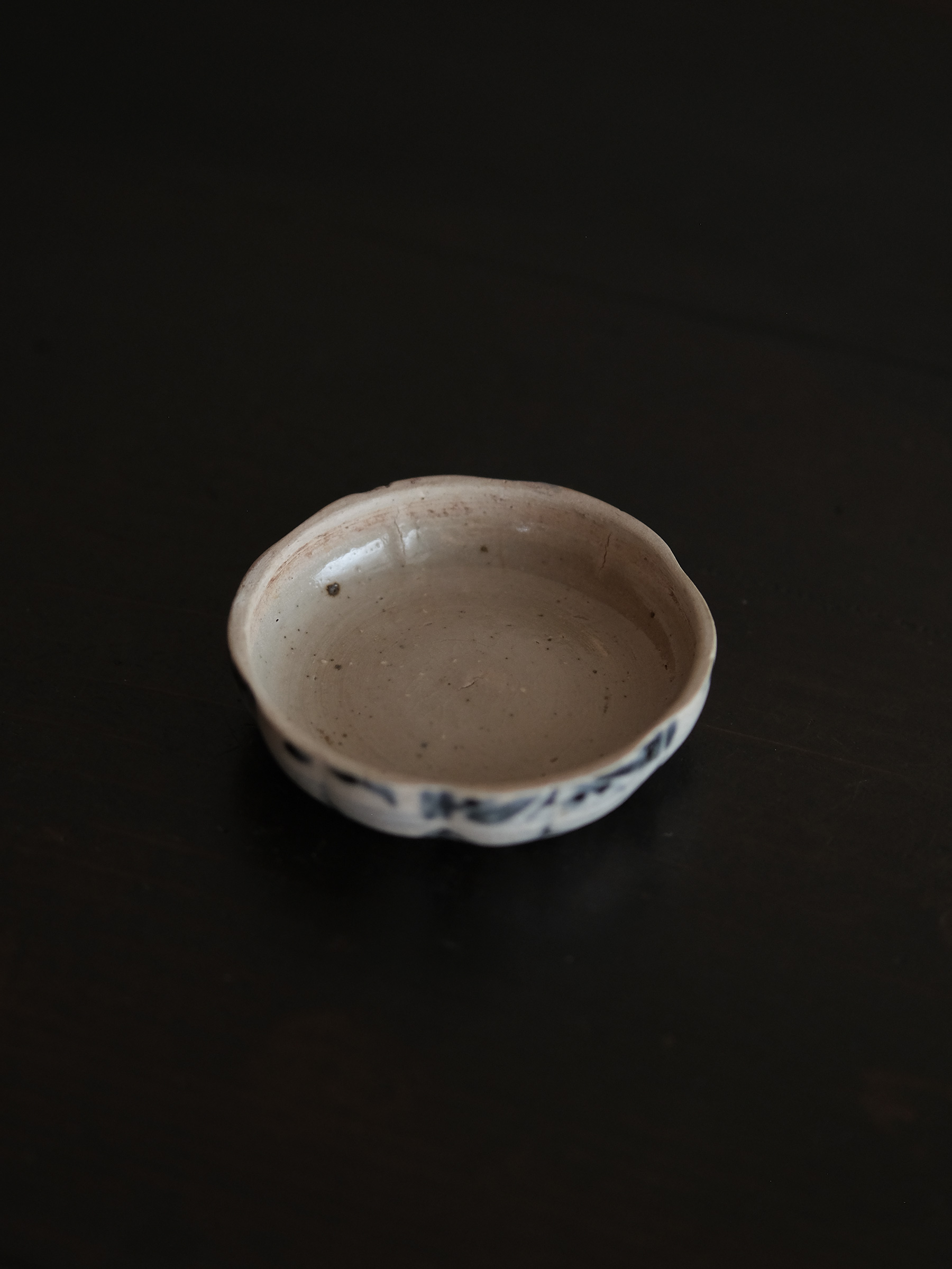
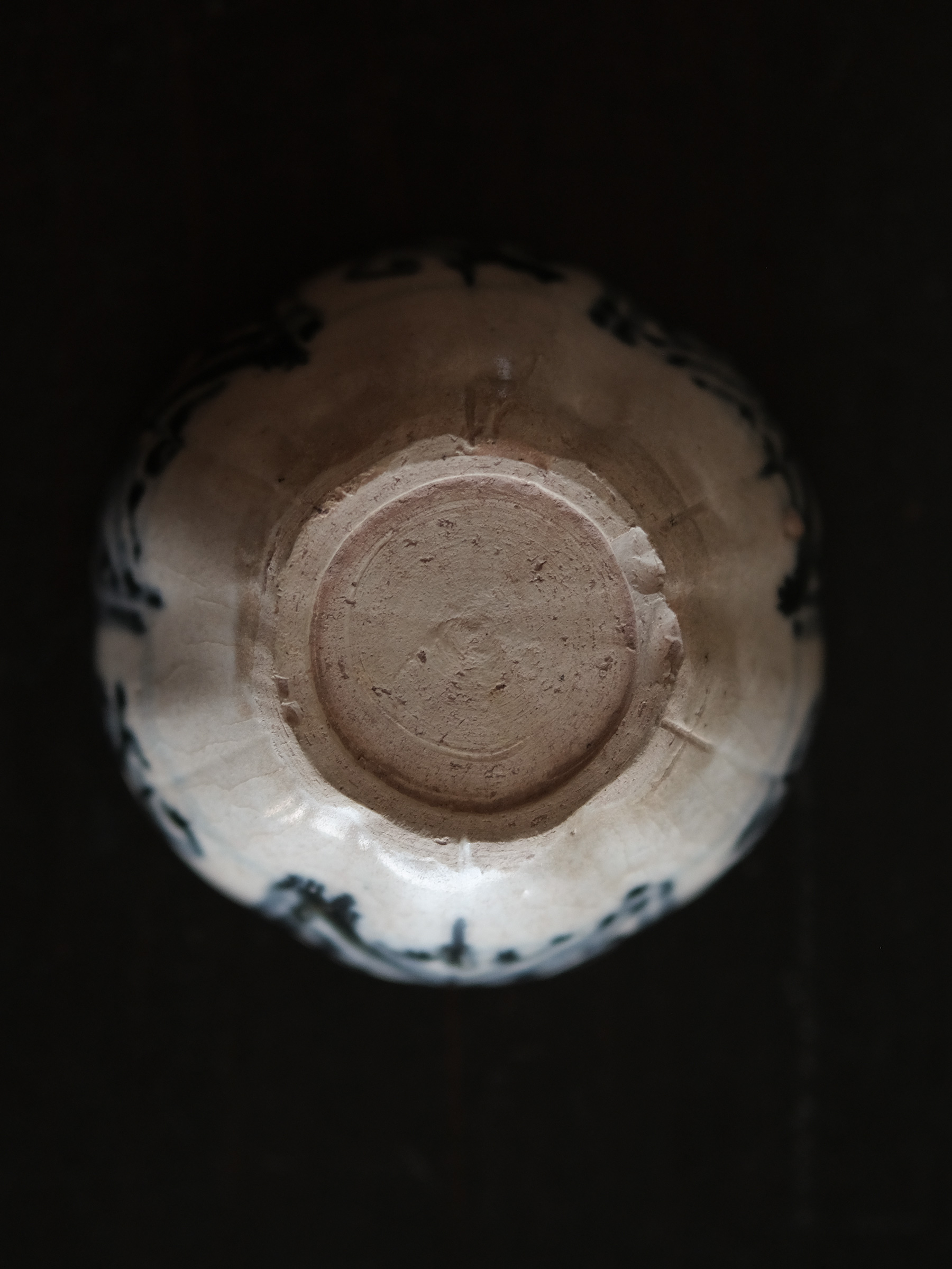
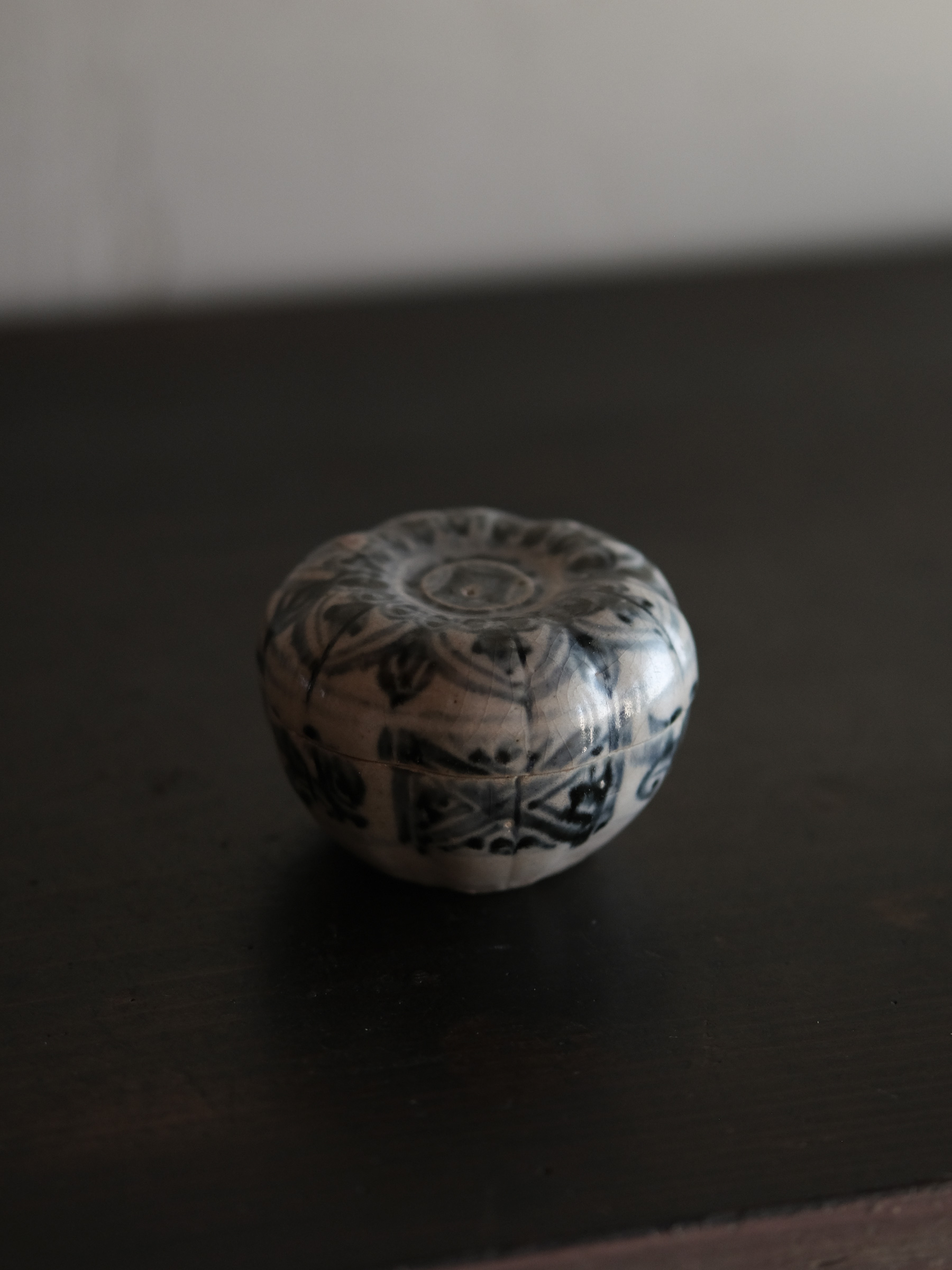
Later Lê Dynasty Blue and White Lidded Box with Floral and Scroll Designs
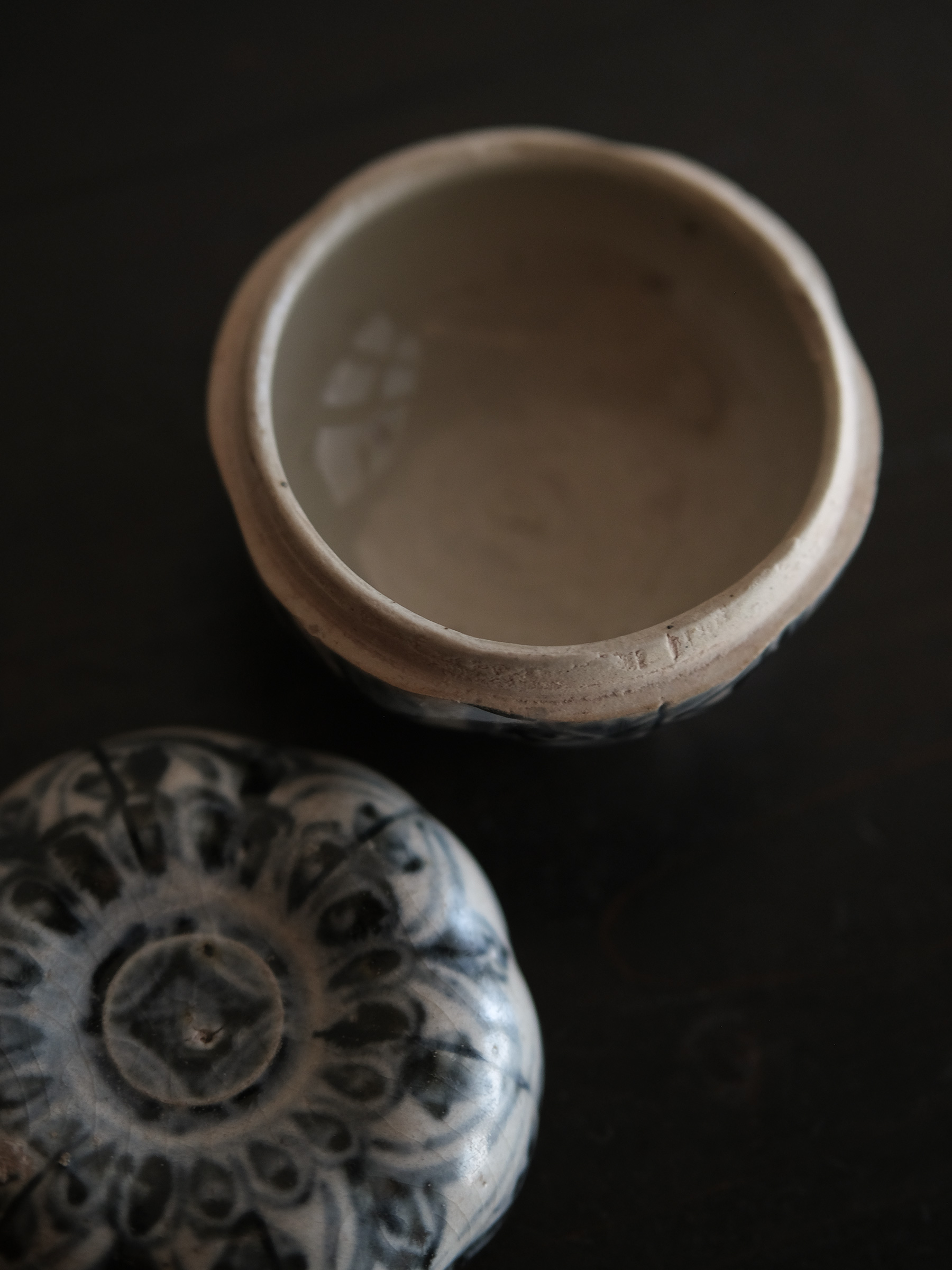
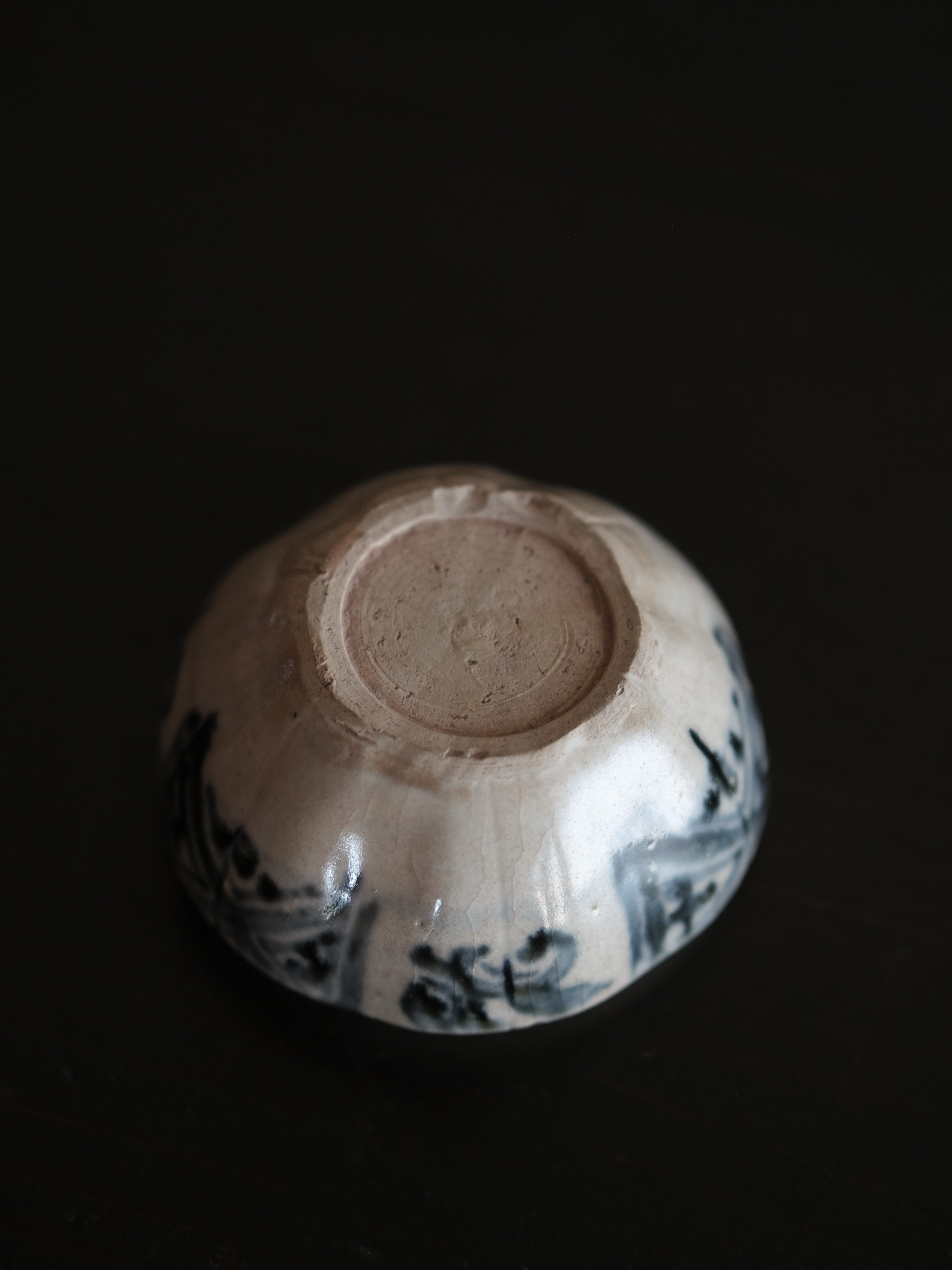
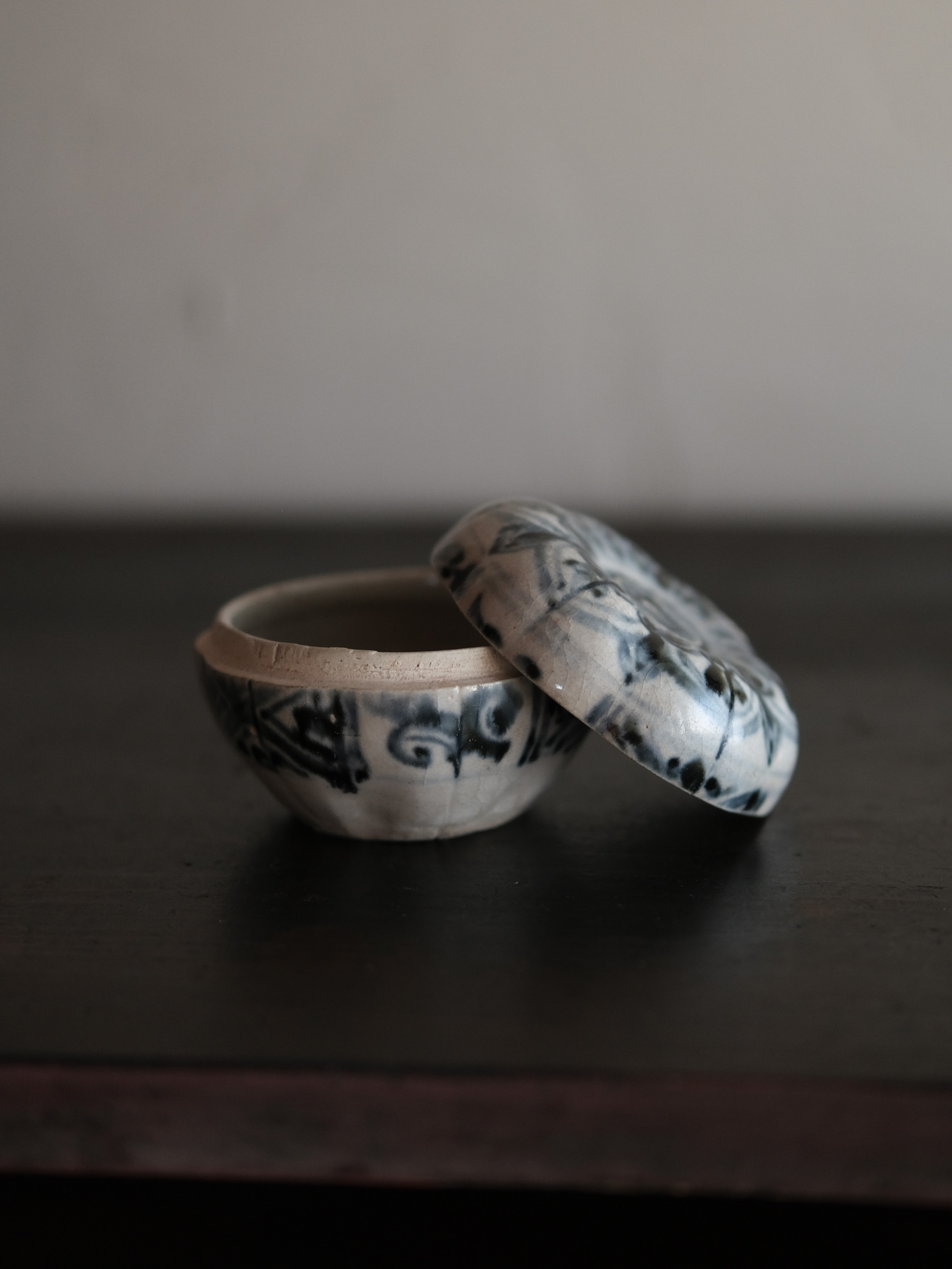
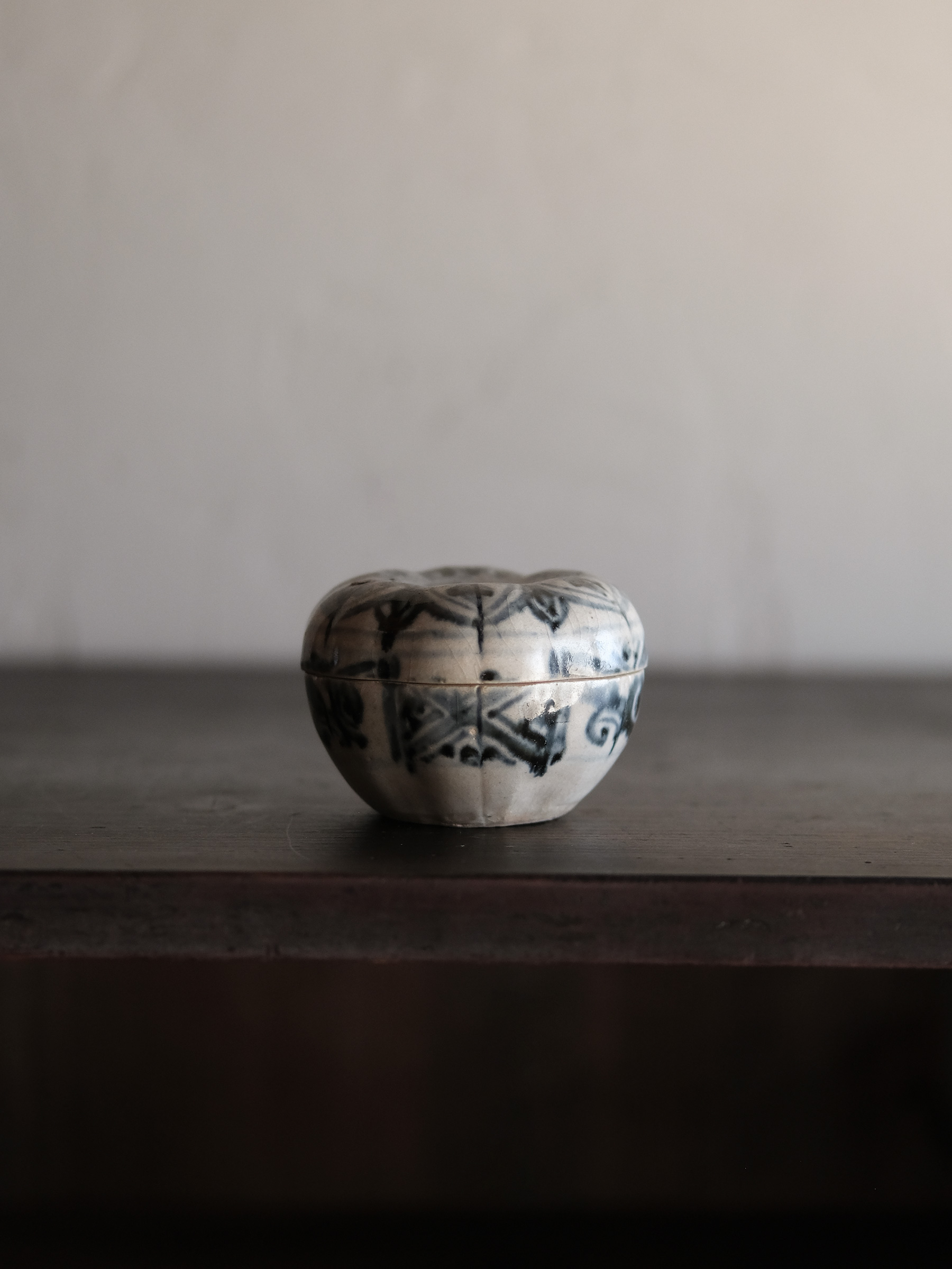
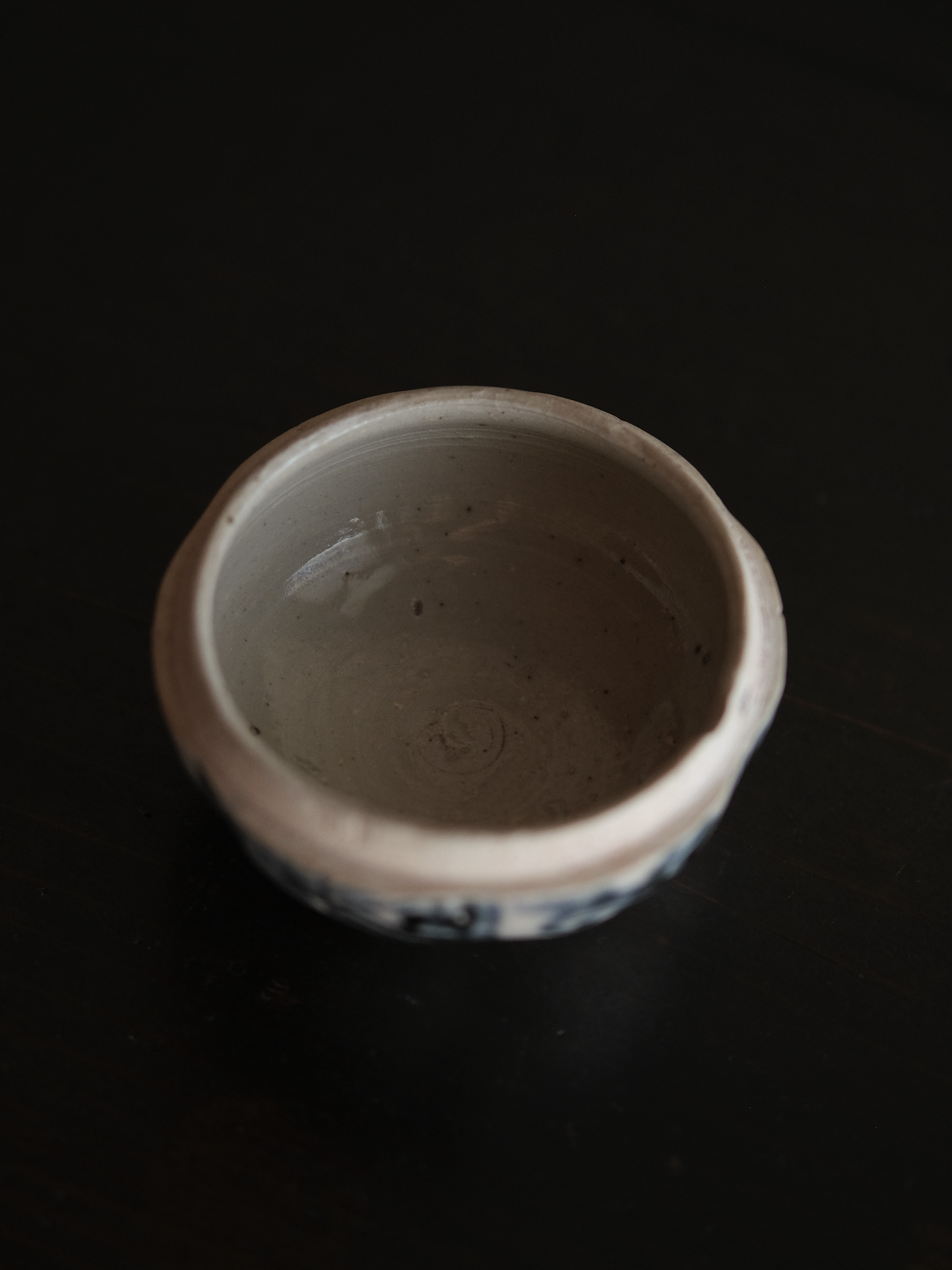
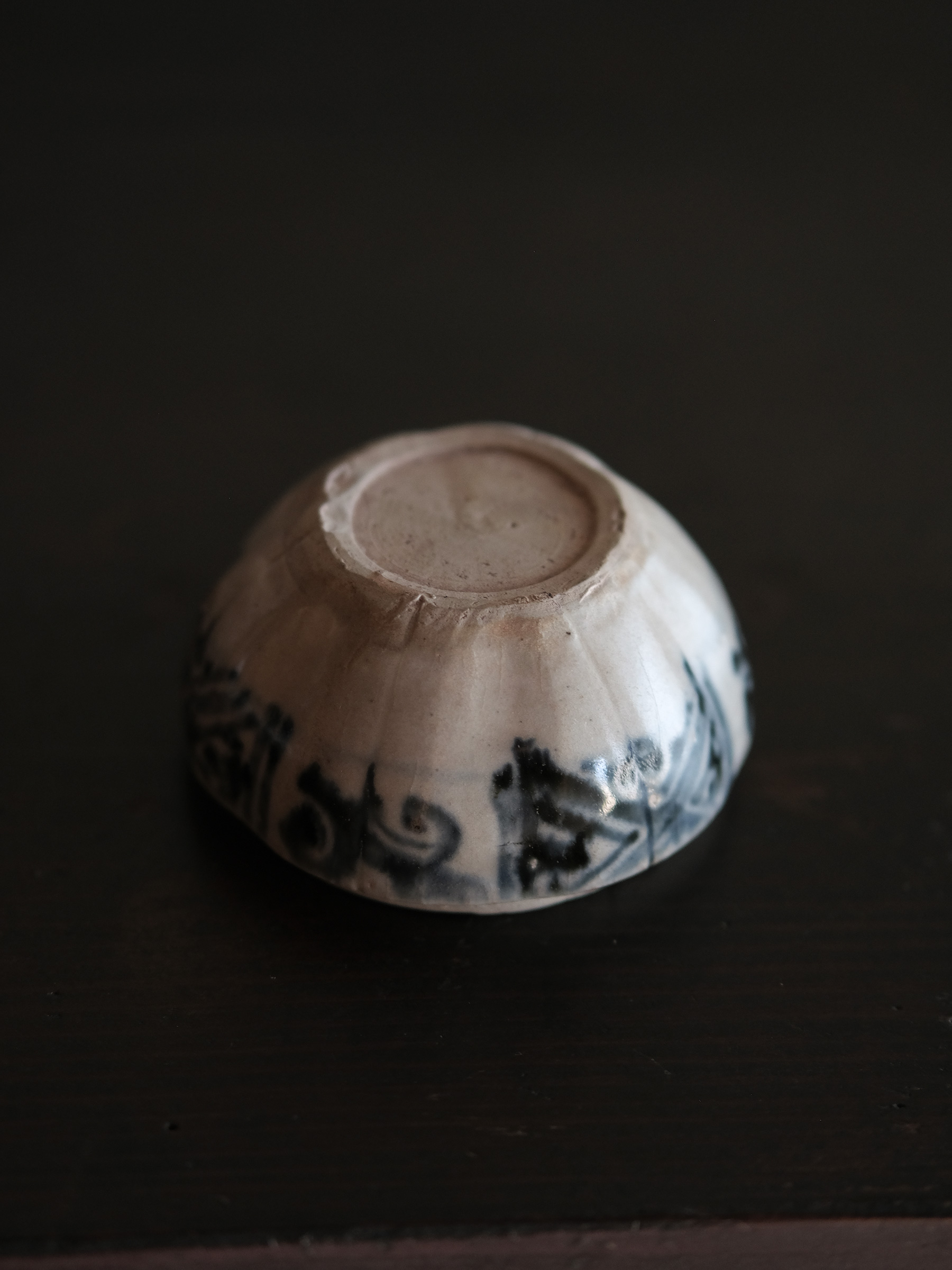
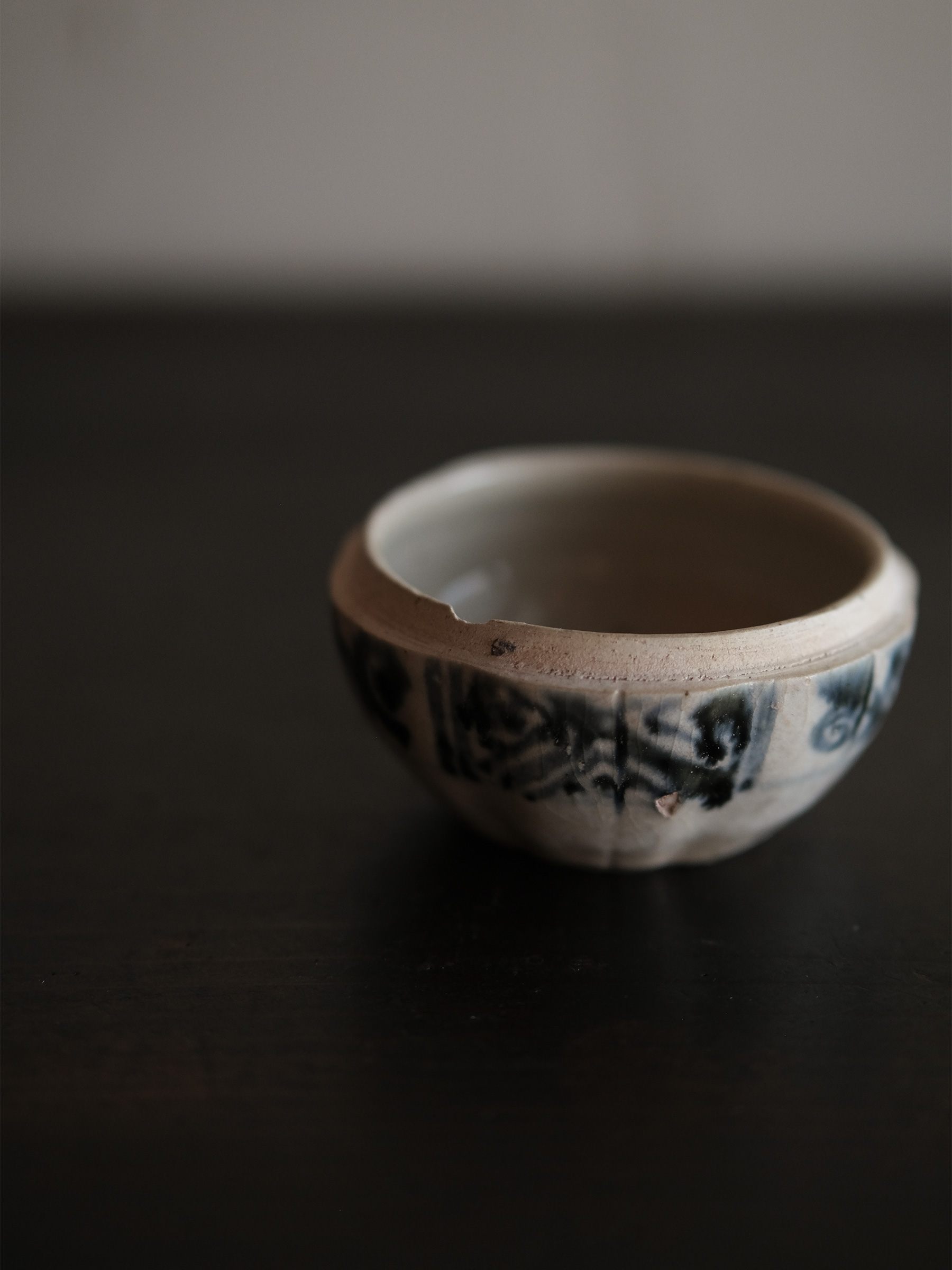
A blue-and-white lidded box fired during the Later Lê dynasty in Đại Việt, present-day northern Vietnam. The body takes the form of a ridged melon, with vertical fluting around its sides. From the recessed centre of the lid, layers of petals radiate outwards, while the body is encircled by scrolling foliage. The mating surfaces of the lid and body are left unglazed, and the base is shallowly carved and flattened. Beneath the glaze, the cobalt blue softens and bleeds gently, its varying tones shifting with the contours of the fluted surface. The overlapping petals reveal different expressions as the box is turned, evoking the shifting patterns of a kaleidoscope.
Numerous lidded boxes of this type have been recovered from archaeological sites and shipwrecks across Southeast Asia, where they circulated as trade ceramics. They are thought to have been used locally to hold lime or medicinal substances associated with the chewing of betel. Although their decorative motifs vary widely, many are distinguished by refined ornamentation, reflecting their role as objects kept close at hand and handled in daily life. Such boxes also travelled by sea to Japan, where tea practitioners prized them as kōgō—small containers for incense used in the tea ceremony. Among Annamese incense containers, this example is particularly fine, with painting that is both intricate and exuberant.
There is a small flake to the footring, probably caused by the vessel adhering to the kiln during firing and being detached. A small chip is also present on the inner fitting surface of the body.
- The description will be updated as our research progresses.
- Images may differ in color from the actual products.
- Please read "Terms" when purchasing.


